
 Worksheets
Free Market and Labor History Quiz
Total questions: 16
Worksheet time: 5mins
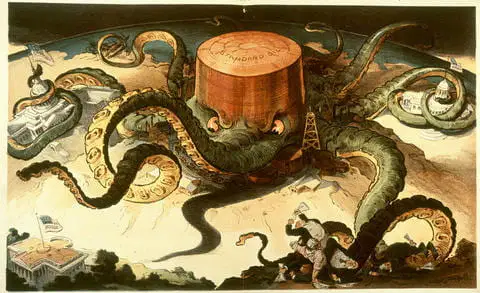
What is a monopoly in economics?
A situation where a single seller has significant market power
A situation where a single entity controls the market to purchase a good or service
A situation where a specific person or enterprise is the only supplier of a particular thing
A situation where a few sellers dominate a market

What was the Homestead Steel Massacre?
A battle between strikers and private security agents
A dispute between the Amalgamated Association of Iron and Steel Workers and the Carnegie Steel Company
A labor strike at the Pullman factory
A national boycott against all trains that carried Pullman passenger cars

What were political machines in the 19th century?
Political groups that relied on hierarchy and rewards for political power
Informal political groups that supported individuals elected into office
Groups of companies that coordinated within an industry to eliminate competition
Political groups that commanded the support of voters and businesses for personal gain
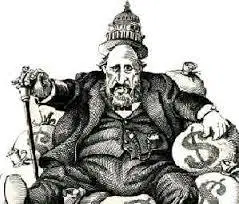
Who was Boss Tweed?
A significant stockholder in iron mines and gas companies
A board member of the Third Avenue Railway Company
The head of the Tammany Hall political machine
A director of the Erie Railroad

What were the working conditions for the working class in the 19th century?
Protected if injured on the job or sick
Met with middle class & government support for unionizing or striking
Subject to child labor, long hours and no protections
10-14 hours days, 6 days a week with good pay
What was the result of the Homestead Steel Plant strike in 1892?
The workers were successful in their strike
The workers were put back to work by the Pinkertons
The government intervened on behalf of the workers
The strike led to improved working conditions
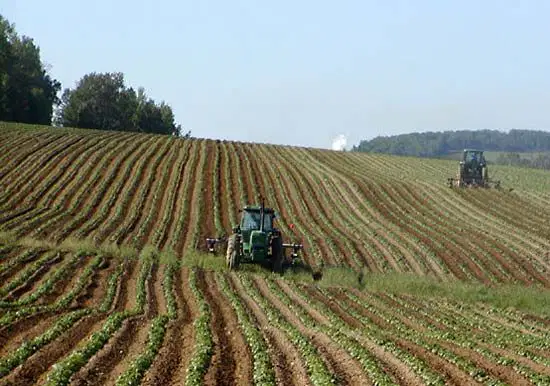
What was the consequence of the surplus in agricultural goods during the Second Industrial Revolution?
Decreased the production of agricultural goods
Reduced the price of agricultural goods
Increased demand for agricultural goods
Improved the financial situation of farmers

Which word correctly describes Tammany Hall?
Corrupt
Clean
Effecient
Fair

What led to an increase in union membership?
Industrialization of America
Agricultural Revolution
Native American reservations
Tammany Hall
laissez-faire economic policies led to this
Lower tariffs
high taxes
Monopolies and trusts being formed
Successful small business

Which population was growing during this time?
Urban
Rural
Eastern
Farmland

What led to the increase in number of people living in tenements?
Rent prices were too high on agricultural land
Large number of immigrants and industrial workers
Apartments were unpopular
Long travel times to cities
Why did business leaders form trusts?
Eliminate competition
Eliminate monopolies
Charge less for their goods
Mass production
What effect did the Governmental policy of laissez-faire have on the US economy?
Economic growth
Economic decline
New agricultural jobs
Child labor laws were enacted
What did business leaders form in order to eliminate competition?
Trusts
Higher Prices
Smaller Businesses
Law Firms

The transcontinental Railroad connected the country and---
Improved nationwide trade
Allowed Europeans to leave the US
Prevented nationwide movement
Hindered government authority

