
Font size
 Worksheets
EOC Benchmark Review
Total questions: 101
Worksheet time: 1hrs 6mins
The _________________________ was a movement in which large numbers of African Americans began leaving the South to take jobs in northern factories.
Great Migration
Trail of Tears
Red Scare
fundamentalism
In the 1920`s what was the most popular musical form which was influenced by African american music?
blues
pop
jazz
hip hop
The ________________________ was a rebirth in African American Art, intellectualism, and literature.
The Great Migration
The Harlem Renaissance
Prohibition
Consumerism
Granted women's suffrage
2nd
7th
19th
18th
Alcohol was outlawed
1st
11th
18th
19th

Define Dust Bowl.
area of the Midwest during the 1930's because of a severe drought.
area of the Southeast during the 1920's because of terrible dust storms.
area from Canada to Texas in the 1930's with severe storms.
What is isolationism?
The belief or policy of separation or being alone.
The fear or hatred of strangers, outsiders, or people unlike yourself.
Love and devotion to your country with the belief of superiority.
To take out things considered offensive or immoral.
shantytowns, communities of makeshift shacks on unused or public land nicknamed after President Herbert Hoover
Hoovervilles
Rooseveltvilles
margin call
Roosevelt’s policies for ending the Depression
New Deal
Real Deal
Square Deal
Which situation was a basic cause of the Great Depression?
excessive profits for farmers
overregulation of the stock market
overproduction of consumer goods
continued increases in wages for workers
What was the main goal of the Federal Deposit Insurance Corporation?
Regulating the stock market.
Helping people buy new homes
Preventing bank failures
Building new roads and bridges.
What is Open Door Policy?
Opening your door to strangers
Opening your door to your friends
Where all countries could trade with and in China
Where all countries could trade with and in the Western Hemisphere
Which term means when countries begin to build up their military and believe they should have a stong military force?
militarism
alliances
industrialization
nationalism
Which is the aggreement between countries that if one is attacked the other will come to help?
imperialism
industrialization
alliance
nationalism
__________ is having pride in one's nation.
nationalism
imperialism
militarism
alliance
What is the policy of when a stronger/larger nation takes over a smaller/weaker nation?
industrialization
imperialism
alliances
What were two reasons for why countries began to imperialize?
natural resources and new markets
gold and glory
new machinery and labor force
Which of the following are advantages of using the assembly line? Choose all that apply
Increased production
Lower cost
Products made faster
More dangerous
The Red Scare was due to a fear of
Communism
Democracy
Monarchy
Monotheism
One change for women in the 1920s...
Women felt freer to be bolder in styles and manners
Married women balanced career and family easily
Many women had long hair and avoided makeup
Women dominated leadership in businesses
What was one of the main reasons for the development of the counterculture movement in the 1960s?
Support for the Vietnam War
Economic prosperity
Opposition to the Vietnam War and societal norms
The rise of conservative politics
What was the main purpose of the Treaty of Versailles?
To start World War II
To end World War I and punish Germany
To establish the League of Nations
To create the United Nations
Which event is considered the spark that ignited World War I?
The assassination of Archduke Franz Ferdinand
The sinking of the Lusitania
The invasion of Belgium
The Zimmermann Telegram

President Woodrow Wilson’s Reasons for Entering World War I
Which additional reason BEST completes this list?
Increase trade with Asian nations
Assist the Allied powers against German aggression
Retaliate against Germany for imposing high tariffs
Prevent fascism from spreading throughout Europe
How did World War I impact women's roles in American society?
Women's roles remained unchanged
Women were discouraged from working
Women gained the right to vote as a direct result
Women entered the workforce in greater numbers
What was Prohibition in the 1920s?
The banning of all war-related activities
The legal prevention of the manufacture, sale, and transportation of alcoholic beverages
The prohibition of women from working
The banning of jazz music
How did the U.S. economy change during the 1920s?
It entered a prolonged period of decline
It saw little to no growth
It experienced significant growth, known as the "Roaring Twenties"
It was primarily focused on agriculture
What was the impact of the radio in the 1920s?
It led to a decrease in public interest in music
It became a crucial medium for mass communication and entertainment
It was used exclusively for government propaganda
It had little to no impact on society
What was the significance of the Scopes Trial in 1925?
It challenged the legality of Prohibition
It addressed women's right to vote
It debated the teaching of evolution in schools
It was about the enforcement of the 18th Amendment
Which of the following best describes the impact of the Progressive Era on American society?
It had little to no impact, with most reforms failing to pass
It led to significant social, political, and economic reforms that addressed the challenges of industrialization and urbanization
It primarily benefited the wealthy, with few changes for the working class
It resulted in a stronger emphasis on laissez-faire economics
During the Progressive Era, which legislation aimed to prevent monopolies and ensure competition?
Sherman Antitrust Act
Federal Reserve Act
Clayton Antitrust Act
Pure Food and Drug Act
John hears that in the United States he can worship as he chooses without fear that the government will throw him in prison. This is an example of
a push factor
a pull factor
Factors that make a person want to leave their country
Push
Pull

John Rockefeller made a fortune in which industry?
Railroads
Oil
Steel
Finance

A wealthy person who donates to charity is known as a ...
Philanderer
Philonthrope
Philistine
Philanthropist

Rockefeller and Vanderbilt came to control nearly everything in the railroad and oil industries. As a result, they were able to set prices high for their products and services. Control over an entire industry is known as having a ....
integration.
oligarchy.
monopoly.
The theory that survival of the fittest applies to the society as well.
Monopoly
Urbanization
Social Darwinism
Philanthropists
What were the main goals of the Progressive Era reforms?
Expand the power of big business
Increase political corruption
Address social and political issues such as corruption, inequality, and the power of big business.
Promote environmental conservation
What were the key initiatives of Theodore Roosevelt's presidency?
Round Agreement
Square Deal
Triangle Bargain
Oval Contract
How did Theodore Roosevelt's presidency contribute to environmental conservation efforts?
He allowed unrestricted logging and mining on federal lands
He abolished all existing national parks and monuments
He sold off public lands to private companies for development
He established national parks, forests, and monuments, as well as the United States Forest Service.
How did Theodore Roosevelt's presidency impact consumer protection laws?
Advocated for regulation of big businesses and fair competition
Implemented policies that favored monopolies and unfair business practices
Ignored the need for consumer protection laws
Supported the exploitation of workers by big businesses

What is the type of sensational reporting where writers exaggerated or even invented stories?
muckraking
yellow journalism
journalism
reporting
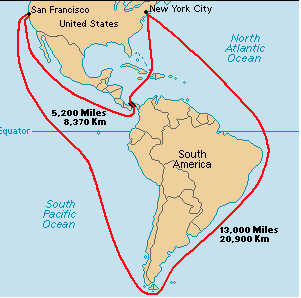
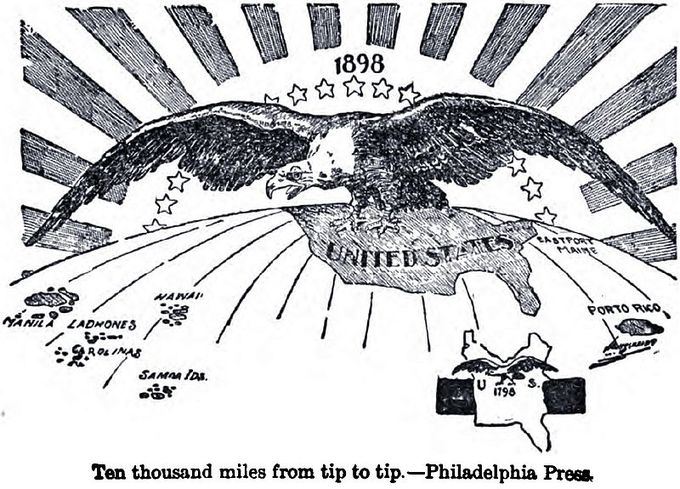
This image is a representation of...
US Exploration
US Diplomacy
US War Relations
US Imperialism
Why is the Spanish American War of 1898 often considered a major turning point in US history?
It revealed the US had become a world power.
It marked the first American victory over a European country.
It demonstrated the need for better communications in wartime.
It showed American support for European economic interests in East Asia.
the Cuban Missile Crisis. Which was the importance of this event?
Read the quote.
“On Sunday, June 25th, Communist forces attacked the Republic of Korea.
This attack has made it clear, beyond all doubt, that the international Communist movement is willing to use armed invasion to conquer independent nations. An act of aggression such as this creates a very real danger to the security of all free nations.”
… excerpt from President Harry S. Truman’s speech regarding Korea (July 19, 1950)
What conclusions can you draw about the United States' involvement in the Korean War?
The United States became involved in the Korean War to gain more allies for future world wars.
The United States became involved in the Korean War to protect their trade routes to China.
The United States became involved in the Korean War to prevent the spread of communism around the world.
The United States became involved in the Korean War to stop Emperor Hirohito from conquering Korea.
How was the United States involved in the Vietnam War?
The United States dropped an atomic bomb on South Vietnam.
The United States was allied with North Vietnam.
The United States provided economic and limited military aid to prevent the spread of communism.
The United States did not want to get involved in other countries' conflicts.
Which senator proposed that citizens turn in their neighbor if they suspected the neighbor was a communist?
Dwight Eisenhower
Joseph McCarthy
Harry S. Truman
Richard Nixon

What were the defining characteristics of the Cold War?
Prohibition, Flappers, Jazz
Arms Race, Space Race, Red Scare
Holocaust, Nazi Germany, Pearl Harbor
Poverty, Unemployment, Dust Bowl
What foreign policy guided American presidents during the Cold War to stop the spread of communism?
Open Door Policy
Dollar Diplomacy
Big Stick Policy
Containment

Baby boomers faced many issues in the 60's (Vietnam War, racism, oppression, wealth inequalities, pollution) What did they believe about these issues?
That activism and the people could make a CHANGE
That these issues were inevitable in the US
That people did not have the power to make a difference
Which of the following is a belief that unified people within "counterculture" in the 1960's?
Wearing tie dye
A distrust of "the establishment"/ "the man"
In 1896, this court case established the "separate but equal" doctrine for public facilities.
Brown v. Board
Texas v. Hernandez
Sweatt v. Painter
Plessy v. Ferguson
Which court case in 1954 ended segregation in schools, and reversed Plessy v. Ferguson?
Brown v. Board of Education
Lee v. Lee
Sweatt v. Painter
Delgado v Bastrop ISD
How were Cesar Chavez and Martin Luther King Jr similar in their protest tactics?
Started riots
Began militant demonstrations
Used nonviolent forms of protest
Organized labor unions
Poll taxes and literacy tests limited which right of African Americans?
Voting
Equal Pay
Education
Health Insurance
Malcolm X and the Black Panther Party are associated with ________.
civil disobedience
militancy ("by any means necessary")
cooperation
political lobbying

More than 200,000 Americans gathered in Washington, D.C., for a political rally for jobs and freedom.
Civil Rights Act of 1964
Montgomery Bus Boycott
Freedom Riders
March on Washington

Desegregated all public schools. This was a major court case that involved Linda Brown attending an all-black school when an all-white school was closer to her home.
Brown vs. the Board of Education
13th Amendment
Civil Rights Act of 1964
Jim Crow Laws

When African Americans refused to ride the public busses as a sign of protest; this began when Rosa Parks was jailed for refusing to give up her seat to a white man.
Voting Rights Act of 1965
March on Washington
Montgomery Bus Boycott
15th Amendment

Separation of two or more races based on skin color
segregation
racism
oppression
fascism
How do terrorists try to get what they want?
They partake in passive aggressive resistance.
They terrorize animals to force their owners to pay ransoms.
They practice satyagraha.
They create terror so that people will force their government to do what the terrorists want.

Which reason BEST explains the change in the number of cars sold between 1910 and 1925?
Cars became more available because of the passage of antitrust laws.
Cars became more affordable because of the removal of wartime price controls.
Cars became more affordable because of the introduction of the assembly line.
Cars became more available because of the removal of tariffs after a global conflict.
What was the primary cause of the Great Depression in 1929?
The collapse of the housing market
Overproduction and underconsumption
The outbreak of World War II
A massive earthquake in San Francisco

What president believed private enterprise should try to take the lead in the recovery from the Stock Market crash of 1928 instead of the federal government due to the fear of a growing national debt?
President Herbert Hoover
President Franklin D. Roosevelt
President Woodrow Wilson
President Theodore Roosevelt
President Calvin Coolidge
What was the name of the program initiated by President Franklin D. Roosevelt to combat the Great Depression?
The Great Society
The New Deal
The Fair Deal
The Square Deal
What was the name given to the day the Stock Market Crash of 1929 began, marking the start of the Great Depression?
Black Tuesday
Dark Thursday
Black Friday
Terrible Tuesday
The USA entered WW2 after _________
the invasion of Poland
the bombing of Pearl Harbor
the Battle of Britain
Operation Barbarossa
What was the battle that took place along 5 beaches in Normandy, France.
Operation Torch
D-Day
Invasion of France
Operation Fortitude
The word appeasement refers to…
To please countries wants to refrain from war
To remain at peace with other countries to refrain from war
To refuse peace to start war
To refuse to repair damage caused by war
What belief was justified by Manifest Destiny?
The need to limit the number of immigrants entering the country
The need to control the area located east of the Appalachian Mountains
The need to expand the United States to the Pacific Ocean
The need to warn European countries against colonizing Latin America
In the early 1800s, why did many people in the United States migrate westward?
There was an abundance of available farmland.
There was tremendous growth in the timber industry.
Transportation was easier due to the Transcontinental Railroad.
They wanted to escape slavery, which was illegal in the western territories.
What was the primary goal of the Monroe Doctrine?
to provide military assistance to Latin America nations
to promote trade between the United States and Africa
to prevent European nations from colonizing Latin American countries
to establish American colonies in South America

Which piece of legislation caused the Trail of Tears?
Dawes Act
Great Compromise
3/5 Compromise
Indian Removal Act

Which of the following connected the Eastern US to the Western US?
Erie Canal
Mississippi River
Transcontinental Railroad
Gulf of Mexico
When a stronger country takes over a weaker country for economic, social or political reasons
Imposition
Socialism
Imperialism
Annexation
To take over a territory or region and make it a part of your own country
annexation
importation
imperialism
impounding
To take over a territory or region and make it a part of your own country
annexation
importation
imperialism
impounding
The Homestead Act offered free land in hopes to encourage what?
western settlement of the U.S.
nothing
people from the west to move back east
people from the South to move to the North
What state boomed in 1849 due to the Gold Rush?
Texas
Florida
Oregon
California
Who joined the populist party?
Middle Class White settlers
northern African Americans
Small Farmers
Bankers/factory owners
This political party wanted an increase in the money supply, an income tax based on earnings, and government owned railroads.
William Jennings Bryan
Populist Party
Republican Party
William McKinley
Bimetallism
How does President Wilson attempt to "sell the war" to the American public?
mass propaganda campaign
bribing American citizens
threatening the American public
stimulus checks
Made it illegal to say anything disloyal about the government or war effort.
Sedition Act
Espionage Act
Disloyal Act
First Amendment Act
Made it illegal to spy or interfere with government foreign policy such as the military draft.
Espionage Act
Sedition Act
Military Draft Act
No Spy Act

Proposal to keep Chinese markets open for all without allowing any one county to gain control over the region
Hays’ letter to other world powers proposed trade to free and open to all
U. S. interests were open access for missionaries and American businesses
Selective Service Act
Open Door Policy
Treaty of Portsmouth
Sussex Pledge

January 1917 - Secret diplomatic communication from Germany to Mexico
Proposed an alliance between Germany and Mexico if U.S. entered WWI; promised the return of Texas, Arizona and New Mexico to Mexico
Zimmerman Telegram
Committee of Public Information
Big Four
Philippines

International diplomatic group formed after WWI to solve disputes between countries before they erupted into war
Origins were in Wilson’s Fourteen Points speech (1918)
Lusitania
Wilson's Fourteen Points
League of Nations
Big Four
1918 – President Wilson’s WWI war goals for the U. S. Demanded:
creation of state for each
nationality
an independent Poland
Open Door Policy
Sedition Act
Wilson's Fourteen Points
Committee of Public Information

