
Font size
 Worksheets
Ancient China Unit Review
Total questions: 43
Worksheet time: 20mins
What is an advantage of the physical barriers that surround China?
protection from invaders
trading goods
interaction with other people
Ancient China was surrounded by deserts, mountains, and oceans. What impact did these have on the culture?
China's geographical location helped to integrate the cultures of other regions.
China established trade with other regions through its geographical isolation.
China was geographically isolated, allowing it to develop independently.
Why is the Huang He/Yellow River also known as "China's Sorrow"?
Because of the easy travel the river provided for boats and shipping vessels.
Because of the fertile soil the river deposited.
Because of the unpredictable flooding and destruction the river caused.
Why was the Huang He also called the Yellow River?
because of the tears loved ones cried into the river
because of the yellow tinted silt (loess) that deposits in the river basin
because of the Yellow Sea right beside the river
Which of these words best describes China's climate?
uniform
varied
single
way too many
According to Confucius people should:
take pride in their role in society
disregard their role in society
both answers are correct
none of the answers are correct
Taoists (Daoists) believed:
the government should have a large part in people's lives
people should be one with nature and go with the flow
there needed to be a balance in all things-Yin & Yang
relationships with others were more important than your own happiness
Followers of Confucianism believed
5 main relationships would guide you through life
the government needed to set the moral example for its people
leave everything to Yin and Yang-they would take care of you
filial piety should be practiced (respecting your elders)
Which of the following accurately describes the practice of Legalism:
A laid back approach that a government system would take to control its people.
A strict set of laws with strict punishments so that people would be scared to break the rules.
The government officials set the moral standard for everyone in the community.
None are correct.
Class system where the king provided lands to nobles for military support, and peasants paid nobles for using the land to farm:
Confucianism
Mandate of Heaven
Feudalism
Bureaucracy
Which dynasty used a Feudal System?
Zhou
Shang
Han
Qin
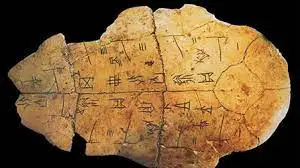
For what purpose would a Shang leader most likely use an oracle bone made from a turtle shell for?
To serve a ceremonial meal
To ask advice from his ancestors
To make music for his family
To send messages to the nobles

The Mandate of Heaven meant that __________.
Chinese kings were given the right to rule by the gods
Following the Dao was the best way to govern
Chinas army was destined to succeed in battle
Everyone worked together

How did the Silk Road benefit China?
Trade decreased.
Travel to North America was easier.
Trade increased and inventions and ideas spread.
Other countries learned how to make silk.
Based on Confucianism, Chinese society was made up of _______ social classes.
three (3)
four (4)
five (5)
six (6)
During this dynasty, China was unified through a standardized system of writing and currency and a set of strict, published laws for everyone to follow.
Han
Zhou
Qin
Shang
Confucius was a great thinker who lived during the Zhou Dynasty. Which of the following statements about him are true?
He valued kindness, good manners, and respecting family.
His teachings were allowed during the Qin Dynasty.
He became emperor of the Zhou Dynasty.
The silk-making process was very valuable so it was kept a secret from other countries.
true
false
Most of the people in ancient China were __________.
emperors
scribes
farmers


Which of these is a scientific contribution from Ancient China?
Silk
Canals
The Great Wall

Both Confucius and Lao Zi was trying to bring _______________ and _______________ to the endless Warring States Period.
chaos, confusion
order, peace
unicorns, rainbows
war, hate
Which Chinese philosophy was founded by Hanfeizi?
Confucius
Daoism
Legalism
None of the above.
Which Chinese philosophy was founded by Laozi?
Confucianism
Daoism
Legalism
None of the above.
Which Chinese philosophy was founded by Confucius?
Confucianism
Daoism
Legalism
None of the above

Pacific Ocean
Bay of Bengal
East China Sea
South China Sea
Which is NOT a major river in China?
Huang He River
Tigris River
Yangtze River
The first dynasty in ancient China with archaeological evidence/artifacts is called . . .
Which of the following is considered an artistic contribution from Ancient China? Choose all that apply.
jade figurines
silk clothing
porcelain vases
seismographs
Place the practice with the correct Chinese philosophy.
Confucianism
5 relationships
Daoism
balance in life
Confucianism
analects
Daoism
yin and yang
Confucianism
filial piety
Which of the following was a major effect of the Silk Road on ancient China?
It made farming more difficult in China.
It caused the decline of Chinese inventions.
It led to the spread of Chinese goods and culture to other regions.
It isolated China from other civilizations.
What was the main reason the Great Wall of China was built?
To protect against invasions from northern tribes
To mark the border with the Yellow River
To provide homes for farmers
To improve trade with India
Why was the Silk Road named Silk Road?
Because the most popular item sold, traded, or bought was the silk
Because the most popular item sold, traded, or bought was the spices
What is the definition of an Ancestor?
A royal Family
An ancestor is a person from whom one is descended. Usually, it refers to a remote person, rather than the immediate parents or grandparents.
Because the most popular item sold, traded, or bought was the silk
Great Wall of China

