wayground logo

Free Printable Worksheets

Font size

S
M
L
XL
Worksheets

Quiz 1/26

Total questions: 28

Worksheet time: 22mins

Name
Class
Date
1.

Soil is made of ---

a)

weathered rocks and minerals.

b)

dead plants and animals.

c)

air and water.

d)

all of the above

2.

Which layer of soil is on the bottom of a soil profile?

a)

topsoil

b)

subsoil

c)

bedrock

d)

humus

3.

Humus is ---

a)

the dead parts of plants and animals in soil.

b)

A food we eat with pretzels.

c)

The tiny particles inside of soil.

d)

The roots that come off of a plant and live in soil.

4.

When plants, animals, and other organisms die, they break down and become part of the soil. What is this part of the soil called?

a)

sand

b)

silt

c)

clay

d)

humus

5.

Horizontal layers of soil are called ---

a)

Soil profiles

b)

Soil horizons

6.

The texture of soil depends mainly on ---

a)

the types of plants that grow in the soil.

b)

the size of the particles in the soil.

c)

the color of the soil.

d)

the number of worms in the soil.

7.

What is the layer of soil that contains humus, leaf litter, and other organic matter called?

a)

O - Organic

b)

A - Topsoil

c)

B - Subsoil

d)

R - Bedrock

8.

Why is topsoil darker than all other levels of soil?

a)

It contains all the darker colored minerals.

b)

It contains volcanic rock.

c)

It contains more organic matter.

d)

It contains bits of burned trees.

9.

Where does most of the water go when it rains?

a)

In the ocean

b)

In the rivers

c)

In the gutters

d)

It absorbs into the soil.

10.

Why is soil an important natural resource?

a)

soil is used to make buildings

b)

soil can grow crops

c)

soil comes from bedrock

d)

soil is full of microbes

11.
What are the four soil components?
a)
Sand, rock, humus, air
b)
Rock, humus, air, water
c)
Rock, humus, roots, water
d)
Rock, humus, animals, plants
12.
Which represents the distribution of water on Earth?
a)
3% freshwater, 97% salt water
b)
97% freshwater, 3% salt water
c)
71% freshwater, 29% salt water
d)
29% freshwater, 71% salt water
13.
Where is most of the freshwater found on Earth?
a)
lakes
b)
glaciers
c)
oceans
d)
rivers
14.

Approximately what percent of Earth's water is salt water?

a)

3

b)

70

c)

79

d)

97

15.

Approximately _____ percent of Earth's water is freshwater.

a)

97

b)

1

c)

3

d)

10

16.

What is groundwater?

a)

water that fills space between rocks of Earth

b)

water found within a lake or pond

c)

water that is evaporated from the surface of Earth

d)

water that is found in the ocean

17.

Water can exist on Earth as...

a)

solid ice

b)

liquid water

c)

the gas water vapor

d)

All of above

18.
Why do we need to conserve water?
a)
It is an unlimited resource. 
b)
It is a limited resource. 
c)
There is a lot of water. 
d)
There is no need to conserve water.
19.
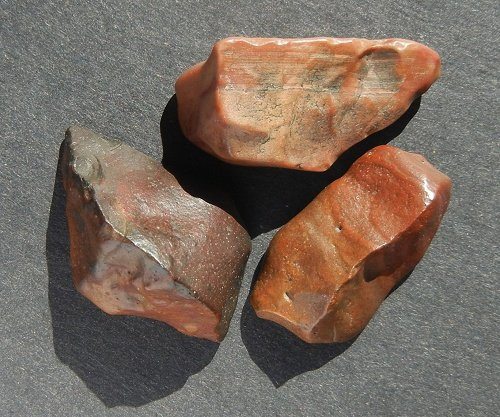
These rocks were broken apart from the continuous freeze/thaw of water in the cracks of the rocks. This is an example of:
a)
ice wedging
b)
acid rain
c)
permeability
d)
abrasion
20.
These rocks were made smooth by wind blowing smaller rock particles across their surface.  This is an example of:
a)
ice wedging
b)
chemical weathering
c)
acid rain
d)
abrasion
21.
This type of weathering occurs when rock is physically broken down into smaller pieces of rock.
a)
mechanical weathering
b)
chemical weathering
c)
erosion weathering
d)
deposition
22.
The process by which water, ice, wind or gravity moves weathered rock and soil from one place to another.
a)
weathering
b)
erosion
c)
deposition
d)
dumptruck
23.
The natural chemical or physical processes that breaks down rock on Earth's surface.
a)
weathering
b)
erosion
c)
deposition
d)
jackhammering
24.
How might a weathered mountain appear different than an unweathered mountain?
a)
Weathered mountain would be taller.
b)
Weathered mountain would be rounder and less jagged.
c)
Weathered mountain would be more jagged and less rounded.
d)
Weathered mountain would have no trees.
25.
How is mechanical weathering different from chemical weathering?
a)
Chemical weathering happens over much shorter time frame than mechanical weathering.
b)
Chemical weathering changes the chemical composition of rocks; mechanical weathering does not.
c)
Chemical weathering occurs only in tropical climates; mechanical weathering occurs only in cool climates.
d)
Chemical weathering occurs only in the mountains; mechanical weathering occurs only on flat land.
26.
Acid rain wearing away the face of a marble gravestone or statue is an example of?
a)
mechanical weathering
b)
chemical weathering
27.
Exposure to rain and oxygen causes the metal minerals in rocks to rust and fall apart.  This is an example of:
a)
mechanical weathering
b)
chemical weathering
28.

What do floodplains, sandbars, and river deltas have in common?

a)

They've all been formed by water erosion

b)

They've all been formed by glacial erosion

c)

They've all been formed by wind erosion

d)

They've all been formed by sandblasting