
 Worksheets
Global 2 Midterm Practice
Total questions: 74
Worksheet time: 49mins
The policy of a larger, more powerful nation taking over a smaller, weaker nation is
Imperialism
nationalism
exploration
Which two were things Industrialized countries needed from those areas they imperialized?
raw materials and markets
markets and government positions
raw materials and trade routes
Which two continents did Europeans begin to imperialize?
Africa
Asia
South America
Austrialia
The meeting of European countries on how to divide up Africa was known as the what?
Versailles Conference
Berlin Conference
Paris Conference
The bourgeoisie (middle class) belonged to which of the three Estates?
First
Second
Third
None
What was the Estates-General?
France's hospital system
A meeting of representatives from 3 Estates
France's military leader
the Assembly that executed the king

July 14, 1789, a French mob stormed a prison. The mob successfully captured the gunpowder they were after.
Storming of the Bastille
The Great Fear
Storming of Pompei
Sandstorm
Declaration of the Rights of Man...
... explained why the British colonies should be free
... listed the natural rights of citizens in revolutionary France
... abolished the monarchy
Robespierre dies & the Reign of Terror ends. What government takes over?
The Directory
Napoleon Bonaparte's
The Parliament
The House of Bourbon
Before the revolution in France, members of the Third Estate had
a smaller tax burden than the other estates
greater political influence than the clergy
a voice in government equal to that of the First and Second Estates
a high tax burden and little political power
The Declaration of the Rights of Man guaranteed all of the following EXCEPT
freedom of speech
freedom of the press
freedom of religion
equal rights for women
In 1793 King Louis XVI and Queen Marie Antoinette were
saved from the Robespierre.
executed.
deported to England.
returned to the throne.
The leader of the Reign of Terror & the Committee of Public Safety was
Marie Antoinette.
Olympe de Gouges.
Maximilien Robespierre.
Dr. Joseph Guillotin.
The French people welcomed Napoleon because?
they hoped he would help the collapsing French economy.
he completely disavowed the ideals of the Revolution.
he was the grandson of Louis XVI and Marie Antoinette.
he promised order after the chaos of the Revolution.

Who led a successful revolution in the northern area of South America, eventually having a country named after him?
Father Miguel Hidalgo
Napoleon Bonaparte
Simon Bolivar
Jose de San Martin
Peninsulares who were given authority to rule colonies in Latin America were known as
Viceroys
Creoles
Haciendas
Encomiendas
Who was the leader of the Haitian Revolution?
Toussaint L'Ouverture
Napoleon Bonaparte
François Hollande
James Monroe
What is nationalism?
the country where you were born
a strong love, pride, or respect for your country
the idea that your country should rule all the others
citizenship to a specific country
Karl Marx wrote which of the following:
The Wealth of Nations
The Communist Manifesto
Mein Kampf
Peace of Paris
According to Marx, which of the following groups of people is considered to be the "ruling class?"
Bourgeoisie
Proletariat
Communists
Socialists
Laissez-faire capitalism as attributed to Adam Smith called for
heavy taxation of manufacturers
strict government control of the economy
minimal government involvement in the economy
government investments in major industries
Which characteristic is associated with an economy based on the principles of laissez-faire?
prices based on supply and demand
production quotas established by the central government
distribution of goods determined by the customs of a traditional society
some goods exchanged for other goods of equal value
Adam Smith’s Wealth of Nations stressed the importance of
tradition
supply and demand
large corporations
government ownership
What is a key principle of a market economy?
The means of production are controlled by the state.
Supply and demand determine production and price.
Employment opportunities are determined by social class.
Businesses are owned by the people collectively.
During the 1800s, the writings of Marx, Engels, and Dickens focused attention on the problems faced by
factory owners
investment bankers
farm laborers
industrial workers
“. . . They [the Communists] openly declare that their ends can be attained [achieved] only by the forcible overthrow of all existing social conditions. Let the ruling classes tremble at a Communist revolution. The proletarians have nothing to lose but their chains. They have a world to win. Working men of all countries, unite!”
— Friederich Engels and Karl Marx, Communist Manifesto, 1848 from the NYS Global History and Geography Regents Exam, August 2002.
These views, expressed by Engels and Marx, were developed in reaction to the
unification of Germany
Commercial Revolution
Congress of Vienna
Industrial Revolution
Where did Karl Marx predict a revolution of the proletariat would occur first?
industrial Europe
independent Latin America
colonial Africa
agricultural Russia
Karl Marx and Friedrich Engels encouraged workers to improve their lives by
electing union representatives
participating in local government
overthrowing the capitalist system
demanding pensions and disability insurance
In the late 1800s, one response of workers in England to unsafe working conditions was to
take control of the government
return to farming
set minimum wages
form labor unions
Karl Marx predicted that laissez-faire capitalism would result in
a return to manorialism
a revolution led by the proletariat
fewer government regulations
an equal distribution of wealth and income
In The Communist Manifesto, Karl Marx and Friedrich Engels expressed the idea that
religion should be the most important factor in society
power should be determined by a person’s wealth
profits from work should belong to the workers
supply and demand should control prices
Laissez-faire economists of the 19th century
argued that
the government should regulate the economy
and foreign trade
individuals should be allowed to pursue their
self-interest in a free market
governments should develop a state-run
banking system to prevent instability
anarchy would result if universal male
suffrage was granted

What is the movement of people from farms to cities?
Utilitarianism
Urbanization
Proletariat
Enclosure Movement

A place where people and machines join together to mass produce goods.
Cartel
Corporation
Factory
Urbanization

In which European country did the Industrial Revolution begin?
France
Britian
Prussia
Spain

Capitalism is
An economic system in which the means of production are privately owned and money is invested to make profits.
An economic system in which the means of production are owned by the public (government) and operate for the welfare of all.
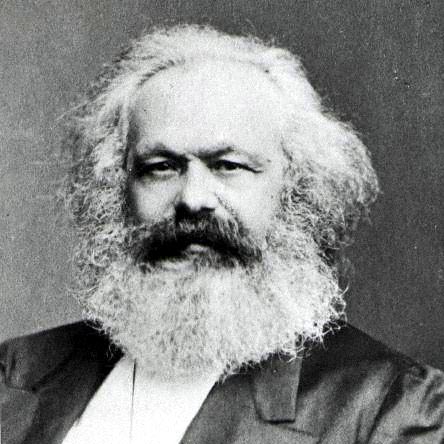
__________________ predicted a violent revolution that would result in the working class taking over in a classless political and economic systems known as communism.
John Adams
Thomas Smith
Karl Marx
Edward Jenner

Adam Smith, who took up for laissez-faire economics, believed that:
mercantilism was the only way to insure a truly free trade.
the government should regulate the economy.
the government should not interfere with the economy.
colonies were an important source of conpetition.

What invention made possible the growth of railroads?
the spinning jenny
the factory
macadamized roads
the steam locomotive

Which industry did the Industrial Revolution first take hold in Great Britain?
textiles
iron production
agriculture
transportation
Why was England the site of the beginnings of the Industrial Revolution?
England was the most powerful nation in the world
It wasn't; history has unfairly given England credit for the Industrial Revolution
England had an abundance of natural resources such as coal, iron ore, and waterways where water wheels and steam engines could be built
England was centrally located to many areas like France, Germany, Spain, and Ireland, giving them an advantage to bring in resources and talent from many places
Why was England the site of the beginnings of the Industrial Revolution?
England was the most powerful nation in the world
It wasn't; history has unfairly given England credit for the Industrial Revolution
England had an abundance of natural resources such as coal, iron ore, and waterways where water wheels and steam engines could be built
England was centrally located to many areas like France, Germany, Spain, and Ireland, giving them an advantage to bring in resources and talent from many places
Commodore Matthew Perry’s visits to Japan in 1853 and 1854 resulted in the
colonization of Japan by the United States
transfer of spheres of influence to China
introduction of Christianity to Japanese society
opening of trade and diplomatic relations with Japan
One effect of industrialization on Meiji Japan was that it
strengthened the power of the Shogunate
decreased the level of pollution
modernized transportation
increased the number of small farms
One effect of industrialization on Meiji Japan was that it
strengthened the power of the Shogunate
decreased the level of pollution
modernized transportation
increased the number of small farms
Japan’s increased foreign trade during the Meiji Restoration was closely related to its
need to maintain a traditional society
desire for a modern industrialized society
colonization by Western nations
encouragement of foreign investment
One reason for Japan’s rapid industrialization during the Meiji Restoration was that Japan had
rejected Western ideas
used its access to the sea for fishing
relied on traditional isolationist policies
reformed its political and economic systems
Which action taken by the Meiji government encouraged industrialization in 19th-century Japan?
building a modern transportation system
limiting the number of ports open to foreign trade
forcing families to settle on collective farms
establishing a system of trade guilds
In the years following the Meiji Restoration in Japan and the unification of Germany in the 19th century, both nations experienced
an increase in military production and strengthened military forces
a reduction in tensions with neighboring nations
a restructuring of government that included popularly elected monarchs
a decrease in the reliance on industrialization and trade
The Meiji Restoration in Japan was prompted in part by
a fear that Japan would be colonized by western nations
the failure of Japanese expansion
the Shogun’s conversion to Christianity
a desire to stay isolated
In which wars were the Chinese defeated by Britain in 1839 and 1856?
Sino-Japanese War
Russo-Japanese War
Boxer Rebellion
Opium Wars
Taiping Rebellion
What good did Britain export (send) to China?
tea
silver
opium
rubber
When the Chinese government did this, the British responded with military force.
attacked Britain
destroyed millions of dollars worth of opium
sent diplomats to Britain to discuss trade
began selling opium to Japan
What was Britain's advantage over China?
Superior weaponry
larger population
homeland advantage
The Treaty of (a) was formed after the first Opium War.
Which was NOT a result of the first Opium War?
China had to open more ports to foreign trade
Britain received compensation for the destroyed opium
Britain took control of the island of Hong Kong
China became a British colony
Which of these best describes the type of imperialism that took place in China?
sphere of influence
protectorate
colony
1917, 1918


