
 Worksheets
Grade 8 Science - Mix and Flow Unit Test Practice
Total questions: 80
Worksheet time: 2hrs 26mins
Solids have...
Definite Shape & Definite Volume
Indefinite Shape & Definite Volume
Indefinite Shape & Indefinite Volume
Definite Shape & Indefinite Volume
Change of State
Gas to Solid
Condensation
Solidification
Sublimation
Fusion
Change of State
Gas to Liquid
Sublimation
Condensation
Solidification
Vaporization
Which state of matters does ice belong to ?
Liquids
Semi-solids
Solids
Gases
_______ is the amount of space an object takes up.
Shape
Weight
Volume
Temperature
Distances between molecules are the greatest in ________.
semi-solids
liquids
solids
gases

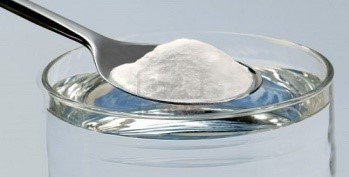
Water is a universal solvent because it ...
freezes when it gets cold.
can be found anywhere.
floats when frozen.
dissolves most substances.
A higher temperature makes the solute dissolve faster
True
False
The rate at which a solute will dissolve into a solvent. Some factors that increase this include: surface area, temperature, pressure, and stirring
Solute
Rate of Dissolving (Solution)
Concentration
Colloid


Mass is measured in
mL
grams
units
air
Volume is measured in
grams
units
milliliters ( mL)
pounds

Which statement is true about this picture?
The dish soap is more dense than the honey
The cherry tomato is more dense than the milk
The honey is less dense than the bolt
The water is less than the lamp oil

What is density?
The amount of matter in a unit of volume
How heavy something is
How old something is
Which state of matter is most dense?
solid
liquid
gas
An object's mass is 12 g and its volume is 4ml. What is the density?
4 g/ml
16 g/ml
3 g/ml
6 g/ml
What can be the opposite force to the force of gravity?
Displacement force
Buoyant force
Normal force
Magnetic force

What is it called when an object is neither floating or sinking?
positive buoyant
negative buoyant
neutral buoyant

If the temperature was cooled down, how would this affect syrup's flow rate?
It would go up
It would go down
It would not change
It is impossible to tell
How are a hydraulic system and pneumatic system different?
One is more powerful than the other.
One uses a gas, and the other uses a liquid.
One has a pump, and the other does not.
One has more valves than the other.
Low viscosity can be described as...
liquids that flow quickly
liquids that flow slowly
Fluids with very high viscosity flow very _______________________.
fast
not at all
slow
whenever it wants
Which of these are classified as fluids?
Solid
Liquid
Gas
When area increases...
pressure increases
pressure decreases
pressure stays the same
pressure increases then decreases

In an airplane, the ears pop at higher altitudes because pressure inside the ear ....
Higher than outside
Lower than outside
Pneumatics is concerned with a system that uses:
Oil
Expanded air
Compressed air
Electricity
Both liquids and gases can be compressed
True
False
An example of a compound is
sand and water
oxygen
water
water and salt
The milk is the _________ and the coffee is the ____________.
homogeneous mixture, mixture
solvent, solute
compound, mixture
solute, solvent
An _______________ is made up of one or more of the same kind of atom chemically combined.
atom
element
molecule
compound
A __________________ is a substance that has definite physical and chemical properties such as appearance, melting point, and reactivity.
mixture
pure substance
compound
element


According to the picture from left to right, which of the answers is correct?
neurally buoyant, positively buoyant, negatively buoyant
negatively buoyant, neutrally buoyant, positively buoyant
positively buoyant, neutrally buoyant, negatively buoyant
neutrally buoyant, negatively buoyant, positively buoyant

A car lift is an example of a hydraulic device.
True
False

What does WHMIS stand for?
Workplace Health Matters Information System
Workplace Helps Make It Safe
Workplace Hazardous Materials Information System

What does PPE stand for?
Perfect Physical Environment
Personal Physical Environment
Personal Protective Equipment
Physical Protective Equipment

What does this hazard symbol mean?
Corrosive Material
Compressed Gas
Bio-hazardous Infectious Materials
Dangerously Reactive Material

What does this hazard symbol mean?
Oxidizing Material
Materials Causing Other Serious Toxic Effects
Materials Causing Immediate and Serious toxic Effects
Bio-hazardous Infectious Materials

What is the name of the product?
Acetic Acid
White Vinegar
Water Thin

What is the name of the supplier?
RF Vinegar
White Vinegar
Flexo Products
Canutec

Are any hazardous symbols located on the Clorox bleach label?
Yes
No

What does this pictogram warn you about?
gases under pressure
fire hazard
explosion or reactivity hazard
may cause less serious health effects

What does this pictogram warn you about?
gases under pressure
fire hazard
explosion or reactivity hazard
may cause less serious health effects

What does this pictogram warn you about?
gases under pressure
fire hazard
explosion or reactivity hazard
may cause less serious health effects

What does this pictogram warn you about?
may cause or suspected of causing serious health effects
oxidizing hazard
organisms or toxins that cause diseases
may cause death or toxicity with short exposure to small amounts

What does this pictogram warn you about?
may cause or suspected of causing serious health effects
oxidizing hazard
organisms or toxins that cause diseases
may cause death or toxicity with short exposure to small amounts
A fluid is ...
a solid
a substance that flows when poured
only a liquid
a substance that piles up when poured
The buoyant force acting on an object that is submerged in a fluid equals the weight of the fluid that is displaced by the object. This describes which principle?
Quinton's Principle
Archimedes' Principle
Aristotle's Principle
Pascal's Principle
This word describes a push or pull, or anything that causes a change in the motion of an object.
Tension
Force
Compression
Pneumatic

The basic idea behind any hydraulic system is very simple: Force that is applied at one point is tranitted to another point using________
A compressible fluid
An incompressible fluid
A cold compress
A hot compress
It's important for a hydraulic system to contain what?
Air bubbles
No air bubbles
Compressible fluid
Compressible gas
What does Pascal's law state?
When you apply a small amount of pressure to a compressed fluid, it will send that pressure nowhere.
When you apply pressure to a confined fluid, the fluid will send that pressure out in all directions at the same rate.
When you apply a large amount of pressure to an object, it will float.
When you use a fluid to apply pressure, the pressure will release.


A box on the floor has a weight of 120 N. The surface area the box takes up is 4m2.
What is the pressure exerted by the box?
30 Pa
50 m2
50 Pa
0.02 Pa
A force of 240 N is applied to an area of 6.0m2. how much pressure is being applied to the surfaced?
14,400 Pa
40 Pa
240 Pa
6.0 m2
A force creates a pressure of 12 Pa over an area of 6.0 m2. What is the magnitude of this force?
72 N
12 N
6.0 N
2 N

