
 Worksheets
Chemical Properties Quiz
Total questions: 16
Worksheet time: 8mins
Name
Class
Date
1.
Which of the following is a sign that a chemical reaction has occurred?
a)
Change in shape
b)
Dissolving in a liquid
c)
melting
d)
formation of a gas
2.
Which of the following is NOT an example of a physical change?
a)
crumpling up paper
b)
sharpening a pencil
c)
rust
d)
Shrunken clothing
3.
A change where one or more new substances are created.
a)
physical change
b)
chemical change
4.
Fizzing, foaming, and burning are all evidence of
a)
physical change
b)
chemical change
5.
When you break a cracker into pieces it is a...
a)
physical change
b)
chemical change
6.
Which of these is a result of a chemical change?
a)
mixture
b)
freezing or melting
c)
solution
d)
a new substance
7.

What form of energy is being CREATED here? There is more than one answer!
a)
electrical
b)
thermal
c)
mechanical
d)
radiant (light)
8.
Which of the following is a sign that a physical change has occurred?
a)
heat being produced
b)
cut into smaller pieces
c)
bubbles forming
d)
light being produced
9.
Chemical changes ____
a)
can't be eaten
b)
can be seperated
c)
can't be undone
d)
involve only two things
10.
Which law states that matter cannot be created or destroyed during a chemical change/reaction?
a)
Conservation of Light
b)
Convervation of Thermodynamics
c)
Conservation of Energy
d)
Conservation of Mass
11.
The substances listed on the right side of a chemical equation are the
a)
reactants
b)
products
c)
yeilds
d)
precipitates
12.
The substances listed on the left side of a chemical equation are the
a)
reactants
b)
products
c)
yeilds
d)
precipitates
13.
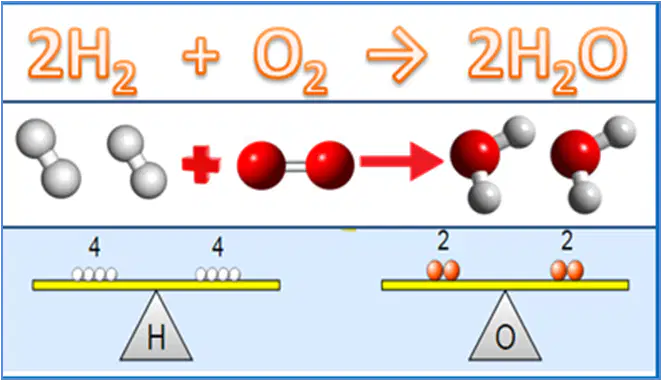
In the equation shown, what are the product(s)?
a)
2H2 + O2
b)
2H2O
14.
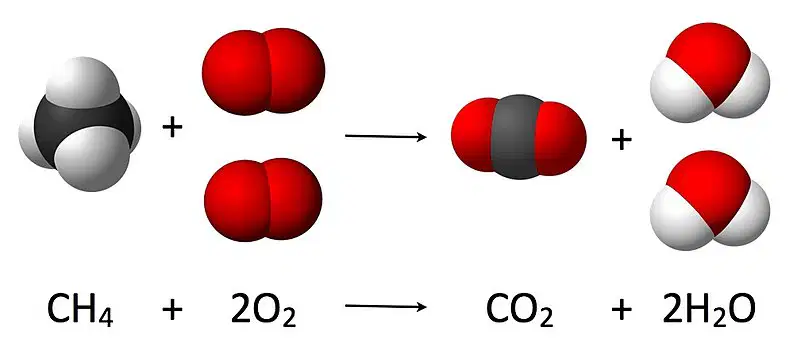
In the equation shown, what are the reactant(s)?
a)
CH4 + 2O2
b)
CO2 + 2H20
15.
Reactants are ___
a)
on the right side of the equation
b)
substances at the end of a reaction
c)
substances at the beginning of a reaction
d)
a base
16.
Products are ___
a)
on the left side of the equation
b)
substances at the end of a reaction
c)
substances at the beginning of a reaction
d)
a base
100 %

