
 Worksheets
5th Grade STAAR Review
Total questions: 137
Worksheet time: 3hrs 6mins

What most likely happened to the dead plants and animals?
They were eaten by scavengers.
They were washed away by water.
They became fossil fuels.
They became an underground aquifer.

A student places 250 g samples of clay, sand, gravel, and silt in separate flower pots. The pots are set on a wire rack, and dishes are placed beneath the pots so that water can drip through holes and collect. The student then pours 100 mL of water over the sample in each pot. The student measures the time it takes for water to begin dripping from the bottom of each pot.What property of soils is the student most likely examining with this procedure?
The amount of time it takes different soils to dry
How well different soils retain water
How much water is needed to dissolve different soils
The differences in texture between wet and dry soils
Which of these describes one or more living organisms that depend on another living organism to survive?
Bacteria living in the mouth of a horse
Ivy plants growing up a fence to obtain more sunlight
Mold living on a hard, rocky surface
An angelfish releasing carbon dioxide into pond water

Which statement correctly describes the transfer of energy in a food chain in this wetland?
Energy is transferred from hawks to shrews to grasshoppers to marsh grasses.
Energy is transferred from marsh grasses to crickets to hawks to frogs.
Energy is transferred from grasshoppers to crickets to frogs to hawks.
Energy is transferred from cattails to crickets to shrews to hawks.
A bright-red male cardinal comes to a school bird feeder every morning. Like other cardinals, this bird makes a sharp chirping sound as it hops around the bird feeder. Which of these is a learned behavior of this bird?
Having red feathers
Eating seeds during the day
Coming to the bird feeder each morning
Making a chirping sound

Some students are feeding a crab in an aquarium. They use tongs to place the food directly in front of the crab. The students look through the side of the aquarium. They notice that the image of the tongs appears to break as the tongs enter the water. Which property of light are the students observing in this situation?
Light can be refracted and separated into different colors as it moves from air to a different medium.
Light is refracted as it moves from one medium to another medium.
Light travels in a straight line and can be reflected off the surface of water
Light is absorbed by water and reflected off glass.

The abalone is a type of sea snail. Adult abalones slowly crawl over rocks near the shore, while larvae float in the water. Which organisms have a life cycle that is most like that of abalones?
Frogs
Humans
Snakes
Birds


The Grand Canyon is more than 400 km long and in some places almost 2 km deep. Which model best represents the main process that formed the Grand Canyon?


The leaves of two types of plants that live in different environments are shown in the pictures. The leaves of both plants have different structures. What differences in the structure of the leaves of these plants likely help them survive in their environments?
The pan-like shape of the giant water lily leaves helps them catch rainwater. The slim shape of the mesquite leaves helps them avoid sunlight
The broad shape of the giant water lily leaves helps them stay on the water surface. The slim shape of the mesquite leaves helps them prevent water loss.
The pan-like shape of the giant water lily leaves helps them attract small fish. The slim shape of the mesquite leaves helps them avoid herbivores
The broad shape of the giant water lily leaves helps them attract aquatic birds. The slim shape of the mesquite leaves helps them attract pollinators.
A family takes a group picture in a park where bluebonnets are blooming. The family notices that some of the blooms are white and others are blue. The color of the blooms is most likely determined by —
inheritance from parent plants
the age of the plant
the types of consumers that eat the plant
air temperature

travels in straight lines and reflects from the surface of the mirror
enters the mirror and changes direction when it is refracted by the back of the mirror
refracts in the glass of the mirror and is spread out all over the room
travels through air and does not change its direction in air
A family was vacationing in the mountains in a cabin that had no electrical power. They needed boiling water in order to prepare dried soup mix. With no electrical energy available, which method would most likely provide enough thermal energy to quickly heat the water to boiling?
Using a microwave oven to heat water in a glass jar for 3 minutes
Shining a battery-powered flashlight on a metal container of water for 10 minutes
Placing a metal pot of water over glowing charcoal in an outdoor grill for 10 minutes
Shaking the water in a closed, insulated plastic bottle for 3 minutes

The picture below shows a cumulonimbus cloud forming over an ocean. Which statement best explains how the sun and the ocean interact to form a cumulonimbus cloud?
Heat from the sun causes clouds in the area to gather over the ocean and form one large cumulonimbus cloud.
Heat from the sun warms the ocean, causing water to evaporate. The water vapor then condenses to form a cumulonimbus cloud.
Light from the sun shines on the ocean, causing water vapor to condense. The water then evaporates to form a cumulonimbus cloud.
Light from the sun causes ocean water to reflect water vapor into the air and gather over the ocean into a cumulonimbus cloud.


Aquatic plants have adaptations that help them live in water. For example, the structures needed for making food are located on the tops of floating plant leaves. This adaptation helps the plants —
absorb sunlight
capture fish
stay anchored
avoid predators

Dry, rocky mountains
Forests of pine trees
Tall, spiny cacti
Lakes and rivers
Which statement best describes the processes of weathering and erosion?
Weathering and erosion are directly responsible for depositing loose sediments on the bottom of the ocean, forming layers of sediment.
Weathering and erosion are directly responsible for the breakdown of any type of rock into smaller particles and the carrying away of the loose sediments.
Weathering and erosion are directly responsible for the amount of water in a river that transports sediments to the sea.
Weathering and erosion are directly responsible for the transportation, deposition, and compaction of loose sediments on the seafloor.

The diagram shows a view of a ball from above a table. The ball is rolling across the table. A student lightly taps the rolling ball in the direction shown in the picture. In which direction does the ball most likely move after the student taps the ball? (3.6B)


The picture shows a pulley system that can be used to lift a box. Which of these should a person do to lift the box? (3.6B)
Tie the end of the rope to the box
Tie the end of the rope to the ceiling hook
Pull the end of the rope downward
Allow the end of the rope to move upward

Four students stand facing a box. The diagram below shows an overhead view of the box. The numbered circles represent the positions of the students. What do the students need to do to slide the box to the northeast? (3.6B)
Students 1 and 2 push, and Students 3 and 4 pull.
Students 1 and 4 push, and Students 2 and 3 pull.
Students 2 and 3 push, and Students 1 and 4 pull.
Students 3 and 4 push, and Students 1 and 2 pull.

Two students are playing on a swing set. Student 1 is leaning back and extending her legs as she moves upward. Student 2 is sitting on the swing with his feet on the ground. Which statement describes how position and work are related in this picture? (3.6B)
Both students are doing work even if only one student is changing position.
Student 1 is changing position because work is being done on the swing.
Work done by Earth's gravity prevents Student 2 from changing position.
Work is being done on both students by the swings because one swing is changing position.

The two pictures show part of an investigation. A magnet, a book, and a paper clip are on a sheet of lined paper. In Picture 1 a student slides a magnet closer to the book. The student holds the book still in both pictures. Which statement about this investigation can be supported by the result shown? (3.6B)
Work was done on the magnet, the book, and the paper clip.
Work was done on the magnet and the paper clip only.
Work was done on the magnet and the book only.
Work was done on the magnet only.

The picture shows an athlete hitting a ball with a tennis racquet. What is the athlete demonstrating in the picture? (3.6B)
Doing work by pushing the ball and changing its motion and position
Changing the position but not the motion of the ball
Doing work by pulling the racquet and changing the ball's position but not its motion
Changing the position and motion of the ball without doing any work

A rubbing force that opposes motion between two surfaces that are in contact. Rough surfaces have more friction and smooth surfaces have less friction
friction
magnetism
gravity
motion

The force of attraction or repulsion of magnetic materials
variables
motion
experiment
magnetism

A force that PULLS objects toward each other
gravity
magnetism
motion
resistance
Students launch air rockets in their science class. Air pressure from a hand pump causes the rockets to rise into the sky. What force causes them to return toward the ground?
Wind pushing up
Pull of Earth’s gravity
Heat from the Sun
Magnetic north pole
Which of these objects would be attracted to a magnet?
Iron nail
Wooden Pencil
Rubber band
Plastic ruler
What is the downward force that pulls objects to Earth?
Magnetism
Air pressure
Electricity
Gravity
A student wants to show how the force of gravity can move a book. Which of the following would best show how gravity can move a book?
Sliding a book across the table
Dropping a book onto the floor
Carrying a book to a bookshelf
Turning the book face down

A
B
C
D

What force makes the needle of a compass point north?
Magnetism
Electricity
Friction
Gravity
Which movement is the result of gravity?
A wheel turning
A knife cutting bread
An electric fan blowing air
A raindrop falling to the ground

A student placed two magnets on the table. If the student slowly pushes Magnet 1 in the direction of the arrow, then which of the following actions will Magnet 2 perform?
Move closer to Magnet 1
Move away from Magnet 1
Not move until Magnet 1 touches it
Get stronger as Magnet 1 gets closer

A student rolled an iron ball down a ramp with a strong magnet near the bottom. Which of the arrows shows the path the ball will most likely follow?


How did the delta at the end of the Rio Grande form?
(a)

Several layers of sedimentary rock are illustrated. They are in the same order as when they first formed. Which layer formed first?
Rock Layer W
Rock Layer X
Rock Layer Y
Rock Layer Z
What changes buried organic matter into fossil fuels?
Industrial pollution
Ocean currents
Volcanic activity
Heat and pressure

Which number in the flow chart is NOT correct in describing the formation of sedimentary rock?
Number 1
Number 2
Number 3
Number 4

Which answer choice best explains how sedimentary rock becomes exposed over the years?
from weathering and erosion
from a hurricane
from a tsunami
none of the above
Which example is like the process that leads to the formation of sedimentary rock?
Blowing through a straw to move sand
Putting three layers of clay on top of each other and pressing down on them with a force
Crumbling a cookie
Shaking a jar filled with rocks

delta
canyon
cave
sand dune
Look at the images. Which image shows a process that would change Earth's surface at the slowest rate?


Which of the following processes is not considered a rapid change to Earth's surface?
volcanic eruption
earthquake
landslide
weathering
Look at the pictures. Which feature was probably formed through water erosion?


rapid moving water
a hurricane
burrowing animals
volcanic activity
Erosion is most often caused by —
air pressure
precipitation
temperature changes
humidity

Look at the illustration. What process is occurring at point B?
erosion
deposition
deflation
abrasion

The process in which rock is broken down into
smaller pieces is –
erosion
weathering
deposition
compaction
When water enters the cracks in a large rock and freezes, the water expands. Over time, water freezing and thawing –
erodes the large rock through a river
weathers the rock into sediments
deposits lava in a new place
changes the rock into a glacier

Both are formed by the movement of glaciers.
Both are formed by water eroding sediments.
Both are formed by wind weathering rocks.
Both are formed by deposition of sediments.
Which pair of landforms are the result of the same agent of change?
a canyon and a v shaped valley
a u shaped valley and delta
a sand dune and cave
a delta and sand dune

a slow moving glacier
a thunderstorm
heavy winds
moving water


What are the 3 basic components of a circuit?
Energy source, Load, Energy Pathway
Battery, Energy source, Energy Pathway
Battery, Wire, Energy Pathway
ALL of them

What type of circuit is shown?
Parallel
Series
Open

What is the power source in this circuit?
Bulb
Switch
Wire
Battery

Students wanted to know how a bell could ring with the push of a button. The circuit is designed to change electrical energy into what other type of energy?
chemical
heat
light
sound

Why electrical wiring usually are covered with a layer of plastic?
To make it look pretty
To help electricity flow along the wire
To make it safe
To add more energy

Why is electrical wiring usually made from copper?
Because copper is shiny
Because copper conducts electricity
Because copper is not magnetic
Because copper insulate electricity

What is a circuit with several paths for electricity to flow?
conductor
series circuit
parallel circuit
open circuit

To complete the circuit, a wire should be placed from —


When the lamp produces light, it demonstrates that the lamp must have a –


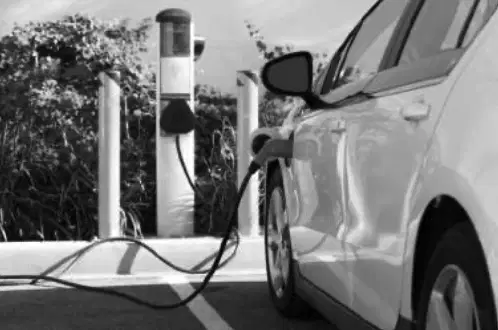
The image shows an electric car charging. An electric car is powered by energy stored in batteries rather than gasoline. Four students each made a table with examples of different forms of energy related to an electric car. Which table is correct?


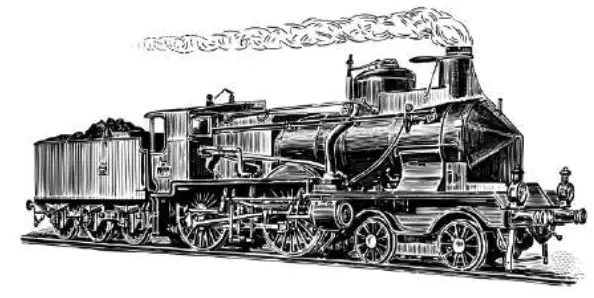
Steam trains became popular about 200 years ago. They burned coal to produce steam. Then, The steam moved the gears and wheels of the train.
Four students each made a table with examples of different forms of energy related to a steam train. Which table is correct?


Four students each made a table with examples of how energy is used. Which table is correct?


Adding thermal (heat) energy to matter can cause matter to change its physical state. When you remove a popsicle from the freezer, it is exposed to heat and begins to melt.
When water is brought to a boil on the stove, thermal energy causes the water to change from liquid water to a gas called water vapor. The change from liquid to gas is called evaporation.
How might an ice cube change from a solid to a liquid?
Thermal energy causes the water to evaporate.
Thermal energy melts the ice cube into liquid water.
Thermal energy causes liquid water to evaporate.
Thermal energy freezes liquid water into an ice cube.
Choose the three examples that describe the use of mechanical energy.
a bird's wings flapping
a cedar tree absorbing sunlight
using a wheelbarrow to move heavy rocks
spinning blades on a fan
an alarm clock playing a song
Thermal energy is heat energy. It is transferred from warmer matter to cooler matter. It can be used to cook food, provide warmth, and produce electricity.
Which of the following does NOT describe a use of thermal energy?
Thermal energy from the sun causes the water from the ocean to evaporate.
Thermal energy from an iron straightens wrinkles in a shirt.
Thermal energy from a fan cools down a classroom.
Thermal energy on a stove boils water.

A student used a toaster to make his breakfast. He plugged in the toaster, put the bread in the toaster, and pushed the lever down. The heating elements toasted the bread. When the toast was done, a spring popped up the trays of toast.
What kinds of energy were used by this toaster?
Electrical and light
Light, thermal, and mechanical
Electrical and sound
Thermal, electrical, and mechanical
Which of these devices uses both electrical and mechanical energy to perform its main function?


Solar panels and wind turbines are forms of alternative energy that help reduce people’s reliance on fossil fuels. What types of energy do they each use to produce electricity?
Solar panels use light energy. Wind turbines use electrical energy.
Both solar panels and wind turbines use thermal energy.
Solar panels use light energy. Wind turbines use mechanical energy.
Solar panels use thermal energy. Wind turbines use electrical energy.
A student recorded the time it took for all the water in a puddle on a sidewalk to evaporate after a rain. Which kind of energy causes water to evaporate?
Light energy from streetlights
Sounds energy from passing cars
Thermal energy from the environment
Mechanical energy from nearby streets
A student plugs a hot plate into an outlet and turns on the hot plate to melt the ice. Complete the example to identify another object that used the same source of energy as the hot plate.
Drag and drop the correct answer in each box.
(a) using (b) energy.

The slingshot below is made with wood and a rubber band. When a ball is placed in the slingshot and the rubber band is pulled, it forces the ball outward. Which kind of energy is produced by pulling the rubber band back?
Mechanical
Thermal
Electrical
All of these
A campfire, fireworks, and a burning candle all produce which forms of energy?
Select TWO correct answers.
Mechanical Energy
Thermal energy
Light energy
Solar energy
Electrical energy
When a lamp is plugged in and turned on it converts ____ energy to _____ energy.
mechanical to light
electrical to sound
electrical to light

A student made a list of activities that involve energy. Each of these activities requires the use of what type of energy?
thermal
sound
electrical
mechanical
A hair dryer is plugged into a wall. Inside the hair dryer, a wire coil is heated and a small motor blows hot air out of the hair dryer. Inside the hair dryer, electrical energy is changed into —
mechanical energy only
sound energy only
electrical energy and thermal energy
thermal energy and mechanical energy
Which forms of energy are important to have present when watching television?
Sound, thermal, and light
Electrical and sound
Electrical, light, and sound
Thermal and light

Humans often use fans to stay cool. The rotation of the fan blades is
an example of what type of energy?
Sound
Thermal
Mechanical
Electrical

What is the energy source for the solar panel shown in the image below?
Sound
Mechanical
Thermal
Light
Which of the following is an example of the use of sound energy?
A bat using echolocation to find its prey
Blades on a wind turbine spinning
A campfire heating marshmallows
A power plant burning coal for power
Both falcons and bats hunt for their food. Falcons use mainly their
eyes and bats use mainly their ears to locate prey.
Which form of energy does each predator mainly use for locating
their prey?
Bat: light
Falcon: thermal
Bat: sound
Falcon: light
Bat: solar
Falcon: sound
Bat: thermal
Falcon: electrical

A toy car is shown. Which types of energy are used to make this toy car move?
Light, electrical, and mechanical
Mechanical, thermal, and chemical
Light, chemical, and sound
Thermal, electrical, and sound

Which elements in the image demonstrate the use of ONLY mechanical energy?
Select THREE correct answers.
A
B
D
E
F

Which examples show only mechanical energy being used to perform their functions?
1
2
3
4
6

A toy car is shown. Which forms of energy are used to make the car move? Click the three forms of energy.
Electrical
Thermal
Sound
Mechanical
Light
Which best describes an organisms niche?
The habitat of an organism
The consumers the organism eat
The job an animal has within its population
An organism that feeds on another organism?
Consumer
Decomposer
Producer
Organism
A simple organism that breaks down dead organisms and waste, returning important nutrients to the environment?
Organism
Decomposer
Consumer
Producer
All the members of a species living in a particular area?
Producer
Consumer
Population
Community
An organism that makes its own food?
Organism
Decomposer
Predator
Producer
An _______ is a community of living and non-living components in an environment.
Environment
Ecosystem
Population
Community
_______ are consumers that eat only meat.
Herbivore
Carnivore
Omnivore
Producers
Which organism makes its own food through the process of photosynthesis?
Decomposer
Herbivore
Producer
Consumer
Which describes a decomposer?
An organism that eats only plants
An organism that makes its own food
An organism that breaks down dead matter
An organism that receives energy for the sun
An animal that naturally preys on another animal is called a ________?
Herbivore
Predator
Prey
Producer
An animal that is hunted and killed by another for food is called a ______?
Predator
Prey
Decomposer
Hunter
Where do plants get their energy from?
The moon
The Sun
Worms
Clouds
The process in which plants use energy from the sun to make their own food is?
Respiration
Condensation
Photosynthesis
Diversity
What gas is released by plants during photosynthesis?
Hydrogen
Carbon dioxide
Oxygen
Sulfur
What is the gas we breathe out that plants use for photosynthesis?
Oxygen
Hot Dry Air
Carbon dioxide
Hydrogen
Which is an example of a producer?
A spider
A catepillar
A tree
Which shows how energy flows from one organism to another?
A food cycle
A prey chain
A predator cylce
A food chain
When organisms need the same limited resources, there is ______?
An extra resource
Sharing
Divirisity
Competition
Which is an example of an abiotic factor in a desert?
The sun
A scorpion
A cactus
A snake
Which is an example of a biotic factor in a desert?
Minerals
The sun
A snake
Soil



