
NEW
Font size
 Worksheets
SELECTION & SPECIATION
Total questions: 25
Worksheet time: 13mins

What is the main difference between a post-zygotic barrier and a pre-zygotic barrier?
all Post-zygotic barriers lead to Allopatric speciation
all Pre-zygotic barriers lead to Sympatric speciation
Fertilization of egg and sperm have occured with post-zygotic barriers
Fertilization of egg and sperm have occured in pre-zygotic barriers
One population of flies mates early in the morning while another mates in the evening. The populations are morphologically similar and each utilize the same resources.
Which reproductive barrier is best shown here?
Temporal isolation
Gametic isolation
Habitat isolation
Mechanical isolation
A small population of peacocks colonizes an isolated island. No peacocks existed on the island before this population arrived.
Which mechanism of evolution does this scenario describe?
Mutation
Genetic drift
Natural selection
Sexual selection
A pollen grain from one population is blown to the area of another population where it lands on the pistil of a flower, fertilizing it. What is this an example of?
Natural selection
Migration
Bottleneck effect
Founder effect
What are the three types of natural selection?
Random selection, uniform selection, and extreme selection
Directional selection, stabilizing selection, and disruptive selection
Adaptive selection, non-adaptive selection, and neutral selection
Gradual selection, sudden selection, and partial selection
What are the effects of genetic drift on a population?
Increase in genetic variation, decrease in inbreeding, and increase in allele frequencies
Effects of genetic drift on a population include loss of genetic variation, increase in inbreeding, and random changes in allele frequencies.
Decrease in inbreeding, loss of genetic variation, and decrease in allele frequencies
No effect on genetic variation, decrease in inbreeding, and random changes in allele frequencies
Bottleneck Effect can happen due to
a natural disaster, like a forest fire or a flood.
a small group leaves the main population and starts a colony somewhere new, like an island.
allele frequency happens due to natural selection
The Founder Effect happens when
a chance disaster occurs that kills randomly kills some of the population.
a small group leaves their main population and starts a new population in a new area, like an island.
changes in allele frequency occur due to natural selection
Orcas occur in the same habitat but some are avoiding each other and do not interbreed. They have different diets, vocal behavior, and social structures. What type of speciation is this?
Allopatric
Sympatric
Complex
Covergent
2. What is the mechanism that can cause sympatric speciation?
Reproductive isolation
Polyploidy
Extrinsic isolation
Geographical isolation

Artificial selection is also known as
natural selection
selective hearing
genetic manipulation
selective breeding
What is an example of artificial selection?
Letting dogs choose their own mate
Letting plants pollinate on their own
Crossing a labrador and a poodle to create a labradoodle
Which statement is true comparing natural selection and artificial selection?
In natural selection, traits benefit humans and in artificial selection, the traits benefit the species
In natural selection, traits benefit the species and in artificial selection, the traits benefit humans
In natural and artificial selection, the process takes hundreds of years to occur
In natural and artificial selection, nature determines what traits will be passed down to offspring.
The process of choosing parent organisms for desired characteristics is called
natural selection
Artificial selection
random selection
genetic manipulation
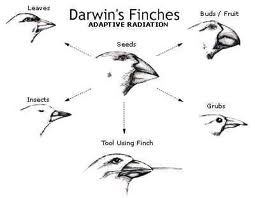
Change in a kind of organism over time; process by which modern organisms have descended from ancient organisms.
Extinction
Genetic variation
Natural Resources
Evolution
A speciation in which new species evolve from a single ancestral species while inhabiting the SAME geographic region.
Sympatric speciation
Allopatric speciation
Complex speciation
Divergent speciation

When the Grand Canyon in Arizona formed, two populations of one squirrel species were separated by the giant canyon. This is an example of _____________ speciation.
Allopatric
Sympatric
Simple
Divergent
What is natural selection?
inherited characteristic that increases chances of survival
organisms with traits well suited to their environment survive and reproduce at a greater rate
a growing population causes a scarcity of resources
differences in the DNA sequence

