
Font size
 Worksheets
Cyclones
Total questions: 75
Worksheet time: 43mins
What is the strongest category of hurricane on the Saffir-Simpson Scale?
Category 5
Category 10
Category 1
Tropical cyclone characteristics:
Very high pressure
Very low pressure
A large rotating storm
They are usually 10-15 metres in diameter
What is the critical wind speed (km/hour) for a tropical storm to be classified as a tropical cyclone?
209
250
119
74
The location of tropical cyclones
Select the correct option(s)
Between 5 and 30 degrees north and south of the Equator
Areas immediately around the Equator
In temperate latitudes
The Caribbean Sea

In which direction do tropical cyclones rotate in the Northern Hemisphere?
Clockwise
Anticlockwise
They do not rotate
Backwards
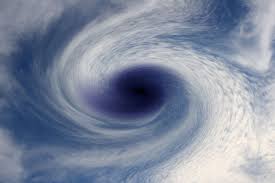
What is the calm area in the centre of a tropical cyclone called?
Wall
Eye
Void
Hole

Where are the strongest winds and heaviest rains in a tropical cyclone located?
In the eyewall
In the outer bands
On the leading edge
In the eye
The eye of a tropical cyclone is dry and calm because it is the only places for kilometres around where the air is...
rising
sinking
converging
rotating
Tropical cyclone formation
High temperatures in the tropics cause air to ________ away from the ocean surface.
Sink
Rise
Fall
Tropical cyclone formation
Sometimes tropical storms converge. This creates a flow of rapidly rising air, producing an area of extreme ________ pressure
High
Low
Warm
Cold
Tropical cyclone formation
In order for tropical storms to converge fully into a tropical cyclone, several trigger conditions need to be present:
A source of warm, dry air
A source of warm, moist air
Winds converging at the ocean surface, causing air to rise
Winds converging at the ocean surface, causing air to sink
Tropical cyclone formation
In order for tropical storms to converge fully into a tropical cyclone, several trigger conditions need to be present:
Warm ocean temperatures at or above 27oC
Warm ocean temperatures at or above 17oC
Formation some distance from the Equator so the Coriolis force will cause the storm to rotate
Formation at the Equator so the Coriolis force will cause the storm to rotate
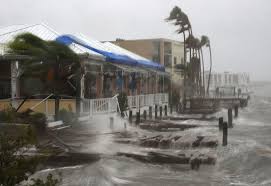
What happens as a tropical cyclone moves further inland?
It speeds up and gets stronger
It turns around and goes back to sea
It slows down and gets weaker
It turns into a tornado
The name given to the route taken by a tropical cyclone:
Path
Road
Track
Journey
The track of the tropical cyclone affects how strong it becomes.
The further it travels over _____________ the more heat and moisture it collects.
the Equator
the land
the ocean
the Tropics
The track of a tropical cyclone is determined by...
prevailing winds
the polar jet stream
incoming solar radiation
surface ocean currents
Tropical cyclones have different names around the world.
In the western Pacific Ocean they are known as...
cyclones
hurricanes
typhoons
depressions
Tropical cyclones have different names around the world.
In the Caribbean Sea and North Atlantic Ocean they are known as...
cyclones
hurricanes
typhoons
depressions
The tropical cyclone season in the northern tropics:
All year round
There is no season
November to April
June to November
The tropical cyclone season in the southern tropics:
All year round
There is no season
November to April
June to November
Typical dimensions of a tropical cyclone:
40 km wide and 1 km high
400 km wide and 10 km high
10 km wide and 400 km high
100 km wide and 40 metres high
Hazards associated with tropical cyclones:
High winds
Earthquakes
Storm surge
Intense rainfall
Volcanic eruptions
Impacts of tropical cyclones - high winds
High winds can cause...
trees to be uprooted
landslides
the movement of beach huts and sheds
earthquakes
Impacts of tropical cyclones - intense rainfall
Intense rainfall can cause...
landslides
flooding
dangerous, fast flowing water
earthquakes
Impacts of tropical cyclones - storm surges
For storm surges to form they require...
high winds
a large area of high pressure over the sea
a large area of low pressure over the sea
earthquakes
Impacts of tropical cyclones - storm surges
Storm surges can cause...
the contamination of farmland
the erosion of beaches
the destruction of coastal habitats
earthquakes
Impacts of tropical cyclones - coastal flooding
Coastal flooding can cause...
the contamination of farmland
earthquakes
deforestation
the destruction of coastal defences
Impacts of tropical cyclones - landslides
Landslides can cause...
the blockage of river channels
earthquakes
deforestation
the blockage of roads and railways
Impacts of tropical cyclones - landslides
These factors increase the risk of landslides:
Intense rainfall
Steep slopes
Slopes with a gentle gradient
Deforestation
The probable level of damage a tropical cyclone will cause if it reaches land is determined based on...
air temperature
amount of rainfall
wind speed
sea temperature
The Saffir-Simpson scale is used to categorise tropical cyclones.
Which of the following is the most important measurement used when deciding the category of a tropical cyclone?
The length of time that the tropical cyclone lasts
The wind speed in the tropical cyclone
The dimensions of the tropical cyclone
The height of the storm clouds
Which of the following is NOT a location where tropical storms form?
Atlantic Ocean
Indian Ocean
Pacific Ocean
Southern Ocean
What is the missing word: "Tropical storms are huge and (a) storms that form in the Tropics."

What is the feature marked with a red arrow?
The eye
Thunderhead
Storm surge
Heavy rainfall
Tropical storms have other names around the world. Tick all those that are correct.
Cyclones
Hurricanes
Typhoons
Willy Willys
Megastorm
True or false: the Tropic of Cancer is in the Northern Hemisphere, 23 degrees north of the Equator
True
False
There are 3 climatic zones on Earth: the tropical zone, the temperate zone and the (a) zone.
Which of the following are descriptive words you could use to describe a tropical storm? Tick the four that apply.
Dry
Torrential
Gusts
Towering
Spinning
True or false: tropical storms form over cool water
True
False
Tropical storms form in low or high pressure systems?
Low pressure
High pressure
Which of the following does NOT occur in tropical storms?
Strong winds
Heavy rainfall
Coastal flooding from the sea
Heavy snowfall
What evidence is there of climate change? Select the correct answers.
Rising sea levels.
Glacial retreat.
Falling global temperatures.
Decreasing snow and ice cover.
How do scientist know what the climate was like in the past? Select all the correct answers.
They monitor ice cores.
They monitor ocean sediments.
The observe / research paintings and diaries from the past.
They monitor current weather.
Which of the following are natural cause of climate change?
Changes in solar output.
Increasing use of transport such are cars, ships and planes.
Increasing energy consumption from fossil fuels.
Volcanic activity.
One of the natural causes that leads to climate change is orbital changes, but roughly how long does it take the Earth's orbit to change from a circular path to an elliptical path?
100 years
10,000 years
100,000 years
1 million years
Identify 3 current causes of climate change.
Orbital changes
Changes in solar output
Increased cattle
Burning of fossil fuels
Deforestation
Select the sources of methane.
Cattle
Landfilling of organic material
Burning fossil fuels
Growing of rice
What is the greenhouse effect?
The loss of heat in the atmosphere caused by the build-up of greenhouse gases.
The retention of heat in the atmosphere caused by the build-up of greenhouse gases.
The reflection of the suns radiation caused by the build-up of greenhouse gases.
What are the social effects of climate change?
Creation of environmental refugees
Increased health risks such as heat stroke in the UK.
Increased forest fires.
Rising sea temperatures.
Increased famine in areas that are too hot and dry to grow food.
What are the economic consequences of climate change?
Increased tropical diseases such as malaria.
Increased spending on coastal defences to protect from rising sea levels.
Loss of income from agriculture in some regions which become too dry.
Loss of coral reefs.
Shorter skiing seasons leads to a loss in tourism for some areas.
How can we adapt to climate change?
Carbon Capture and Storage.
Reduce dependence on fossil fuels.
Plant alternative crops that will suit climate changes.
Manage current water supplies more effectively.
Build sea defences to cope with the expected sea level rises.
How can you mitigate the effects of climate change (reduce the amount of carbon dioxide in the atmosphere)?
Carbon Capture and Storage.
Invest in renewable energy.
Change the types of crops grown in a given area.
Manage water more effectively.
Plant more trees.
How will the UK be affected by climate change?
Flooding due to rising sea levels.
Flooding due to increased intense rainfall events.
Increased heatwaves.
Melting glaciers.
Loss of tropical rainforests.
Why are humans to blame for the current climate crisis?
Dependency on fossil fuels.
Deforestation.
Increased consumption of goods.
Throw-away culture leading to increased consumption.
Increased use of renewable energy.
Some argue that climate change is a natural process as the climate has fluctuated throughout the quaternary period. But what are the natural factors that have led to changes in our climate in the past?
Increased use of fossil fuels.
More cows.
Orbital changes.
Volcanic activity
Changes in solar output.
The quaternary period is the name given to the last......
26,000 years
26 years
2.6 million years
260 million years
What is wind?
Large scale movement of air caused by differences in air pressure
Large scale movement of CO2 caused by differences in air pressure
Large scale movement of air caused by differences in temperature
Large scale movement of temperature caused by differences in air pressure
Differences in air pressure are caused by...?
Differences in the earths rotation
Differences in temperature
Differences in rainfall
Differences in sea level
Winds move from...
high pressure to low pressure
low pressure to high pressure
Warm air...
sinks
rises
Cold air ...
sinks
rises
Where experiences warm temperatures with clouds and rain?
The equator
The sub-tropical highs
The sub-polar lows
The polar highs
What weather is caused by low pressure?
Clouds and rain
Clear skies
True or false - warm air rises, cools and condenses and forms clouds, this is called low pressure
True
False
Cool air sinks at the sub-tropical highs, what does this lead to? SELECT TWO
Deserts
Cloudless skies and low rainfall
Tropical rainforests
Clouds and rainfall
What are trade winds?
Surface winds blowing towards the equator
Atmospheric winds
Winds blowing away from the equator
Low pressure winds
Surface winds blowing towards the poles are called ...
westerlies
easterlies
southerlies
northerlies
Why has the UK got cloudy and wet weather?
It is located at the sub-polar low
It has a lot of mountains
It is located in an area of high pressure
It is located in the middle of an air mass
Why is it hot and dry at sub-tropical highs?
Cold air sinking, no clouds can form
Warm air sinking, no clouds can form
Cold air rising
Warm air rising
Objects in the NORTHERN Hemisphere deflect to which direction due to the Coriolis Effect?
Left
Up
Down
Right
Objects in the SOUTHERN Hemisphere deflect to which direction due to the Coriolis Effect?
Left
Up
Down
Right

