
 Worksheets
European Exploration Review
Total questions: 38
Worksheet time: 33mins
Which of the following explorers was NOT sponsored by Spain?
Hernando de Soto
John Cabot
Christopher Columbus
Vasco Nunez de Balboa
Why did many explorers look for a “Northwest Passage”?
to find a quicker route to Asia
to search for the coldest climate
to claim land for their country
to find gold
What was one reason that many Spanish explorers traveled to North America?
They wanted to spread Christianity to people who lived in the area.
They wanted to visit places they read about in their holy books.
They wanted to learn about the religions of American Indians.
They wanted to find a place to practice their religions freely.
Why was it difficult for early European explorers, such as John Cabot and Christopher Columbus, to plan their journeys to the Americas?
They did not have maps that could show them where to go.
They had to pay for their ships and supplies by themselves.
They did not have the skills needed to find food on their voyages.
They could not build big enough ships to hold all of their supplies.
Which of the following is an example of “mercantilism” by an explorer.
Balboa claimed the Pacific Ocean for Spain; Spain sent more boats to explore the ocean
De Soto stole jewelry from American Indians; De Soto made their own jewelry
Columbus was one of the first explorers; Columbus made maps for future explorers
Cartier took furs back to France; France used the furs to make coats and scarfs
Did Columbus meet the goals set out for his voyage by the king and queen? Why or why not?
Yes, because he found land that was good for farming.
Yes, because he traded furs with American Indians.
No, because he did not find a sea route to Asia.
No, because he did not find any oil or coal.
Which of the following explorers was sponsored by France?
John Cabot
Henry Hudson
Jacques Cartier
Hernando de Soto
Who were the first indigenous people Columbus encountered on his first exploration?
The Cherokee
The Creek
The Sandorian
The Taino
Why was Hernando de Soto considered a “conquistador”?
He named rivers to honor Spain during this exploration.
He helped American Indians make weapons during his exploration.
He created peace treaties with American Indians on his exploration.
He killed many American Indians during his exploration.
What areas of the United States today did Hernando de Soto explore?
Northeast
Northwest
Southwest
Southeast
Which environmental challenges did Vasco de Balboa face on his expedition?
large glaciers
dense jungles
cold temperatures
desert sand storms
Based on your knowledge of Hernando de Soto’s exploration, what river did de Soto explore?
The Hudson River
The Colorado River
The Mississippi River
The St. Lawrence River
What did Vasco Núñez de Balboa accomplish during his exploration?
He became the first European to reach the Pacific Ocean.
He became the first European to explore South America.
He became the first European to reach the Atlantic Ocean.
He became the first European to explore North America.
How did John Cabot’s final voyage end?
He remained in North America to start a colony.
He and his crew vanished and were never found.
He was kicked off his boat when his crew mutinied.
He died and his crew buried him in the Hudson River.
What does it mean when a ship’s crew does a “mutiny”?
The crew leaves the ship and swims to the nearest shore.
The crew puts their resources together and helps the captain.
The crew disobeys the captain’s orders and takes over the ship.
The crew ignores the captain’s frequent request to clean the ship.
What current country was claimed for England by Henry Hudson?
Mexico
Canada
Panama
United States
Which of the following rivers did Jacques Cartier explore?
Ohio River
Hudson River
Mississippi River
St. Lawrence River
What was one accomplishment of Jacques Cartier’s exploration for France?
He discovered gold in what is today Canada.
He found the Northwest Passage to Asia.
He began the fur trade with American Indians.
He explored the Mississippi River.
How did the fur trade benefit both the French and the American Indians?
The French were better boat builders, so their boats helped American Indians find furs quicker and more easily.
The French taught American Indians to speak French and allowed them to attend their schools if they agreed to help them find furs.
American Indians captured furs for the French, and in exchange for the furs, the French gave them tools they could not make.
American Indians built traps that were less advanced than those the French used, so the French made better traps for the American Indians
Which of the following is one example of trade between the Spanish and American Indians?
The Spanish introduced buffalo to the American Indians.
The Spanish introduced clay to the American Indians.
The Spanish introduced the horse to the American Indians.
The Spanish introduced teepees to the American Indians.
Which of the following BEST explains the difference between why the Spanish explored the Americas and why the French explored them?
The Spanish wanted to start colonies, while the French wanted warriors to join their army.
The Spanish wanted to spread Christianity, while the French wanted to trade and make money.
The Spanish wanted to trade with American Indians, while the French wanted to start colonies.
The Spanish wanted to bring Natives back to Spain, while the French wanted to spread Christianity.
Which of the following is the BEST definition of “mercantilism”?
Bringing finished goods from one country to another
Making raw goods so they can be changed into finished goods
Receiving finished goods from another country instead of raw goods
Taking raw goods from an area and making them into finished goods

Which of the following explorers is being described in this quote?
Henry Hudson
John Cabot
Hernando de Soto
Vasco Núñez de Balboa
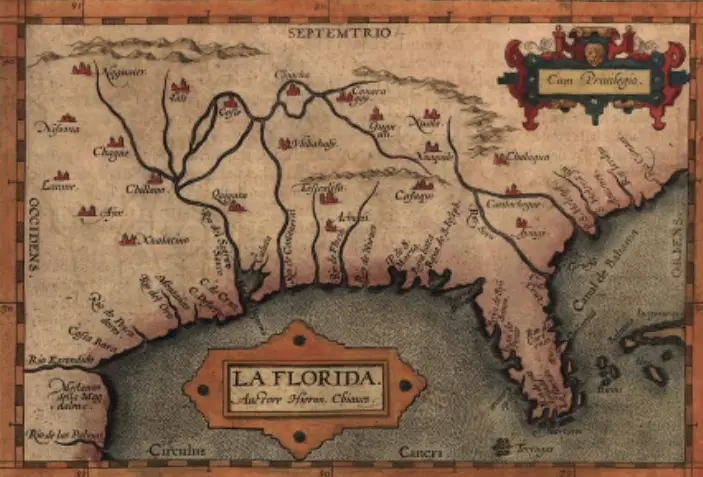
Which explorer would MOST LIKELY have made this map of the Southeast after his exploration?
Hernando de Soto
John Cabot
Vasco Núñez de Balboa
Henry Hudson

Which British explorer visited the area marked by an “X”?
Vasco Nunez de Balboa
John Cabot
Christopher Columbus
Hernando de Soto

Which explorer is MOST LIKELY being described in the quote?
John Cabot
Henry Hudson
Jacques Cartier
Hernando de Soto
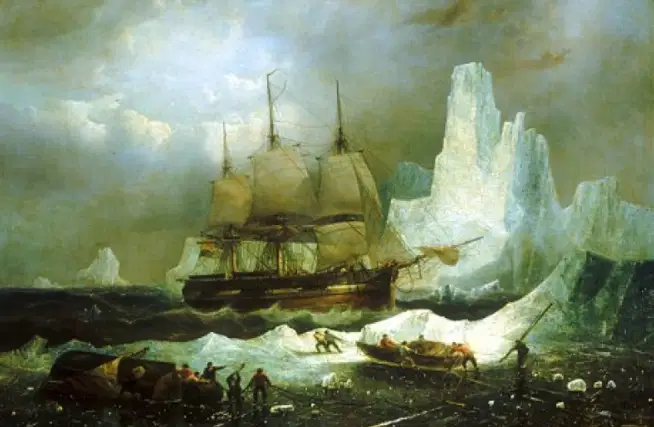
Which explorer MOST LIKELY encountered this obstacle on their voyage?
Vasco Núñez de Balboa
Christopher Columbus
Henry Hudson
Hernando de Soto
Which of the following was one goal of Christopher Columbus?
to give away land and food
to find a quicker route to Asia
to make friends with the Taino
to search for the coldest weather
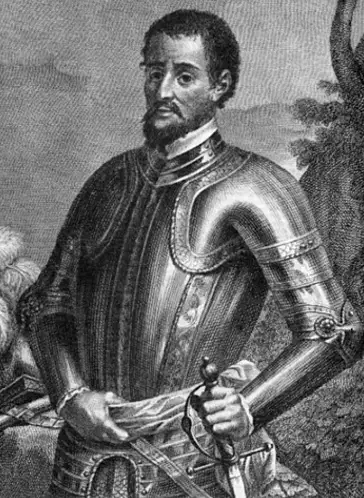
What is one advantage De Soto’s men had when fighting American Indians?
rock weapons
wood spears
metal armor
faster tanks
Why was Vasco de Balboa considered a “conquistador”?
He fought with many indigenous people to take their land.
He helped indigenous people build houses.
He created a language to communicate with indigenous people.
He shared food and supplies with indigenous people.
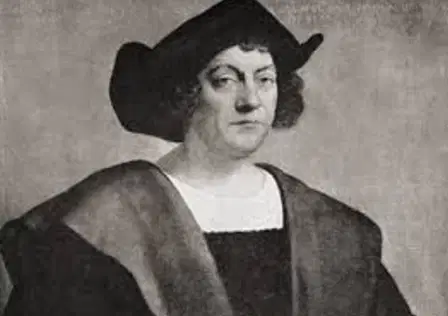
Which of the following BEST describes Christopher Columbus’ explorations?
He was able to reach the Pacific Ocean.
He was able to find a passage to Asia.
He was the first to claim land for Spain.
He was the first to explore the Mississippi River.
Why did some explorers call North America the “New World”?
Because the land and water there looked like a globe
Because the oceans had so many waves
Because the land was new to people in Europe
Because the gold found in the new land made people rich
If there were maps at the time, how might the voyage of Christopher Columbus have been different?
Christopher Columbus would have chosen a more skilled crew to travel with him.
He would have known that he was traveling to the Americas and not the East Indies.
The Taino people would have been prepared for the arrival of the explorers.
His crew would have treated the Taino people better when they arrived.
What did European explorers believe about land in North America?
They believed that land belonged to all people.
They believed that land was only good for farming.
They believed that land could not be owned.
They believed that land was not shared by all people.
Which of the following is an example of cooperation between explorers and Native tribes?
Native tribes made metal farming tools for the explorers
Explorers stole food from Native tribes.
Explorers took land from the Native tribes.
Native tribes taught explorers new farming techniques.
How were the obstacles of Cartier and Balboa different?
Cartier battled dense jungles, and Balboa faced harsh winters.
Cartier faced harsh winters, and Balboa battled dense jungles.
Cartier vanished during his voyage, and Balboa suffered through bad weather.
Cartier suffered through bad weather, and Balboa vanished during his voyage.
How did the fur trade with American Indians benefit the French?
The American Indians captured furs for the French.
The French became better boat builders.
The American Indians taught the French to make clothes.
The French learned to speak the language of American Indians.
How did the introduction of horses from the European explorers help the American Indians?
The horses helped American Indians find gold.
The horses helped American Indians hunt buffalo.
The horses helped conquistadors improve their farming.
The horses helped protect American Indians from diseases.

