
 Worksheets
Cell Review
Total questions: 15
Worksheet time: 11mins

The basic unit of structure and function in an organism is the . . .
Cell
Chloroplast
Lysosome

Organisms with cells that have a nucleus are called . . .
Archaea
Bacteria
Eukaryotes

This outermost layer protects and supports the cells of plants.
Cell Membrane
Cell Wall
Cytoplasm
This fluid in the cell is where the organelles are found. It contains water and chemicals the cell needs.
Blood
Cytoplasm
Plasma

What is the mitochondria?
The power house of a house
The power house of a cell
The main function of a cell

The organelle that relates to storage of water, food, and nutrients in a cell.
lysosome
vacuole
mitochondria

This cell structure controls everything that goes in and out of a cell:
cell wall
vacuole
cell membrane
The man who discovered and named the "cell":
Schleiden
Schwann
Hooke
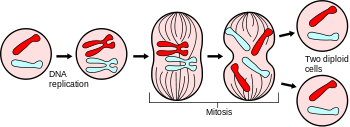
When cells are damaged, new cells are created by cell division. How does the cell theory explain this fact?
It states that all cells have a nucleus which divides.
It states that all living things are made up of one or more cells.
It states that cells come from previously existing cells.
It states that the basic units of structure and function are cells.
This organelle is responsible for removing waste and dead parts from the cell.
mitochondria
lysosome
vacuole
cell wall

Organisms whose cells do not have a nucleus are called . . .
Eukaryotes
Multicellular
Prokaryotes
Unicellular


These organelles in plants capture light energy and store it in glucose molecules to be used as food.
Chloroplasts
Mitochondria
Endoplasmic Reticulum
Vacuoles

An organism made of only one cell is called . . .
Eukaryotic
Monocellular
Multicellular
Unicellular

