Wayground logo

Free Printable Worksheets

Font size

S
M
L
XL
Worksheets

APWH 6.6 & 6.7 Reading Quiz

Total questions: 21

Worksheet time: 11mins

Name
Class
Date
1.
1. Economic imperialism was a system that helped __________________ businesses.
a)
A. Foreign
b)
B. Domestic
2.
2. The Dutch policy from 1835 - 1870 that forced Indonesians to either grow cash crops or participate in corvée labor (unpaid labor) was called the...
a)
A. Cash Crops System
b)
B. Agriculture System
c)
C. Culture System
3.
3. China was not interested in trading their silk, tea, and porcelain to Great Britain for British goods. As a result, what drug did Britain force India to grow so they could illegally sell it to Chinese citizens?
a)
A. Marijuana
b)
B. Cocaine
c)
C. Aspirin
d)
D. Opium
4.
4. True or False: One result of the 1st and 2nd Opium Wars was China being forced to open up their ports for Western trade
a)
True
b)
False
5.
5. True or False: The "Spheres of Influence" was a policy that allowed the United States exclusive trading rights with China.
a)
True
b)
False
6.
6. European imperial countries traded all of the following to their colonies in Africa for cash crops/raw materials EXCEPT:
a)
A. Alcohol
b)
B. Cotton textiles
c)
C. Guns
d)
D. Canned food
7.
7. What was Egypt's primary colonial export towards the end of the 19th century?
a)
A. Cotton
b)
B. Steel
c)
C. Enslaved people
d)
D. Ivory
8.
8. Though slavery was outlawed in British colonies in 1833, when was slavery in non-British colonies in Africa abolished by law?
a)
A. End of the 20th century
b)
B. First quarter of the 21st century
c)
C. Middle of the 21st century
d)
D. End of the 21st century
9.
9. This term describes Central American countries that were under the economic power of foreign based companies who specialized in exporting tropical fruits.
a)
A. Pineapple Democracies
b)
B. Pineapple Republics
c)
C. Banana Democracies
d)
D. Banana Republics
10.
10. True or False: The end of the Atlantic Slave Trade ended slavery around the world.
a)
True
b)
False
11.
11. Which country did Britain and its colonies ship their convicts to?
a)
A. Fiji
b)
B. Indonesia
c)
C. Australia
d)
D. India
12.
12. Chinese indentured servants contributed greatly to which of the following?
a)
A. U.S. Transcontinental Railroad
b)
B. U.S. Gold mining
c)
C. U.S. Coal Mining
13.
13. All of the following were reasons that Irish people emigrated from Ireland EXCEPT:
a)
A. Political Reasons
b)
B. Religious Freedom
c)
C. Famine
d)
D. Economic reasons related or organized crime
14.
14. True or False: The majority of British people emigrating to Argentina during the 19th century were emigrating to flea poverty and persecution.
a)
True
b)
False
15.

Which country did Britain and its colonies ship their convicts to?

a)

New Zealand

b)

Indonesia

c)

Australia

d)

India

16.

Chinese indentured servants contributed greatly to which of the following?

a)

U.S. Transcontinental Railroad

b)

U.S. Gold mining

c)

U.S. Coal Mining

d)

U.S. Steel making

17.

All of the following were reasons that Irish people emigrated from Ireland EXCEPT:

a)

Political Reasons such as wanting to be able to run their own country (not the English)

b)

Religious Freedom due to Catholic vs Protestant problems

c)

Famine due to the Potato Blight

d)

Economic reasons related or to begin/join organized crime

18.

True or False: The majority of British people emigrating to Argentina during the 19th century were emigrating to flee poverty and persecution.

a)
True
b)
False
19.

True or False: The intended purpose of transportation technology like railroads was to help the inhabitants of the colonized region?

a)
True
b)
False
20.

As described in the passage, Anna da Trindade’s life differed from the typical experience of newly arrived slaves in colonial Latin America in that she was

a)

transported to Brazil

b)

baptized as a Christian

c)

born in Africa

d)

able to purchase her freedom

21.

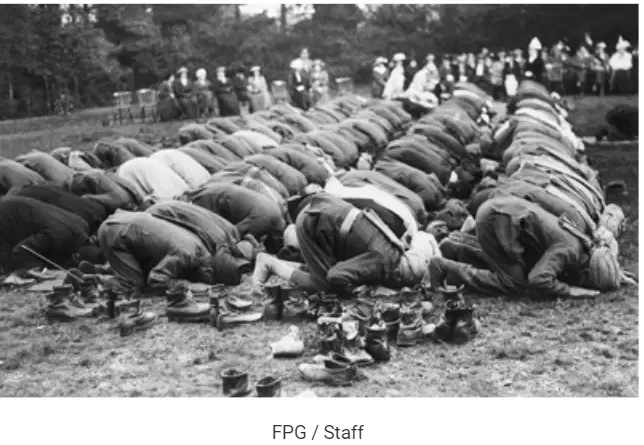
INDIAN MUSLIM TROOPS IN THE BRITISH ARMED FORCES PRAYING. PHOTOGRAPH TAKEN IN SURREY, ENGLAND, 1916 In the background, a group of British civilians, mostly women, are watching the troops pray.

Question: The photograph best illustrates which aspect of population movements in the late nineteenth and early twentieth centuries?

a)

They often involved the spread of cultural traditions into new locations.

b)

They were often undertaken to displace labor force lost to war or disease.

c)

They often resulted in the decline or disappearance of native religious traditions.

d)

They often caused intercommunal violence.