
 Worksheets
Astro 150 Trivia - February 2, 2024
Total questions: 18
Worksheet time: 15mins
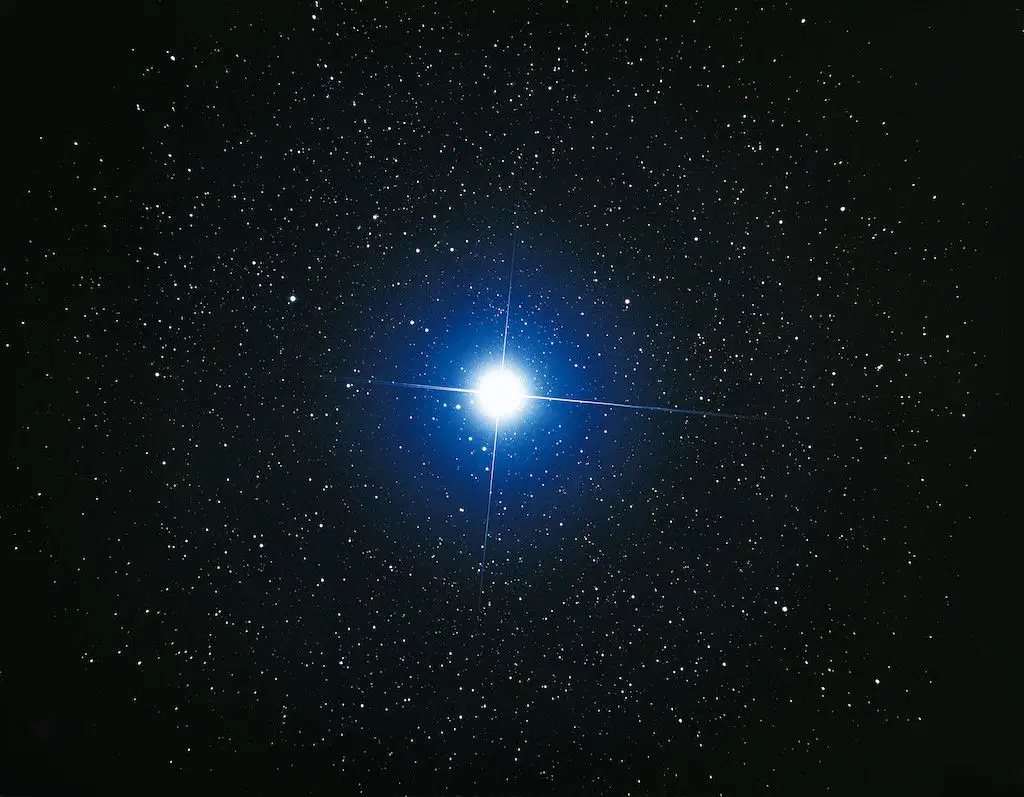
Which of these is dependent on distance?
Brightness
Luminosity
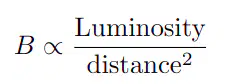
Which is the LEAST bright?
A star with the sun's luminosity 10 ly away
A star with half the sun's luminosity 5 ly away
A star with the sun's luminosity 5 ly away
A star with a quarter of the sun's luminosity 3 ly away

Which of these emits the most energetic photons?
A radio broadcast tower
The lights in this room
A microwave oven
A doctor's x-ray machine
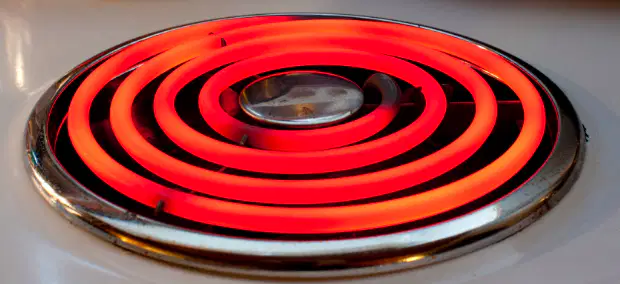
Hotter objects produce...
Mostly infrared light
Redder light
Temperature is not related to light emission
Bluer light

Hotter objects produce...
Fewer photons
More photons
More gasses that emit photons
Temperature is not related to the number of emitted photons
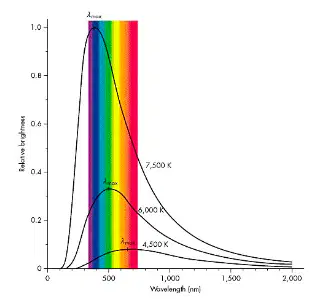
Why are blackbodies called "blackbodies?"
The first one discovered was black in color
They don't emit any light
They are usually obscured in some way, making them look black
They reflect little to no light
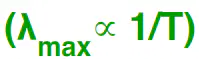
Which one of these deals with the peak wavelength of a blackbody?
Stefan-Boltzman law
Law of blackbodies
Wien's Law
Law of peak wavelengths of blackbodies
According to the Stefan-Boltzman law, how are radius and temperature related to luminosity?
L ∝ RT2
L ∝ R2T4
L∝ R4T2
L∝R2T

Which answer has two stars of the same luminosity?
Star 1 is twice as large as star 2
Star 2 is twice as hot as star 1
Star 1 is twice as large as star 2
The stars have the same temperature
The distance between us and star 2 is half that of the distance between us and star 1
Star 1 is four times larger than star 2
Star 2 is twice temperature of star 1
None of these

The spectrum of the sun would not look like this because
The sun is not a black body.
The sun is a black body, but it doesn't emit visible lights.
Since the sun is much closer to the Earth other than any of stars, it would show much brighter spectrum.
Some of the photons from the sun will be absorbed by the sun's cooler gas and the earth's atmosphere.

The graph on the left is the spectrum of a star. Which one is false about the spectrum?
The continuum spectrum implies the star is a black body.
The wavelength where the intensity peaks is determined by the distance to the star.
The dark lines in the spectrum and the dips in the graph are results of cloud of gas that absorbs photons from the star.
If the sun is hotter than the star, the intensity of the sun would peak at the wavelength shorter than the one in this graph.

What would happen if an electron (red dot) encounters a photon that has the same energy as the electron's orbital transitional energy between orbit 1 and orbit 2?
Nothing happens
The electron becomes unbound.
Emission line is produced
Absorption line is produced.

True or False: This is the spectrum of hydrogen atom. If there is a cloud of hydrogen between you and a star you observe, the spectrum of the star will have dark lines on top of its continuous spectrum, but these dark lines will appear at different wavelengths as the emission lines
True
False
True or False: According to quantum mechanics, orbits of electrons are quantized such that electrons cannot occupy in between orbits.
True
False
True or False: Spectral lines appear at all wavelengths even at X-rays.
True
False
To detect X-rays from iron atoms, we should put our telescope in space because
the telescope becomes closer to what we want to observe.
X-rays are blocked by Earth's atmosphere, not reaching the ground.
It is cheaper to put it in space than on the ground.
Let's say a star 1 has luminosity L1 and brightness B1, if the star becomes two times further away from us, the luminosity and the brightness become:
2L1, B1
L1, B1/4
L1/4, B1/4
not changing.
True or False: Molecular spectra can be used to
probe the birth materials for planets.
True
False

