
 Worksheets
Unit 4 - Embellishments and Cadences
Total questions: 26
Worksheet time: 30mins
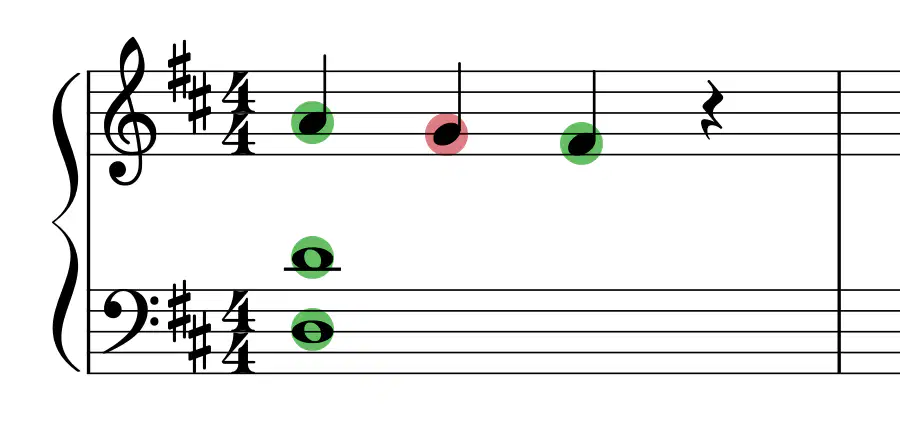
The following non-chord tone is described as...
Passing Tone
Appoggiatura Tone
Neighboring Tone
Suspension Tone
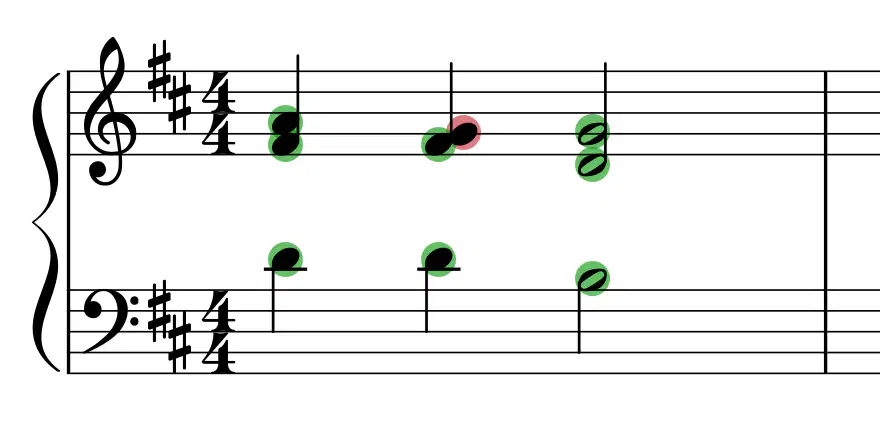
The following non-chord tone is described as...
Passing tone
Suspension tone
Escape tone
Anticipation tone
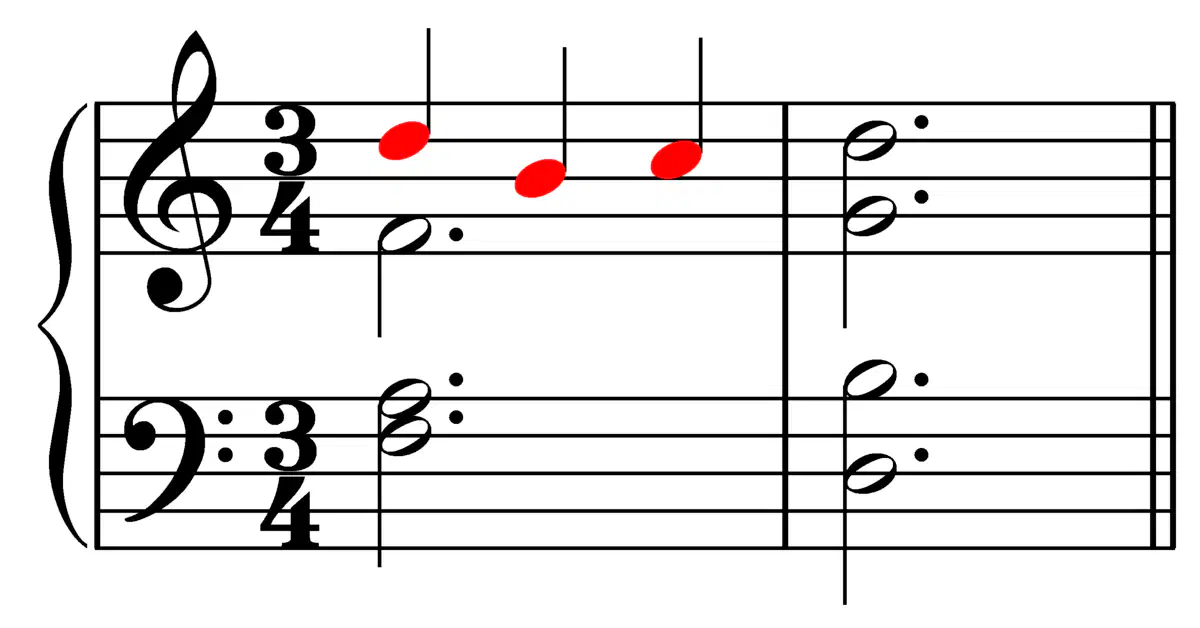
Which type of non-chord tone is used?
Cambiata
Appoggiatura
Neighbor group
Accented
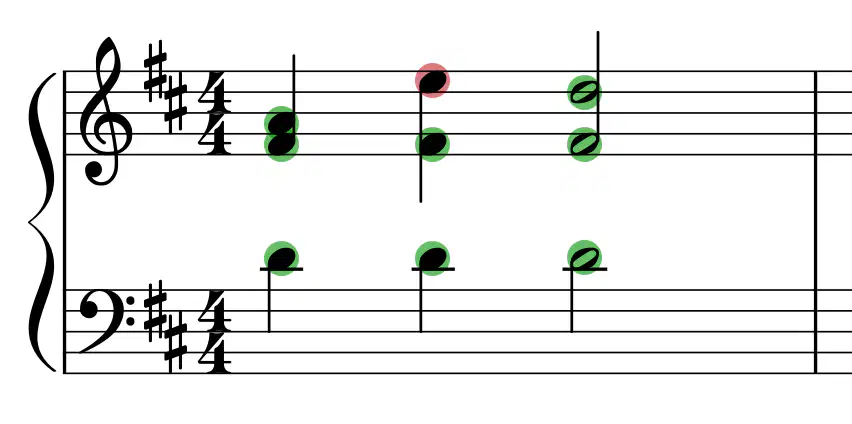
Which NCT is used?
Pedal Point
Neighbor
Cambiata
Appoggiatura
Which non-chord tones are NEVER accented?
Escape tone
Appoggiatura
Retardation
Incomplete neighbor
The preparation in a suspension occurs:
As chromatic
As Super-metrical
As sub-metrical
As metrical
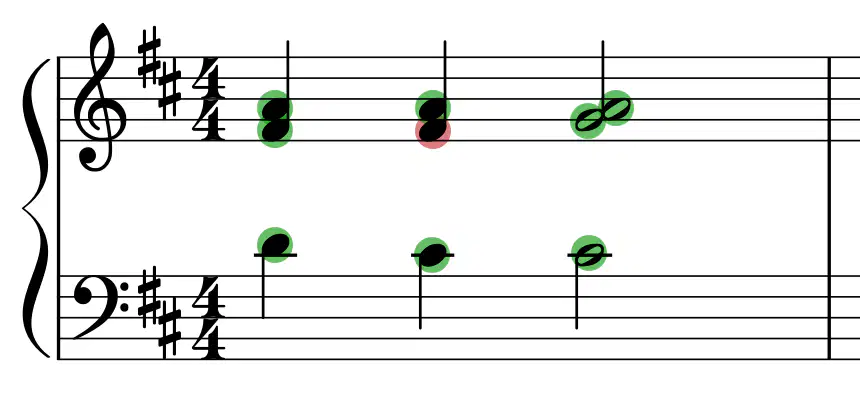
The following NCT represents...
Suspension
Retardation
Neighbor
Pedal Point
More than one NCT can occur at the same time.
TRUE
FALSE
An approach by STEP, left by a LEAP in OPPOSITE direction is...
Escape tone
Appoggiatura tone
Cambiata tone
Incomplete neighbor tone
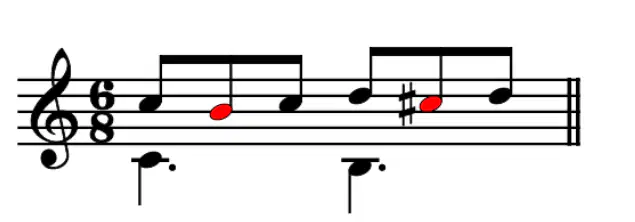
The following NCT can be described as...
Incomplete neighbor tone
Neighbor group tone
Neighboring tone
Double passing tone
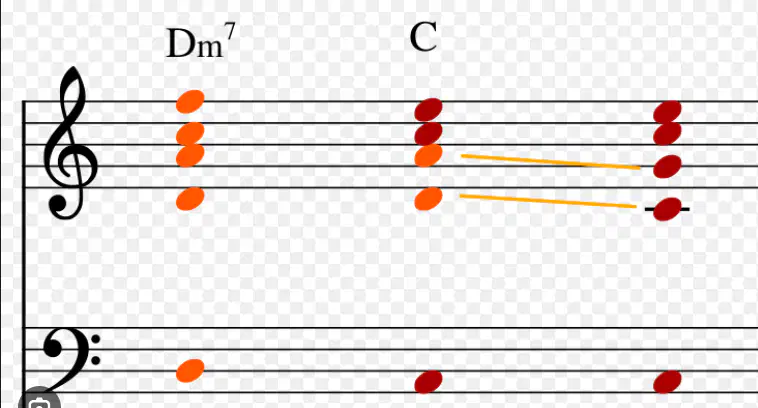
The bass represents...
An anticipation
An appoggiatura
A pedal point
A Retardation
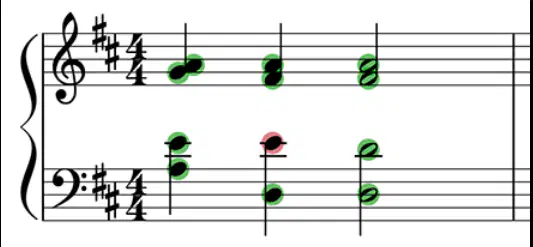
The following represents:
9-8 Suspension
7-6 Suspension
6-5 Suspension
4-3 Suspension
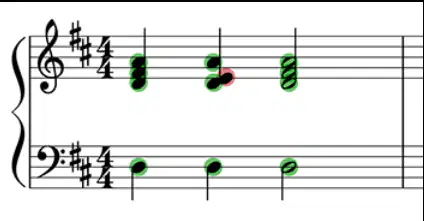
Which NCT is used here?
Passing tone
Neighboring tone
Anticipation tone
Appoggiatura tone
A Suspension resolves:
Up by step
Up by leap
Down by step
Down by leap
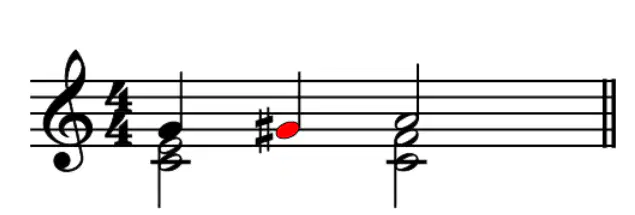
The embellishment used is...
A chromatic passing tone
A metrical neighboring tone
Unaccented passing tone
Chromatic neighboring tone

Which NCT is used here?
Neighbor group
Cambiata
Pedal Point
Anticipation
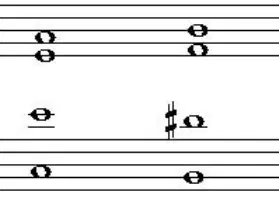
The following cadence can be described as...
Half
Deceptive
Phrygian Half
Imperfect Authentic
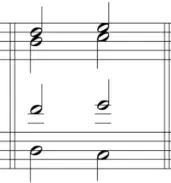
The following cadence can be described as...
Imperfect Authentic
Perfect Authentic
Plagal
Picardy Third
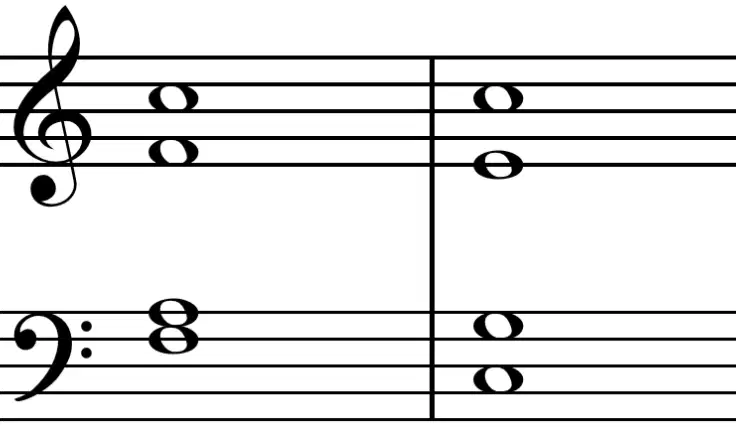
The following cadence can be identified as...
Imperfect Authentic
Half
Phrygian Half
Plagal
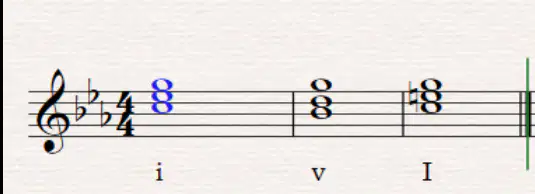
The following cadence shown is...
A half cadence
A plagal cadence
A deceptive cadence
A picardy third cadence
Which progression represents a deceptive cadence?
V-vi
IV-V
V-I
vi-I
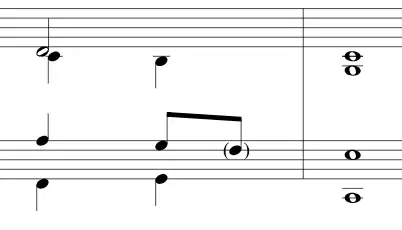
The first chord in the key of C Major is...
ii7
vi6/5
iii
viio7
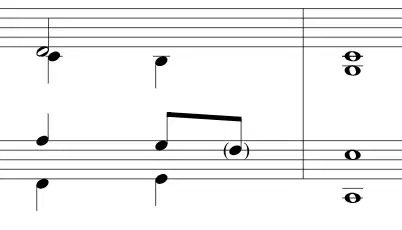
The second chord is...
Complete without a NCT
Incomplete without a NCT
Complete with a NCT
Incomplete with a NCT
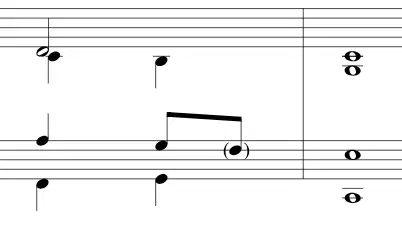
The cadence is a PAC because...
The soprano note is the tonic
The tonic is the root
The tonic is in the bass
The chord is in a closed position
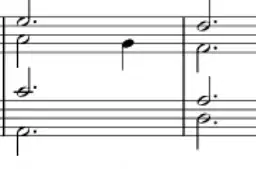
In the key of D, The first chord can be identified as...
V7
V
V6/5
V8-7
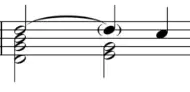
The following progression shows a...
7-6 Suspension
4-3 Suspension
NO NCTS
6-5 Suspension

