
NEW
Font size
 Worksheets
Ethics
Total questions: 13
Worksheet time: 6mins
What does the study of ethics involve?
The systematic analysis of societal norms.
Evaluating personal beliefs and values.
Examining and evaluating moral principles, values, and standards that guide behavior.
Studying legal regulations within society.

What is the role of ethical considerations in decision-making?
They provide a framework for avoiding decisions.
They guide individuals in making morally sound decisions.
They dictate specific choices without considering values.
They have no impact on the decision-making process.

How does ethical behaviour contribute to personal and professional relationships?
By promoting dishonesty and deception.
By fostering integrity, honesty, and responsibility.
By encouraging actions that disregard the well-being of others.
By creating conflicts and disputes in relationships.
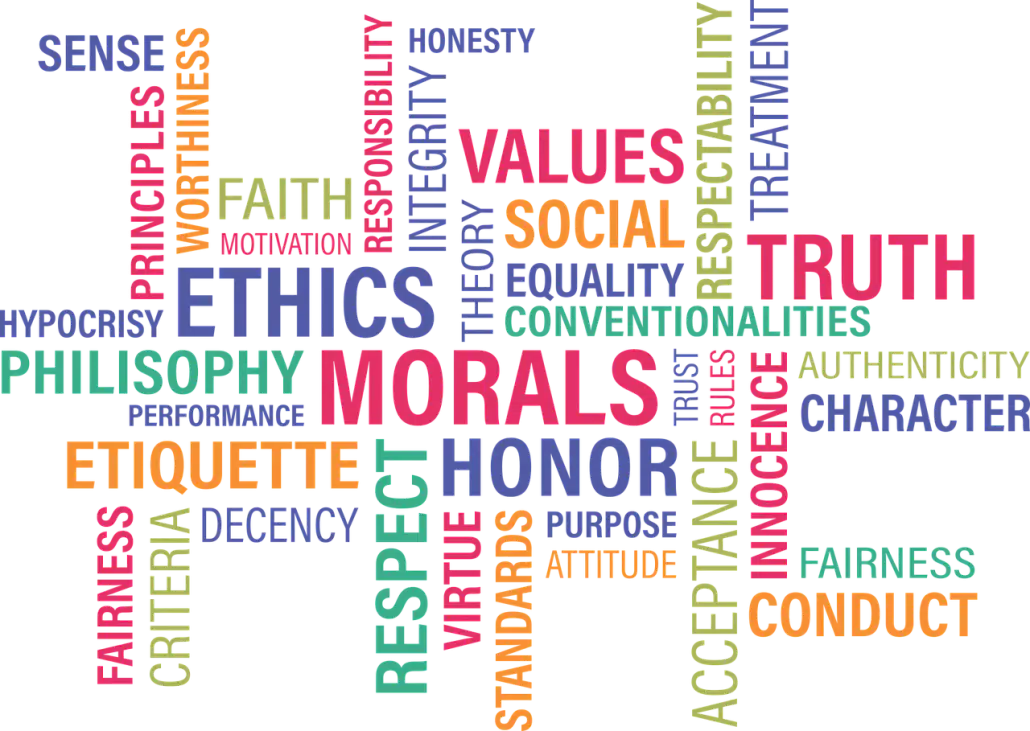
What characterizes a value?
It is imposed on individuals without their consent.
It arises from arbitrary and unintentional choices.
It is chosen willingly and independently, reflecting a deliberate choice.
It is influenced solely by cultural norms.

Which of the following influences an individual's values?
Media and religious affiliations.
Synderesis and moral identity.
Personal contemplation and cognitive processes.
Accumulation of wealth and status.
How do morals differ from morality?
Morality is personal beliefs, while morals are collective principles.
Morality involves the distinction between right and wrong, while morals refer to cultural norms.
Morality is situational, while morals are enduring and persistent.
Morals are individual beliefs, while morality is a broader concept encompassing shared principles.

According to Aristotle, what did he propose as essential for promoting the 'GOOD LIFE'? (Virtue Ethics)
Pursuit of wealth and status.
Engaging in noble actions and cultivating good habits.
Disregard of common interests.
Adherence to specific cultural norms.

What did C.S. Lewis believe about moral behaviour?
Moral behaviour is divinely inspired.
Moral behaviour involves prioritizing selfish needs.
Moral behaviour can be broken down into ensuring 'fair play', cultivating good people, and maintaining a positive relationship with the creator.
Moral behaviour is shaped solely by individual experiences.

In a scenario where a military force is considering engaging in war, which ethical framework is most likely to be used for justification, according to the information provided?
Virtue Ethics
Utilitarianism
Ethic of Care
Deontology
What does Deontology emphasize in moral actions?
The consequences of actions.
Moral character development.
The intentions behind actions.
The variability of virtues.
Suppose an individual consistently demonstrates qualities such as honesty, generosity, and justice through daily actions. According to which ethical theory is this person likely building up virtue?
Utilitarianism.
Deontology.
Virtue Ethics.
Agent-based normative theory.

Imagine a situation where an individual faces a moral dilemma and Virtue Ethics is applied. What aspect would be the focus when determining the ethical rightness of the decision?
The consequences of the decision.
The moral character of the decision-maker.
The adherence to a set of universal laws.
The overall happiness produced.
Which of the following is a characteristic of morality as described in the information?
Binary - either legal or illegal.
Grey areas with different perspectives.
Objective enforcement by government actors.
Formal regulation by the police.

