
 Worksheets
cell
Total questions: 31
Worksheet time: 17mins

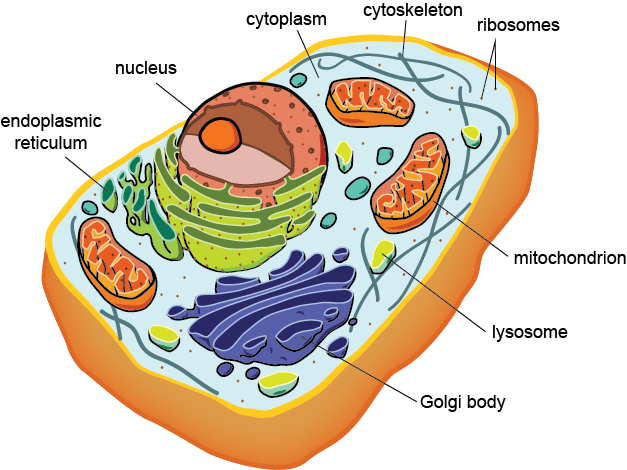
The powerhouse of the cell is the_________.
It converts energy from food into energy the cell can use
Mitochondria
Golgi body
Nucleus
Ribosomes
what is the function of a lysosome?
To create energy for the cell
To command the cell what to do
To remove waste using digestive enzymes from the cell
To protect the cell
Which organelle is the command center for eukaryotic (plant and animal) cells?
Cell wall
Nucleus
Mitochondria
Lysosome

___________observed free living organisms in the pond water for the first time.
Edward Jenner
Louis pasteur
Antony von leeuwenhoek
Robert Brown
____ is credited with being the first scientist to observe cork cells.
Leewenhoek
Shleidon
Hooke
Cells come from______.
other preexisting cells
cytoplasm
organelles
prokaryotes
Bacteria is classified as a what?
Prokaryote
Eukaryote


How can you tell that this is a prokaryote or eukaryote cell?
It is a prokaryote because it doesn't have a nucleus
It is a eukaryotic cell because it has a cell wall and a nucleus
It is eukaryotic because it does not a nucleus nor a cell membrane
It is prokaryote because it has a cell wall
FALSE FEET OF AMOEBA ARE KNOWN AS
(a)
Which is the largest cell
Nerve Cell
Ostrich Egg
Skin Cell
Muscle Cell
Who coined the term cell?
Antoine Van Leeuwenhoek
Robert Hooke
Karl Landsteiner
John Dalton
WHAT IS THE NAME OF THE SMALLEST CELL DISCOVERED TILL NOW?
MYCOPLASMA
BACTERIA
VIRUS
WHITE BLOOD CELL
Which of the following are examples of prokaryotes?
Algae
Fungi
Bacteria
Protozoa
Who coined term Cell
Robert Brown
AV Leeuweenhock
Robert Hooke
Purkinje
Which plastid is present in animal cell
Chloroplasts
Chromoplasts
Leukoplasts
Mesoplasts
None of these
Who discovered nucleus
Robert Hooke
Robert Brown
Leewenhoek
Camillo Golgi
What contains genes?
Nucleolus
Chromosomes
Cytoplasm
Cell membrane
None of These
Cell is......
Fundamental Unit of life
Structural Unit of Life
Functional Unit of Life
All of these
There are three tenets of the Cell Theory. Which of the following is NOT a tenet?
Cells are the basic structure and function of life.
All living things are made of one or more cells.
The cell is the basic unit of matter.
All cells come from preexisting cells.
_______ are the smallest units of life because they grow, reproduce, respond, and use energy.
atoms
elements
cells
all of the above

What is NOT a part of cell theory:
all cells come from existing cells
all cells have a nucleus
all living things are made of cells
cells are basic unit of structure and function in living things
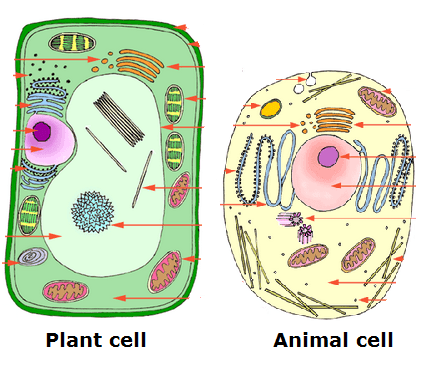
What distinguishes a plant cell from an animal cell? (How do you tell them apart) Hint: There's 3 ways (Check all 3)
Central Vacuole
Mitochondria
Cell Wall
Ribosomes
Chloroplasts
The main site for synthesis of lipids
RER
SER
Golgi apparatus
Lysosomes
When viewing a cork through his homemade microscope, Robert Hook discovered small compartments that he called _____.
boxes
cells
prokaryotes
eukaryotes
The term Cell was coined by
Robert Hooke
Robert Brown
JE Purkinje
AV Leeuwenhoek

