
Font size
 Worksheets
Ancient Chinese Philosophies and Influences Quiz
Total questions: 38
Worksheet time: 20mins
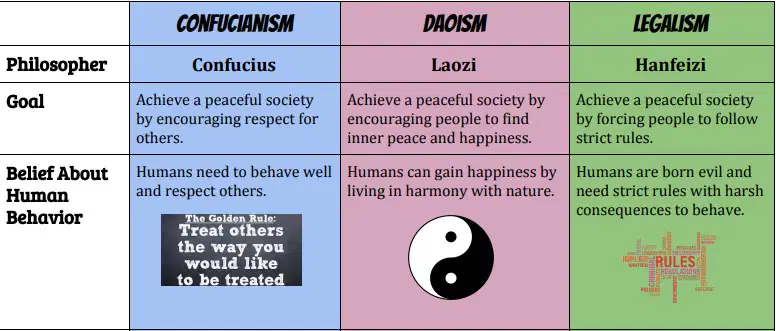
Who is considered the founder of Confucianism?
Laozi
Confucius
Han Feizi
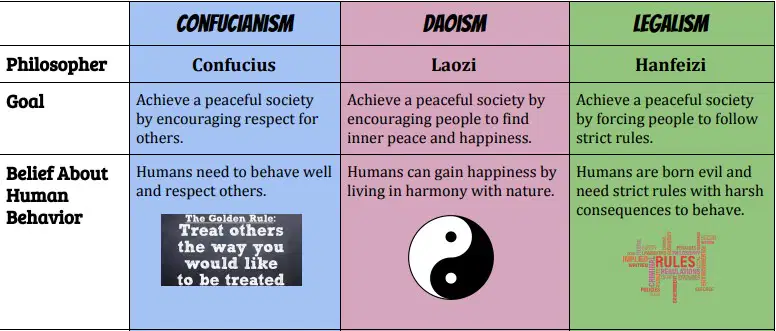
What is the main focus of Confucianism?
Following strict rules
Harmony with nature, others and finding inner peace
Having fairness and respect for others
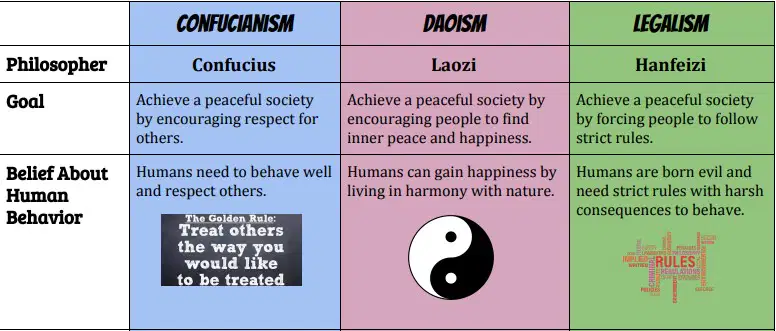
Who is traditionally credited with founding Taoism?
Confucius
Laozi
Han Feizi
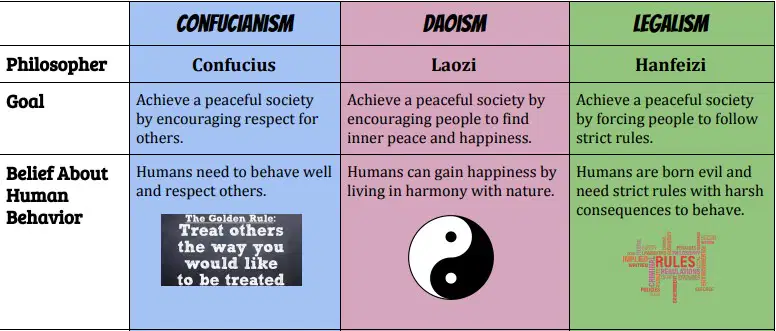
What is the key concept in Daoism?
The importance of laws and punishment
The Four Noble Truths which guide you
Achieving harmony with nature, others and self
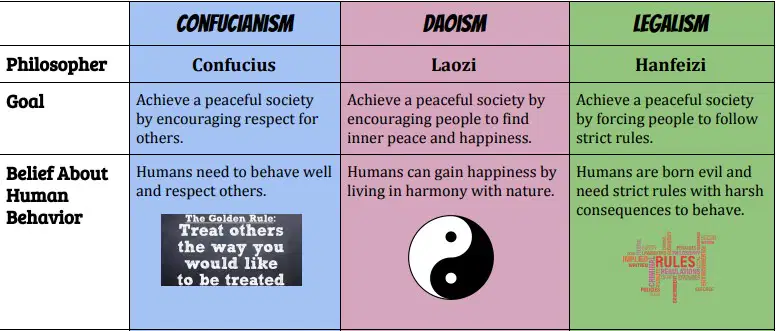
Legalism emphasizes the need for:
Strict laws and harsh punishments
Meditation and inner peace
Respect for elders and ancestors
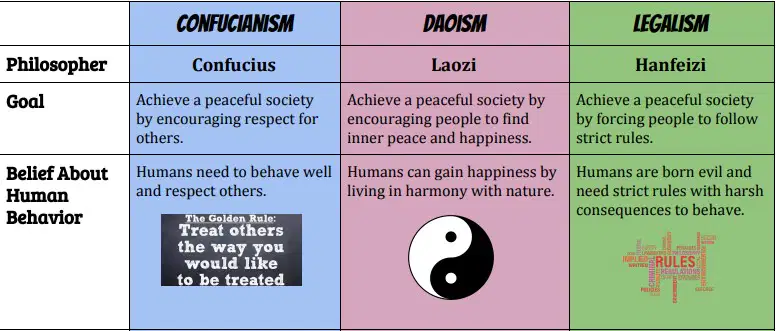
Who is associated with the development of Legalism?
Confucius
Laozi
Han Feizi
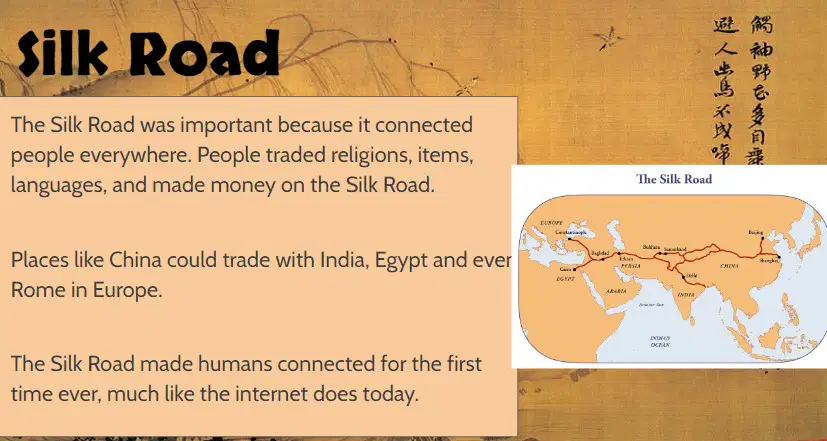
The Silk Road was important for ancient China because it:
Was used as a major military route
Allowed for the exchange of goods, philosophy religion, and language
Was the only road out of China
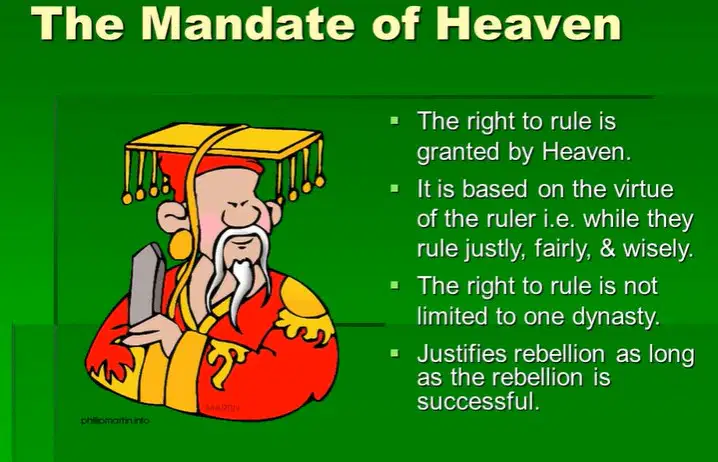
The Mandate of Heaven means:
Natural disasters are a sign from heaven
The right to rule is granted by heaven
The afterlife is more important than this life
The Mandate of Heaven is a concept that was used to:
Justify the rebellion of people against a Chinese leader
Teach people about the afterlife, ruling as an ancestor
Promote the study of science
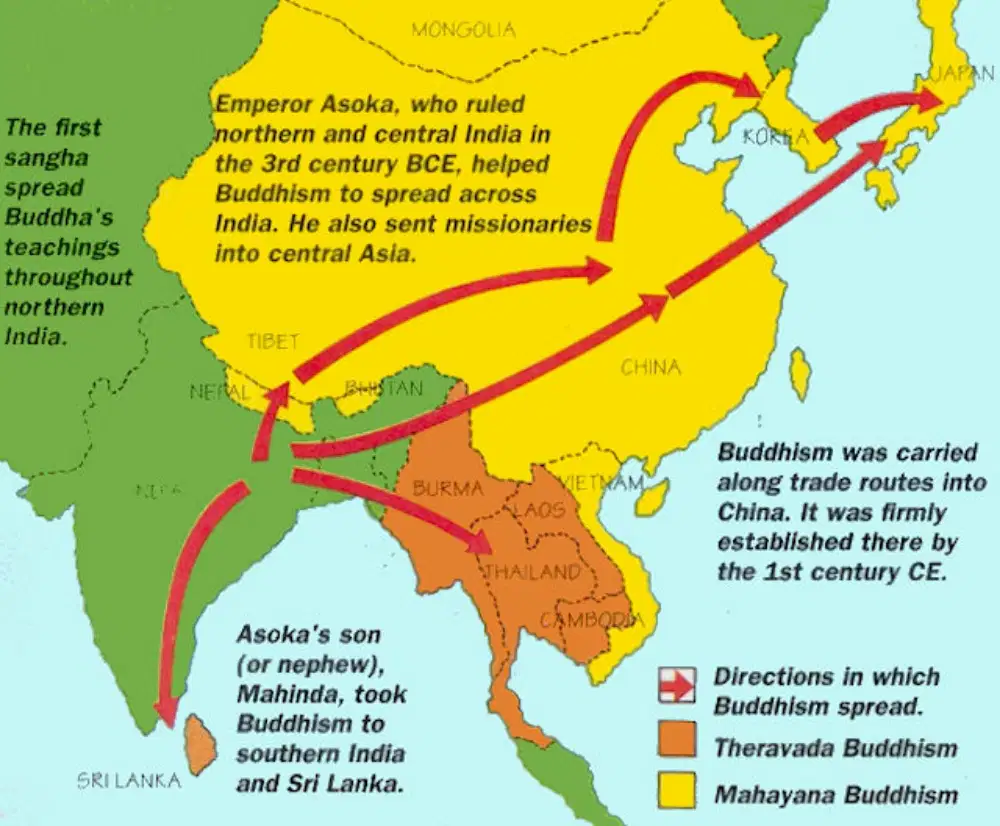
Who from India sent missionaries to China to spread Buddhism?
King/Emperor Mahinda
Queen Sangha
Emperor/King Ashoka
How did the Buddhist Religion enter China in Central Asia from India?
Missionaries on The Silk Road
Military conquests of Sangha
Legalist scholars
What role did the Silk Road play in the spread of Buddhism into China?
It was primarily a military route that indirectly helped.
It spread the study of Buddhist religious teachings and texts.
It was used to transport Buddhist statues of Buddha.
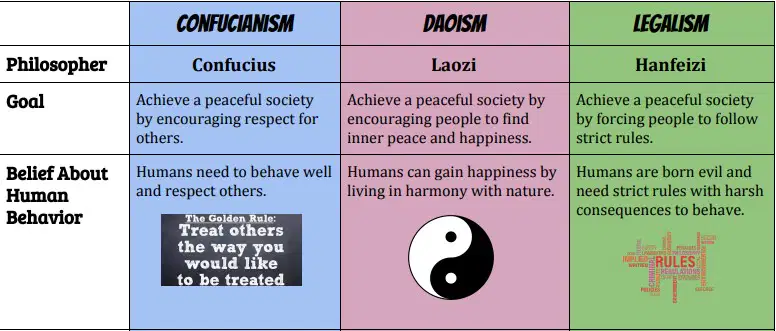
Which philosophy would argue that the best government is one that governs the least and would have the fewest rules?
Confucianism
Daoism
Legalism

Read the quote in the pink box. Why does the Doaist quote reference a fish?
The animal represents a flow with nature
The animal represents strength and courage
The animal was often eaten and brought good fortune

Read the quote in the blue box. Confucius believed that society should be organized around:
A set of strict laws
The concept of harmony with nature
Morals and values

Which philosophy is known for its teaching of "wu wei," or non-action during a stressful situation?
Confucianism
Daoism
Legalism
Legalism was adopted as the official ideology of which dynasty in Chinese history?
Han Dynasty
Qin Dynasty
Zhou Dynasty
Confucianism was adopted as the official ideology of which 'Golden' dynasty?
Han Dynasty
Qin Dynasty
Zhou Dynasty

What threat impacted for Chinese merchants on the Silk Road?
Zang Quian's missionaries
Nomadic Attackers
Poor weather conditions
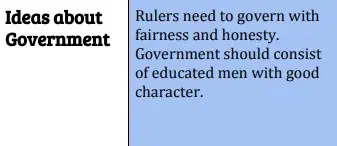
Confucian Idea on government during the Han dynasty is shown in the picture. What 2 educational things were created during this time period?
Imperial Academy
A code of laws that all citizens signed
Usage of Buddhist religion
Civil service exams
Which dynasty first implemented Confucianism as the foundation of the state exam system?
Han Dynasty
Sui Dynasty
Tang Dynasty
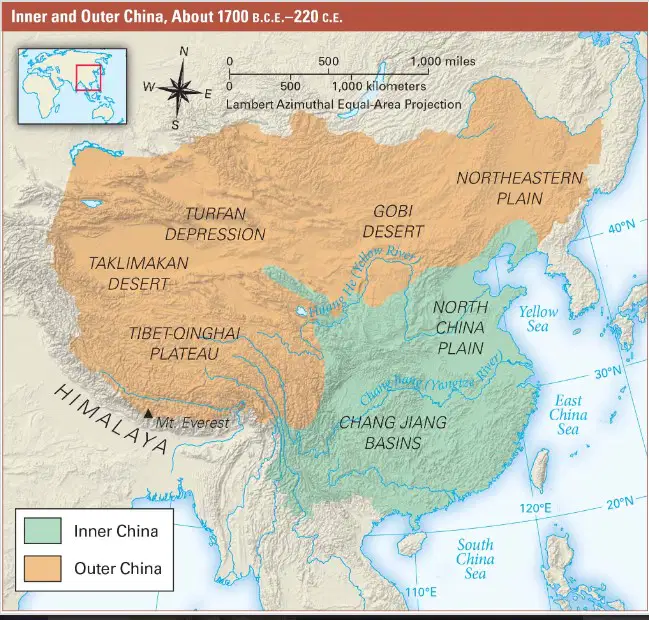
Where did most people in Ancient China live and settle because this was a fertile land area?
Inner China on the North China Plain
Outer in the China Gobi Desert
Outer China on the Plateau near the Himalaya mountains
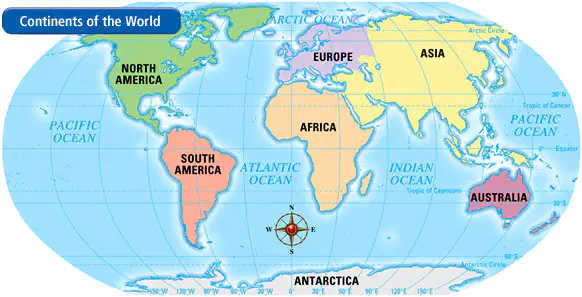
What continent is China located on?
Europe
Asia
Africa
What is 'Chinese Philosophy'?
The way in which a leader thinks about leading
The opinion of the citizens
A written law code with harsh rules
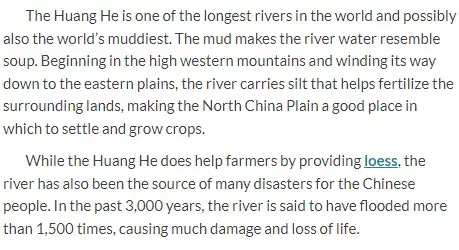
What makes the North China plain a good place to settle and grow crops?
Huang He river
Yellow river
Fertile volcanic soil
Flooding more than 1,500 times
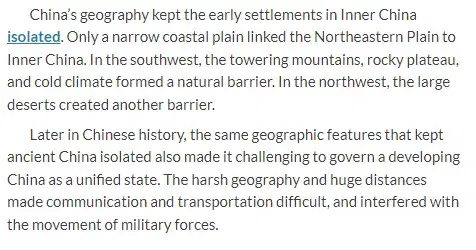
What made China isolated from others, making transportation and communication difficult?
China's military leaders
China's Geography and harsh landscape
China's seas and oceans
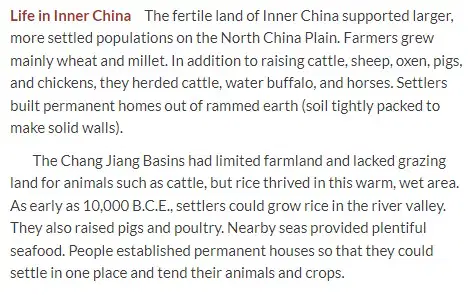
What was the first crop people in China grew as early as 10,000 BCE? This is one of their most FAMOUS crops they traded.
Rice
Pigs
millet
wheat
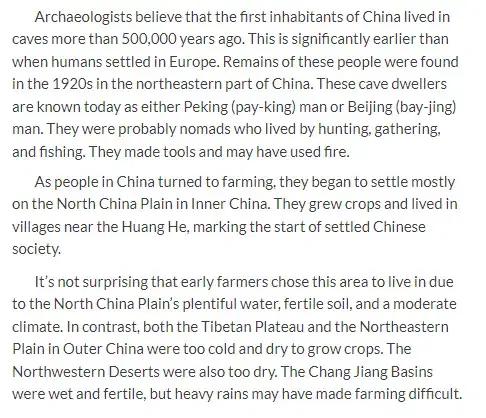
Which BEST describes the EARLIEST Chinese people?
People who lived nomadic lives, wandering around as hunter gatherers
People who lived in caves as hunter gatherers
Which BEST describes the Chinese people when they became settled?
People who lived nomadic lives, wandering around as hunter gatherers
People who lived in huts building the great wall of China for the emperor
People who lived in villages along the Huang He river
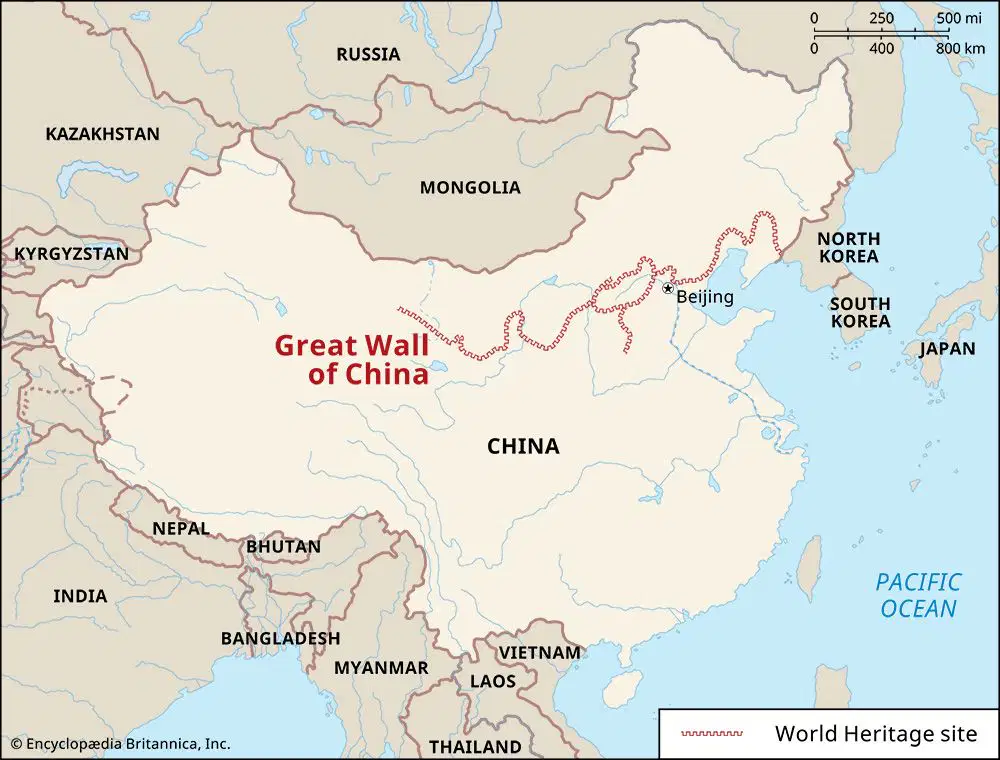
Why was the Great Wall of China built?
To provide easy access to new areas
For protection and defense from Mongolian invaders
As a national monument that made China famous
To protect against Korean attackers
What impact did the Silk Road have on China?
In enable the Han to expand Chinese territory.
It allowed the Chinese to learn the process of making silk.
It brought new ideas such as Buddhism into China.
It made travel easier between northern and southern China.
What is the silk road? (Jesus Z.)
a soccer field
a football field
a trading route
a path
Which Dynasty established the Silk Road?
Shang Dynasty
Zhou Dynasty
Qin Dynasty
Han Dynasty
Identify one way in which China benefited from the Silk Road
Cultural diffusion brought new goods and ideas to China
Conflicts started over who had the right to trade
China began trading with the Americas
China grew poor because other countries took advantage of them
The Silk Road connected China with which of the following regions?
Sub-Saharan Africa
Eastern Europe
The Mediterranean
All of the above
Which of the following goods was NOT commonly traded along the Silk Road?
Silk
Spices
Potatoes
Gold
Spread Buddhism by sending missionaries throughout Asia
Buddha
Ashoka
Laozi
Cyrus the Great

