
 Worksheets
Computer Science Bi-Weekly Review 02/08/24
Total questions: 137
Worksheet time: 2hrs 42mins
Which of the following is not done by abstraction?
Identifies essential details
Disregards non-essential information
Breaks the problem down into smaller tasks
Which of the following is not done by decomposition?
Allows multiple people to work on the problem together
Disregards non-essential information
Breaks the problem down into smaller tasks
When drawing a dog, which of the following characteristics is non-essential?
Dogs have 4 paws
Dogs have fur
Dogs have brown fur
When designing a building that must be accessible for wheelchairs, which of the following characteristics is non-essential?
Number of doors
Number of walls
Number of wall paintings
One advantage of abstraction is that it means no mistakes can be made
True
False
You could use abstraction to replace specific objects with simple shapes
True
False
This is a good example of decomposition
Sit down
Do homework
True
False
Decomposition allows each task to become _______
More manageable
Easier
Quicker
Decomposition allows the entire task to be completed as _____
A Team
A Whole
Quickly as possible
Abstraction and Decomposition are separate concepts, you would usually choose to do either one or the other
True
False
It is always necessary to decompose a task
True
False
Abstraction and Decomposition are examples of...
Computational Thinking
Algorithmic Thinking
Computer Science
Logical Reasoning
What is pattern recognition?
Breaking down a complex problem into smaller problems
Looking for similarities among and within problems
Building models from patterns
Why do we need to look for patterns in problems?
Patterns make it easier for us to solve complex problems
We don't need to look for patterns
Patterns make it more difficult complex problems
If you don't look for patterns in a problem, your solution might be _____
Wrong
Inefficient
Too slow
Identifying the steps involved in solving a problem
Abstraction
Decomposition
Pattern Recognition
Algorithmic Thinking
Looking for similarities and trends within a problem
Abstraction
Decomposition
Pattern recognition
Algorithmic Thinking
What is a flowchart?
A visual representation of an algorithm.
A diagram that shows abstraction.
A series of shapes.
A school database has lots of information on students, the data manager needs to use abstraction. What data should she leave out?
Age
Guardian's phone numbers
Classes
Eye colour

What is the difference between private and personal information?
Personal information shares your private information to the world, but private info doesn't.
They are both about you, but personal info doesn't give away anything about you. Private info does.
Private information is not ok to share and neither is personal info as the both give away something about you.
What is the difference between private and personal information?
Personal information shares your private information to the world, but private info doesn't.
They are both about you, but personal info doesn't give away anything about you. Private info does.
Private information is not ok to share and neither is personal info as the both give away something about you.

Which ones are examples of personal information. Choose 2 answers.
Hobbies.
Full Name.
Favourite Food.
School.

Which ones are examples of private information. Choose 2 answers.
First Name.
Email address.
Phone Number.
Country you live in.

What is a digital footprint?
Everything you do and everywhere you go on your computer?
The trail of websites you visit on the internet.
Everything you do and everywhere you go on the internet.

True or False?
You can have both a positive and negative digital footprint.
True.
False.

Sarah's older sister wants to know her password for Roblox. What should she do?
Give it to her. Sarah can trust her family with her passwords.
Tell her no.
Give her a fake password so she can't get into her account.
Tell her sister no but check with her parents.

What does SMART stand for?
Be Safe, Don't meet up, Accepting emails and texts can be dangerous, is the info reliable, tell an adult.
Be smart, Meet up with your friends, Accepting files can be dangerous, is the information reliable, talk to someone.
Be Safe, Don't meet up, Dont share your address or age, remember the safety rules, tell an adult.
Be smart, Meet up with your friends, Accepting emails and texts can be dangerous, is the info reliable, tell and adult.

How does being SMART on the internet help us?
It means we can be better researchers and find reliable answers on the internet.
It means we can protect our identity and stop ourselves from being cyberbullied.
It means that we won't get into trouble and our parents will completely trust us to do what is right online.

Why is it dangerous to talk online with people we don't know in real life? Choose the best answer.
Because our parents and our teachers tell us not to.
Because we don't know if they are our friends or not.
They might not be who they say they are and they could trick us into revealing private information.

Who are examples of trusted adults we can go to if something doesn't feel right online? Choose 2 answers.
Parents.
All family members.
Teachers.
Random strangers.

What is a privacy policy?
It is a long, boring document that explains the privacy laws for that country.
It is a document on a website or app that tells you what kind of info they are collecting and how they will use it.
It is an app on your phone that explains how to keep your personal information private.

How do you know if a website is appropriate and safe to use?
It has a privacy policy, a seal of approval and a person to contact if you have questions.
It has a privacy policy and links to other safe websites that are good for kids.
It has a seal of approval and a lock symbol in the address bar which means they are keeping their website secure.

True or False?
You can accept an email from a stranger if it is from a big Australian company that has a good reputation (like Woolworths).
True.
False.

You are playing minecraft when a person who says they go to your school joins the game and starts chatting with you. What do you do?
Keep playing and ignore the chat box and the message.
Hop off Minecraft straight away and go tell your parents about the message.
Say hi and start chatting.
Say hi and keep playing but ignore any other messages that come through.

What is a troll?
It is a mean person who says rude things and bullies others.
It is a mean character from a fairy tale.
It is a person who makes mean comments online to others.

What is a hater?
Someone who hates everybody esle because they have low self esteem and like hurting others.
It is a mean person online who constantly sends rude, hurtful messages to others.
It is someone who hates you.

You are watching a funny cat video on YouTube when you see an ad pop up for free music downloads for kids. What do you do? Choose the best answer.
Ignore the ad and keep watching the video.
Report the ad as inappropriate.
Click on the ad to download the free music.

What is the 'feedback sandwich'?
A type of sandwich that is available at McDonalds for a good price.
A strategy we use in class when commenting on others work.
A tool that helps us comment to others in a positive way.

You receive an email about your Minecraft account. It says you need to update your password. What do you do?
Click on the link in the email to update your password.
Don't reply because it is probably a hacker trying to get your private information.
Reply and tell them you are blocking the address because this is a scam.
Ignore the email because you aren't having any problems with your account.

What is the number #1 cyber safety rule for kids your age?
Ask or tell a grown up before you do anything online.
Never share your private information online.
Always stand up for yourself and report or block cyberbullies.


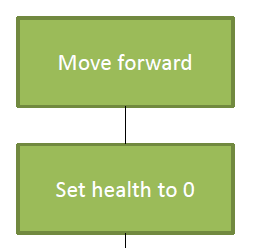

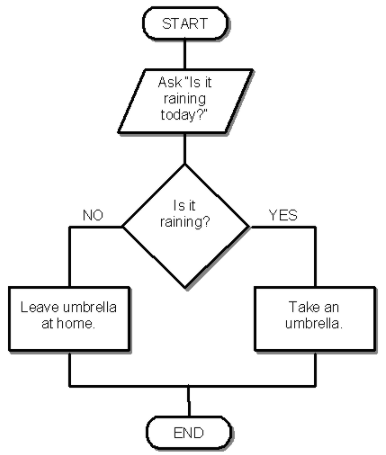
Yes

19

What will happen if the user's book return is late?
Sends them an SMS (text)
Does not send them an SMS (text)

How many arrows come out of the end symbol in the flowchart?
0
1
2
3
How many arrows come out of the start symbol in the flowchart?
0
1
2
3

This flowchart is made to...
Calculate the area and perimeter of a square
Output figures of different sizes
Calculate the area and perimeter of a circle
Find out how long it takes to get to the moon

In this flowchart, r ...
is the radius of a circle
stands for random number
represents a running total
is a miscellaneous variable

In this flowchart the diamond shape helps with...
Deciding whether the student should pass or fail
Adding up the student's marks
Making sure the student gets good marks
Checking the student's general behaviour

This flowchart is made to ...
Check whether a number is odd or even
Decide if we like a number or not
Calculate the remainder of a number + 2
Help people with Maths
_________is a programming language that is perfect for making games, animations, interactive stories and other visually rich programs.
Pane
Scratch
Blocks
the objects that perform actions(moves) in a project
Sprite
Script
Loops
What is a loop?
Starting the program
Ending the program
Allows something to be repeated


What is a sprite?
Character that can move
Cat
Mouse
Block
What blocks do we use to allow the sprite to move
Looks
Logic
Motion
Control
What blocks do we need for sounds and costumes?
Motion
Looks
Control
Pen
What was your favorite program we made in scratch? (Build-A-Band, Jumping Game, Create A Story, Catching Game, Ping Pong)
I enjoyed Scratch
YES
NO
Loop
Loops that have a predetermined beginning, end, and increment (step interval).
The action of doing something over and over again.
A description of the behavior of a command, function, library, API, etc.
To repeat in order to achieve, or get closer to, a desired goal.
Specific instructions given to a computer.
output
list
rules
command
Any programming language that lets users create programs by manipulating “blocks” or graphical programming elements, rather than writing code using text.
Command
Run Program
Algorithm
Block-based programming language
When someone clicks, taps, or types on a computer screen this generates a(n)...
code
event
algorithm
program
Precise sequence of instructions for successfully carrying our a task. It can be written in everyday language but the steps might be capable of translation into a programming language.
Decomposing
Algorithm
Logic
Loop/ Repeat

The following code is drawing shapes when program runs. As you learned in the class, program code is executing in a sequential manner. In the code above how many of the steps will be executed when the program runs?
11
12
14
13

The following code is drawing shapes when the program runs. When the program runs, what shapes and how many of the shape will be drawn?
One square
Triangle
Two square
Two triangle

What completes the following shape?
Move forward by 100px, turn right by 120px, move forward by 100px
Turn right by 120px, move forward by 100px, Move forward by 100px,
Turn right by 120px, turn right by 120px, move forward by 100px
Move forward by 100px, move forward by 100px, turn right by 120px, move forward by 100px

The Pacman is trying to catch the vulnerable ghost. Which one is the correct direction in the blank.
RIGHT
LEFT
UP
DOWN

The number of times the angry bird repeats moving forward to catch the green pig.
2
4
6
10

The artist is supposed to draw a triangle by following gray lines. In the workspace as shown below, you can see that the first line of code will be drawing the bottom line. Next, what degree should the artist turn left?
11
12
120
13

In which maze can the zombie get the sunflower using the following code?


What is plagiarism? Choose all that apply.
Ctrl C+Ctrl V
Writing and citing from a newspaper.
Using someone else's words as your own
Changing some words from an author that you want to use.
What do you use when you want to use a passage from the author and put it in your own words?
summary
paraphrase
reported speech
OKAY or NO WAY?
OKAY or NO WAY?
Cats can have long hair or short hair, they can be lots of different colors, and "they can even have blue eyes," says Julia Nelson in her book called Cats are Amazing Animals.
OKAY or NO WAY?
OKAY or NO WAY?
OKAY or NO WAY?
OKAY or NO WAY?
OKAY or NO WAY?
OKAY or NO WAY?
OKAY or NO WAY?
OKAY or NO WAY?
When do you ever cite evidence in everyday activities
running
reading
dancing
go crazy!!!
what is textual evidence?
evidence from the text
a little piece of knowledge
evidence used in text
evidence that isn't important
What is the MINIMUM number of examples you must give from the text to explain your answer?
1
2
3
5
The part of ACES where you give evidence from the text to support your answer
Restate
Answer
Explain
Cite

Which sentence starter is appropriate when you're explaining your evidence?
This is significant because...
The author states...
The author points out...
In conclusion...
About this topic, I feel...
Not so good
I know something
In the middle
I feel pretty good!
I'm so confident! I'm gonna ace this topic!
What is a claim?
a statement based on evidence
a main idea
a detail
something I want
What is an inference?
A guess
Evidence that is directly stated in the text
A conclusion based off of facts and reasoning
What does explicit mean?
A guess
Evidence that is directly stated in the text
A conclusion based off of facts and reasoning

