wayground logo

Free Printable Worksheets

Font size

S
M
L
XL
Worksheets

CHEMICAL REACTIONS TEST

Total questions: 109

Worksheet time: 2hrs 43mins

Name
Class
Date
1.
The positive particles of an atom are 
a)
electrons 
b)
positrons 
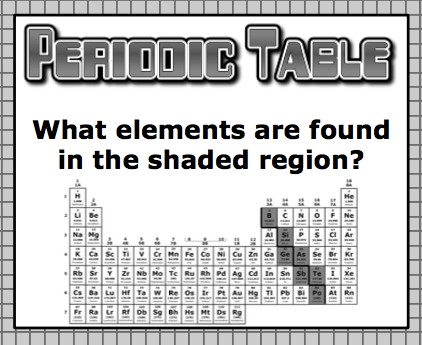
c)
neutrons 
d)
protons 
2.
an atom with atomic number 6 would have how many protons 
a)
6
b)
12
c)
3
d)
cannot be determined 
3.
Particles in an atom that are neutral and have no charge are 
a)
negatrons 
b)
electrons 
c)
neutrons 
d)
protons 
4.
A particle that moves around the nucleus is a(n)...
a)
Proton
b)
Neutron
c)
Electron
d)
Quark
5.
Which of the following is a negatively charged subatomic particle?
a)
Electron
b)
Proton
c)
Neutron
d)
Quark
6.
The atomic number of an elements is the total number of which particles in the nucleus?
a)
neutrons
b)
protons
c)
electrons
d)
protons and electrons
7.
What does the nucleus consist of?
a)
Protons + Electrons
b)
Neutrons + Electrons
c)
Atoms
d)
Protons + Neutrons
8.
What is the number of protons that the element in this image contain?
a)
14
b)
7
c)
15
d)
18
9.
What particle uniquely identifies an element?
a)
Number of Valence Electrons
b)
Number of Protons
c)
Number of Electrons
d)
Atomic Mass
10.
If an atom has 12 positively charged subatomic particles, which of the following must it also have to be considered a neutral atom?
a)
12 neutrons
b)
12 electrons
c)
12 protons
d)
24 protons and neutrons
11.
What is the mass number?
a)
the number of protons
b)
the number of protons and neutrons
c)
the number of neutrons
d)
the number of protons and electrons
12.
a)
2
b)
3
c)
5
13.
This is a correct dot diagram for fluorine (F)
a)
true
b)
false
14.
a)
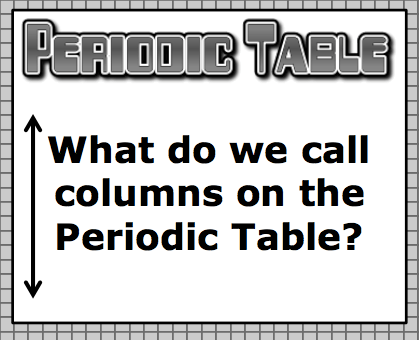
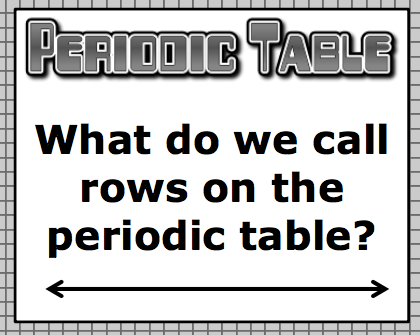
Periods
b)
Groups
15.
a)
Periods
b)
Groups
16.
a)
energy levels
b)
valence electrons
c)
protons
d)
neutrons
17.
a)
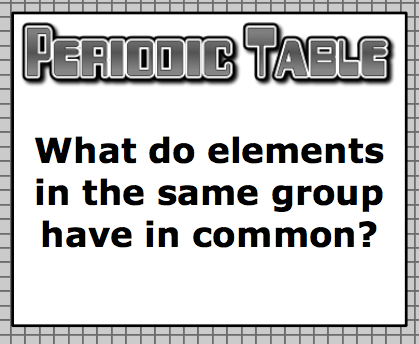
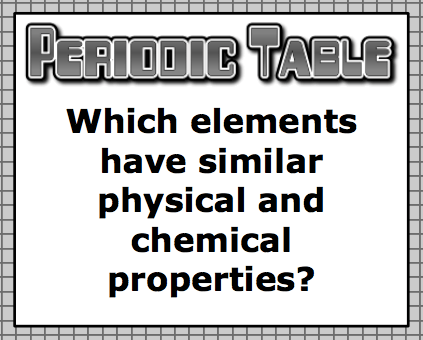
Same group
b)
Same period
18.
a)
Group 1
b)
Group 17
c)
Group 18
d)
Group 2
19.
a)
Group 1
b)
Group 17
c)
Group 18
d)
Group 2
20.
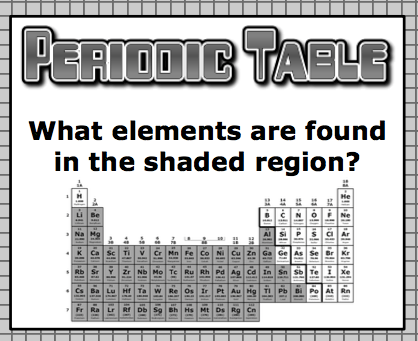
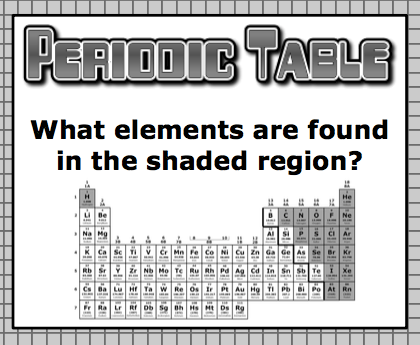
a)
Metals
b)
Nonmetals
c)
Metalloids
21.
a)
Metals
b)
Nonmetals
c)
Metalloids
22.
a)
Metals
b)
Nonmetals
c)
Metalloids
23.
a)
Metals
b)
Nonmetals
c)
Metalloids
24.
a)
Metals
b)
Nonmetals
c)
Metalloids
25.
a)
Metals
b)
Nonmetals
c)
Metalloids
26.
Which elements have the most similar chemical properties?
a)
K and Na
b)
K and Ca
c)
K and Cl
d)
K and S
27.
What section is the least reactive? 
a)
yellow
b)
red
c)
dark blue
d)
orange
28.
Metals that can be used as wire are ____________.
a)
metallic
b)
shiny
c)
malleable
d)
ductile
29.
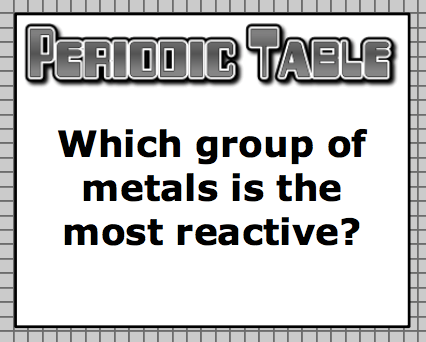
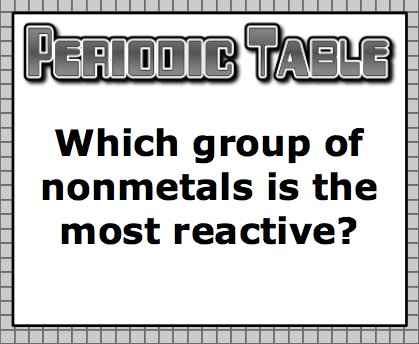
Which group on the periodic table are the halogens?
a)
orange
b)
yellow
c)
blue
d)
white
30.
Which group are the Alkali Metals found? 
a)
Group 1
b)
Group 6
c)
Group 18
d)
Group 13
31.
Elements in the same ________ are more chemically similar.
a)
group
b)
period
c)
club
d)
table
32.
Which statement is true about the alkaline earth metal family?
a)
They have 2 valence electrons.
b)
They are found on the right side of the periodic table.
c)
They form -2 charges.
d)
They tend to gain valence electrons.
33.

What is the atomic number of this element?

a)

17

b)

18

c)

35

d)

35.453

34.
What is the name of this element?
a)
Helium
b)
Hydrogen
c)
Argon
d)
Silver
35.

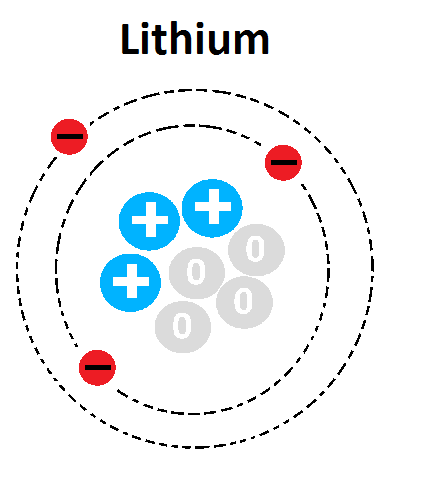
What element is represented in this Bohr Model?

a)

Carbon

b)

Hydrogen

c)

Aluminum

d)

Lithium

36.
What is the name of this element?
a)
Lithium
b)
Boron
c)
Carbon
d)
Neon
37.
What is the mass number of this atom?
a)
1
b)
3
c)
4
d)
7
38.
What is the atomic number of this atom?
a)
2
b)
4
c)
6
d)
none of the above
39.

Atoms of an element will always have the same number of 

a)
neutrons
b)
protons
c)
isotopes
d)
atoms
40.

How many electrons can fit on the 1st energy level (orbital) for any Bohr Model?

a)

2

b)

6

c)

8

d)

10

41.

What is the mass number of this atom of Chlorine?

a)

17

b)

18

c)

35

d)

35.453

42.
What does the nucleus of an atom contain?
a)
Electrons and neutrons
b)
Protons and neutrons
c)
Neutrinos and positrons
d)
Electrons and megatrons
43.

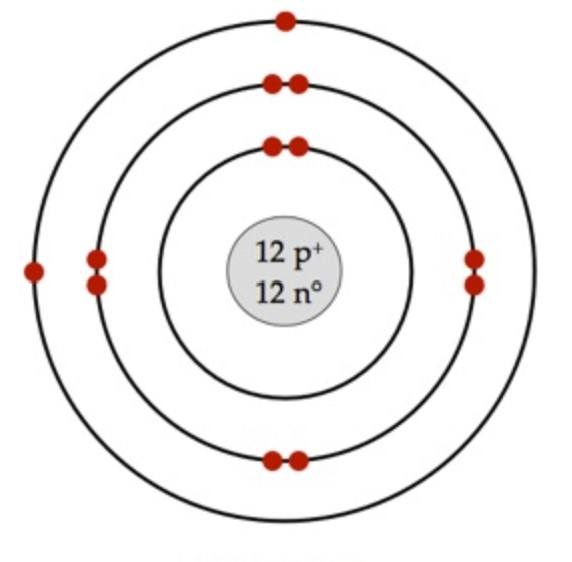
Which element does this Bohr model represent?

a)

Aluminum

b)

Silicon

c)

Magnesium

d)

Cobalt

44.

What is the mass of this atom?

a)

9

b)

10

c)

19

d)

28

45.

What element does this Bohr model represent?

a)

Chromium

b)

Magnesium

c)

Carbon

d)

Krypton

46.

Name this element.

a)

Neon

b)

Magnesium

c)

Sodium

d)

Manganese

47.

What is a valence electron?

a)

Electrons in the first energy shell

b)

Electrons in the second energy shell

c)

Electrons in the outer shell

d)

Total number of electrons

48.

What group does this element belong to?

a)

1

b)

2

c)

17

d)

18

49.

Elements in Group number 17 are known as

a)

Alkai Metals

b)

Alkaline Metals

c)

Halogens

d)

Noble Gases

50.

Which group includes non-reactive gasses that have a full outer electron shell?

a)

Alkai Metals

b)

Alkaline Metals

c)

Halogens

d)

Noble Gases

51.

Which group includes soft, highly reactive metals with one electron in their outer shell?

a)

Alkai metals (group 1)

b)

Alkaline metals (group 2)

c)

Halogens (group 17)

d)

Noble gasses (group 18)

52.
Elements in the same column of the periodic table always have the same # of _______ as one another.
a)
Protons
b)
Neutrons
c)
Electrons
d)
Valence Electrons
53.
How many valence electrons are found in atoms of group 14?
a)
4
b)
3
c)
14
d)
16
54.
Which group has the greatest number of valence electrons?
a)
1
b)
14
c)
18
d)
16
55.

How many neutrons are in an atom of this element?

a)

19

b)

39

c)

58

d)

20

56.

How many electrons would you find in an electrically neutral atom of this element?

a)

28

b)

14

c)

10

d)

42

57.

What is the mass number of this element?

a)

80

b)

25

c)

55

58.

What is the element symbol of this element?

a)

5

b)

B

c)

11

d)

Boron

59.
How many elements are in C6H12O6?
a)
1
b)
2
c)
3
d)
4
60.
How many atoms of carbon (C) are in  C6H12O6?
a)
3
b)
6
c)
12
d)
24
61.
Element or compound?
H2O
a)
element
b)
compound
62.
Element or compound?
O2
a)
Element
b)
Compound
63.
Which of the following is a compound?
a)
Co
b)
O2
c)
C
d)
CO2
64.
Which is the correct formula for:
 three hydrogen (H)
one sulfur (S)
four oxygen (O)
a)
H3SO4
b)
HSO4
c)
H4S3O
d)
H2O
65.
Which is the correct formula for:
one carbon (C)
two oxygen (O)
a)
CO2
b)
CO
c)
C2O
d)
2CO
66.
How many elements are in H2O?
a)
1
b)
2
c)
3
d)
4
67.
Which of the following is NOT an element?
a)
H2O
b)
H2
c)
O2
d)
Au
68.
How many atoms are there TOTAL in:
H2SO4
a)
6
b)
5
c)
7
d)
3
69.
In this image, what are the symbols in red are called the_______.
a)
Products
b)
Reactants
c)
Subscripts
d)
Coefficients
70.
In this image, the symbols to the right of the arrow (in black) are called the_______.
a)
Products
b)
Reactants
c)
Subscripts
d)
Coefficients
71.
Na + MgF2 -->  NaF + Mg
What are the reactants?
a)
Na + MgF2
b)
Na
c)
NaF + Mg
d)
NaF
72.
NH3 ---> N2 + H2
What are the products?
a)
N2 + H2
b)
N2
c)
H2
d)
NH3
73.
A substance that undergoes a(n) _____ change becomes a new kind of substance.
a)
large
b)
physical
c)
chemical
d)
state of matter
74.
All of the following are chemical changes except
a)
iron rusting
b)
water evaporating
c)
wood burning
d)
food rotting
75.
The smallest physical unit of an element or compound (Oand H2O are both examples of ONE of these)
a)
Physical change
b)
Chemical Symbol
c)
Yield Sign
d)
Molecule
76.
The small number that is written below the symbol and shows how many atoms of each element is present.  
a)
Compound
b)
Molecule
c)
Coefficient
d)
Subscript
77.
The large number written in front of a chemical formula.  It shows the number of molecules.
a)
Molecule
b)
Compound
c)
Coeffiecient
d)
Subscript
78.
Hydrogen peroxide breaks down to form water and oxygen gas. Which observation is evidence that a chemical reaction has occurred?
a)
The mass of the solution remains the same.
b)
The temperature of the solution increases. 
c)
 The color of the solution remains clear.
79.
A clear liquid from a flask is poured into another clear liquid in a beaker. Which of the following results of this procedure would indicate a new substance was formed?
a)
The level of the substance in the beaker is higher after the other liquid is added.
b)
A yellow solid forms and then settles to the bottom of the beaker.
c)
Small white crystals are left behind in the flask that held the first liquid.
80.
Which of the following is an example that includes evidence of a chemical reaction?
a)
A sample of zinc is placed in water and it settles to the bottom
b)
A solid block of ice is heated and it completely melts into a liquid. 
c)
Sugar that is burned gives off an odor and turns brown and then black.
d)
A tomato is placed into a blender and chopped up into smaller pieces.
81.
When materials combine to form new compounds it is a chemical change. Which example is a chemical change?
a)
baking powder fizzing
b)
water boiling
c)
ice melting
d)
sugar cube dissolving
82.
Rate of chemical reaction means
a)
amount of product formed
b)
speed of reaction
c)
concentration of reacting particles
d)
combining reactants with products
83.
A substance that increases speed of chemical reaction without being being changed is called:
a)
Catalyst
b)
Acid
c)
Base
d)
pressure
84.
Increase in temperature of the reactants can do one of the following
a)
Slow collision frequency
b)
Allow less effective collision between the particles
c)
Neutralise the reaction
d)
increase collision between the particles thus increasing the rate.
85.
Which factors increase the rate of a reaction.
a)
increasing temperature
b)
increasing concentration
c)
increasing surface area
d)
all of these
86.
Grinding a seltzer tablet into powder increases the rate of reaction due to increased
a)
concentration
b)
surface area
c)
temperature
d)
reactants
87.
Which of the following increase the reaction rate?
a)
less surface area
b)
higher temperature
c)
an inhibitor
d)
less concentration
88.
Which of the following increase the reaction rate?
a)
less surface area
b)
lower temperature
c)
a catalyst
d)
less concentration
89.
Which of the following increase the reaction rate?
a)
less surface area
b)
lower temperature
c)
an inhibitor
d)
increased concentration
90.
Which of the following decreases the reaction rate?
a)
more surface area
b)
lower temperature
c)
a catalyst
d)
increased concentration
91.
Which of the following decreases the reaction rate?
a)
more surface area
b)
higher temperature
c)
a catalyst
d)
decreased concentration
92.
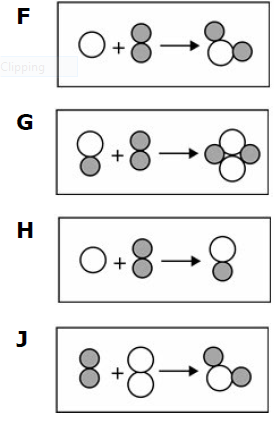
Which of the following models best demonstrates a balanced chemical equation?
a)
F
b)
G
c)
H
d)
J
93.
According to the law of conservation of mass, if 5 grams of Oxygen completely reacted with 10 grams of Hydrogen, how many grams of water should be produced?
a)
5g
b)
10g
c)
15g
d)
20g
94.
The law of conservation of mass states that....
a)
Matter can be created
b)
Matter is sometimes destroyed
c)
Matter cannot be created or destroyed
d)
Matter can be created but not destroyed
95.
The red numbers in the image below represent ________
a)
subscripts
b)
coefficients
c)
I don't know, and don't want to try
d)
None of the answers are correct
96.
The blue numbers in the image below represent ________
a)
I don't know, and don't want to try
b)
coefficients
c)
subscripts
d)
none of the answers are correct
97.
How many oxygen atoms are in 2Fe2O3?
a)
6 oxygen atoms
b)
2 oxygen atoms
c)
3 oxygen atoms
d)
4 oxygen atoms
98.
How many magnesium atoms are in 3MgCl2?
a)
3
b)
5
c)
1
d)
6
99.
Is this balanced?
2HgO → 2Hg + O2
a)
Yes
b)
No
100.
The Law of Conservation of Mass means that the number of atoms of the products is greater than the number of atoms in the reactants. 
a)
True
b)
False
101.
In the equation,          2Mg + O2 ---> 2MgO, which are the reactants?
a)
Mg and O
b)
MgO
c)
Mg and MgO
d)
O and MgO
102.
In an exothermic reaction, heat is ...
a)
taken in
b)
given out
103.
In an endothermic reaction, heat is ,,,
a)
taken in
b)
given out
104.
What type of reaction occurs in a hand warmer
a)
exothermic
b)
endothermic
105.
If a chemical reaction is EXOTHERMIC, the temperature would....
a)
Stay the same
b)
Increase
c)
Decrease
106.
When iron nails get rusty, heat is released.  What process is this?
a)
Exothermic
b)
Endothermic
107.
In an endothermic reaction the system is releasing energy.
a)
True
b)
False
108.
During an endothermic reaction in a beaker if we are part of the surroundings and touched the beaker, it would feel _______. 
a)
Warm
b)
Cold
109.
Evaporation is what kind of change?
a)
Endothermic
b)
Exothermic