wayground logo

Free Printable Worksheets

Font size

S
M
L
XL
Worksheets

The Civil Rights Movement

Total questions: 20

Worksheet time: 20mins

Name
Class
Date
1.
Which doctrine relating to public education was overturned by the Supreme Court decision in Brown v. Board of Education?
a)
due process of law
b)

"separate but equal" (Plessy v. Ferguson)

c)
"all deliberate speed"
d)
equal protection of the law
2.
One of the first organized movements by African Americans to fight segregation was the -
a)
"children's crusade" in Birmingham
b)
Montgomery, Alabama, bus boycott
c)
mass march on Washington, D.C.
d)
Selma, Alabama, voting rights campaign
3.

What was the main type of pressure exerted by the Montgomery bus boycott in response to segregation on buses?
a)
social
b)
economic
c)
political
d)
physical force
4.
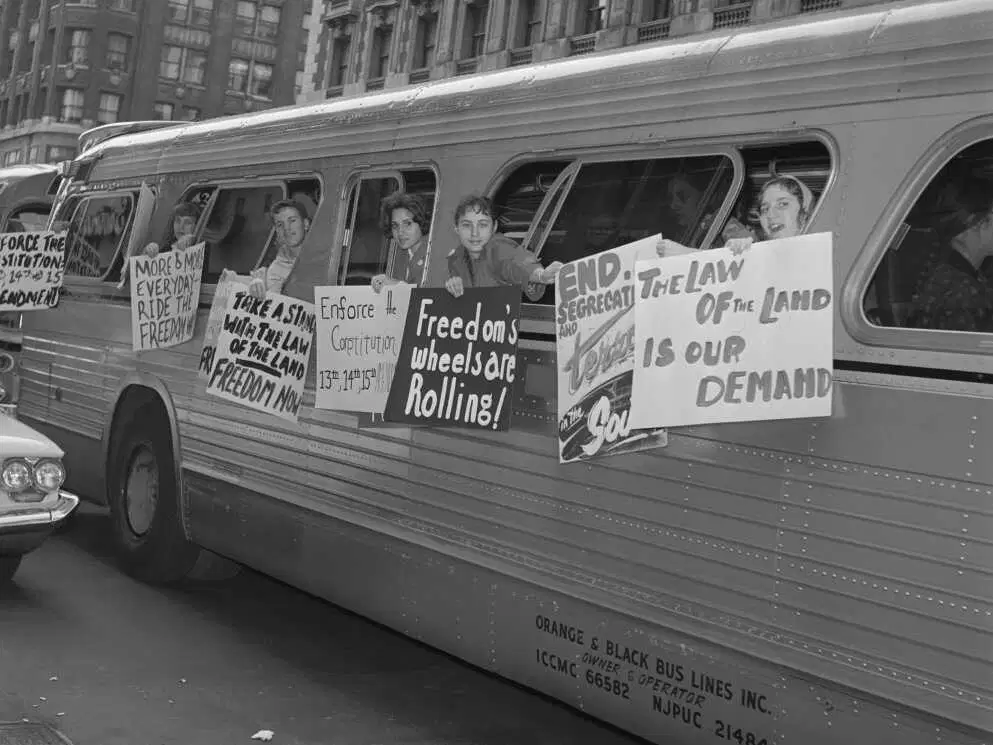
One accomplishment of the ___ was bringing about a federal ban on segregation in all interstate travel facilities.
a)
Little Rock Nine
b)
freedom riders
c)
Black Panthers
d)
Montgomery bus boycott
5.

Appealing to many African Americans' anger and frustration over a lack of social and economic power, ___ preached a more militant/aggressive approach to civil rights.

a)
Martin Luther King, Jr.
b)
Malcolm X
c)
Medgar Evers
d)
Fannie Lou Hamer
6.

What was the main difference between MLK and Malcolm X?
a)
MLK believed in black supremacy, while Malcolm X promoted racial harmony.
b)
MLK advocated for violent protests, while Malcolm X supported peaceful demonstrations.
c)
MLK focused on nonviolence and integration, while Malcolm X emphasized self-defense and black nationalism.
d)
Both MLK and Malcolm X were strong proponents of segregation.
7.

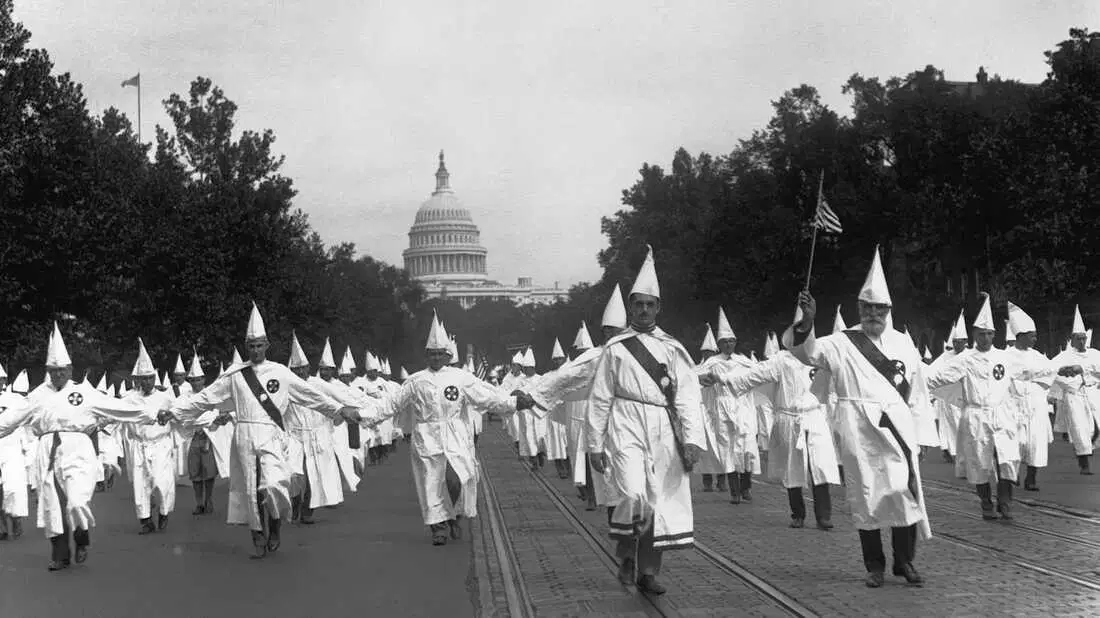
How did the KKK create obstacles to civil rights for minorities?

a)
By advocating for equal rights legislation in government.
b)
The KKK created obstacles to civil rights for minorities through intimidation, violence, and systemic racism.
c)
Through peaceful protests and community engagement.
d)
By promoting education and job opportunities for minorities.
8.

The Civil Rights Act of 1964 prohibited discrimination in which of the following areas?

a)

employment

b)

private clubs

c)

religious institutions

d)

personal relationships

9.

What did the Voting Rights Act of 1965 do?

a)
It established a national voting age of 18.
b)
It allowed states to impose literacy tests for voters.
c)
It mandated that all elections be held on weekends.
d)
It prohibited racial discrimination in voting and aimed to protect the voting rights of African Americans.
10.

What 4 amendments are most associated with civil rights?

a)
10th, 11th, 12th, 20th Amendments
b)
1st, 2nd, 3rd, 4th Amendments
c)
5th, 6th, 7th, 8th Amendments
d)
13th, 14th, 15th, 19th Amendments
11.

What was the significance of the desegregation of the armed forces?

a)
It was a crucial step towards racial equality and integration in the U.S.
b)
It led to increased military funding.
c)
It had no impact on civil rights movements.
d)
It was primarily focused on gender equality.
12.

What was the significance of Sweatt v. Painter?
a)
It challenged racial segregation in higher education and set a precedent for future civil rights cases.
b)
It focused solely on elementary education rights.
c)
It upheld racial segregation in public schools.
d)
It was a case about voting rights for African Americans.
13.

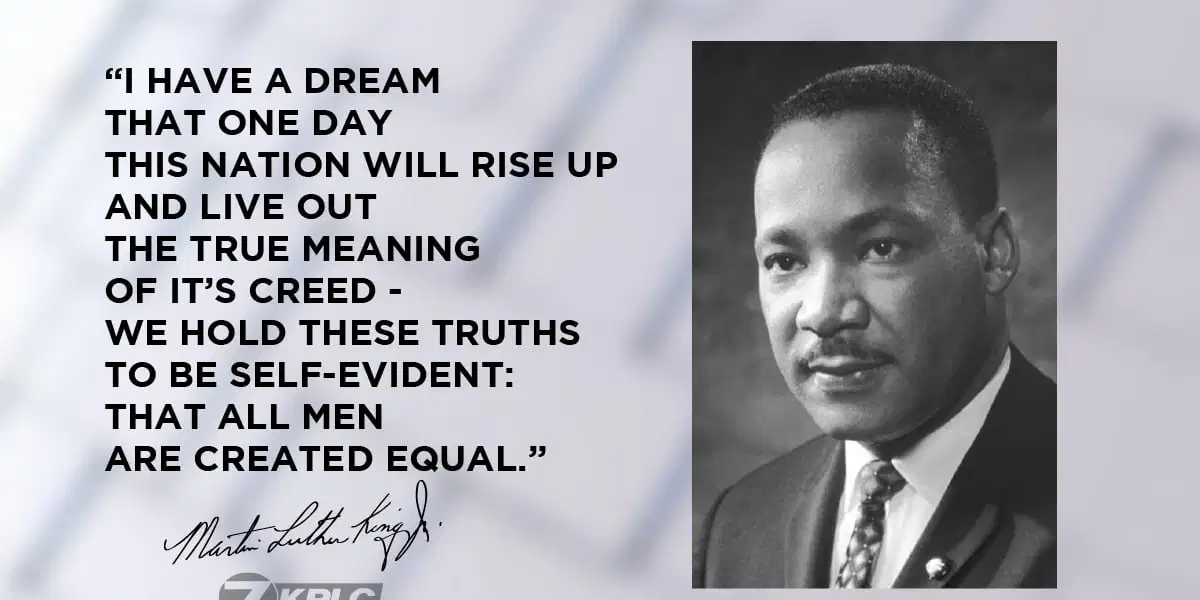
What was the significance of MLK's I have a Dream speech?
a)
The speech symbolized the struggle for civil rights and inspired millions for equality and justice.
b)
The speech was delivered in a foreign country.
c)
It was primarily a call for military action.
d)
The speech focused solely on economic issues.
14.

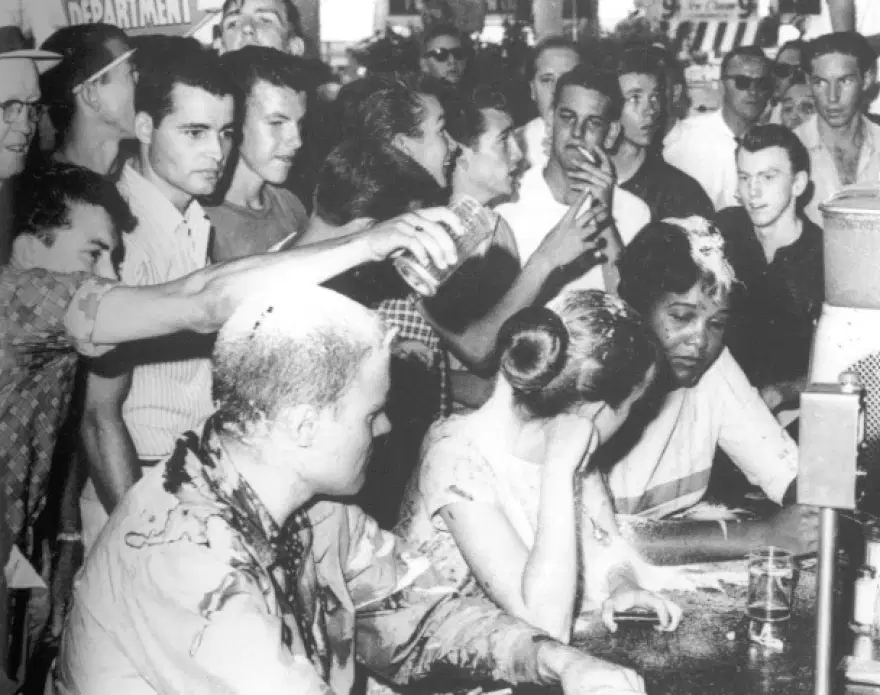
What were Sit-ins?

a)
Sit-ins were gatherings for discussing political theories.
b)
Sit-ins were military strategies used in wartime.
c)
Sit-ins were a type of dance popular in the 1960s.
d)
Sit-ins were nonviolent protests against racial segregation, where participants occupied public spaces to demand equal rights.
15.

What court case ended segregated schools? 

a)
Brown v. Board of Education
b)
Davis v. Miller
c)
Johnson v. Smith
d)
Smith v. Jones
16.

Who were the Little Rock 9?

a)

A group of teachers at Little Rock Central High School.

b)

Nine African American athletes who protested in 1968.

c)

A famous band from the 1960s.

d)

9 African American students who integrated into Little Rock Central High School in 1957.

17.

Who was Thurgood Marshall?

a)
Thurgood Marshall was the first African American president of the United States.
b)
Thurgood Marshall was a renowned scientist in the 20th century.
c)
Thurgood Marshall was the first African American Supreme Court Justice and a key figure in the civil rights movement.
d)
Thurgood Marshall was a famous actor in Hollywood.
18.

What was the main focus of the Student Nonviolent Coordinating Committee (SNCC)?

a)

To promote violent resistance

b)

To organize sit-ins and freedom rides

19.

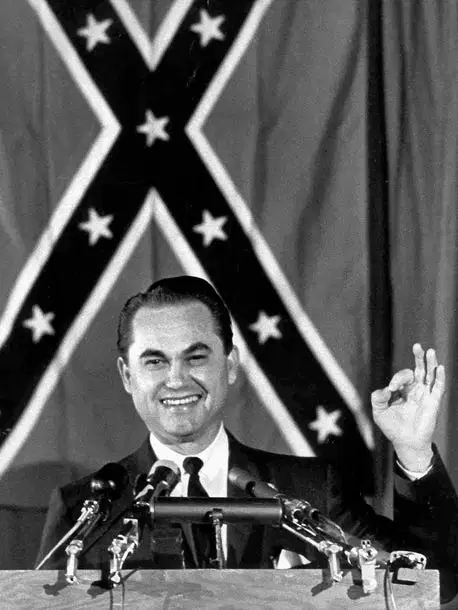
What was Alabama Governor George Wallace famous for saying?
a)
I have a dream of equality for all.
b)
We must unite for a better future.
c)
Segregation now, segregation tomorrow, segregation forever.
d)
Freedom and justice for every citizen.
20.

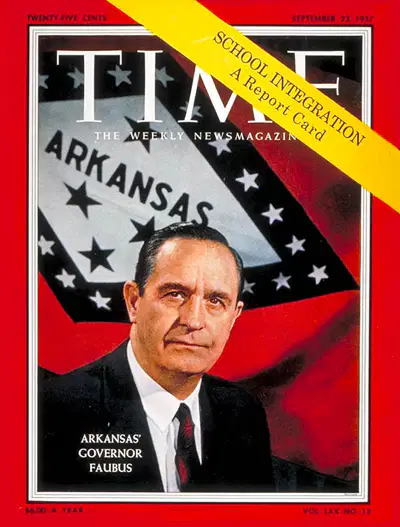
Who was Orval Faubus and what did he do?

a)
Orval Faubus was a civil rights leader who supported school desegregation.
b)
Orval Faubus was the President of the United States during the 1960s.
c)
Orval Faubus was a famous Supreme Court Justice known for his rulings on education.
d)

Governor of Arkansas who opposed school desegregation, particularly when the Little Rock 9 tried to attend a white school.