
 Worksheets
Hawkins 25-26 Topic 1 Test - GL
Total questions: 15
Worksheet time: 8mins
Name
Class
Date
1.
1. Which statement is NOT true of all bacteria
a)
respond to stimuli
b)
can survive without water
c)
can reproduce
d)
use energy
2.
2. At hospitals, tools are put in a special oven to kill any microorganisms that may be on them. Why is it important to keep the tools in plastic bags after all the microorganisms are killed?
a)
to prevent spontaneous generation of the bacteria
b)
to block the bacteria’s access to a host
c)
to weaken the bacteria’s resistance to antibiotics
d)
to block the bacteria’s access to food and water
3.
3. Michaela is allergic to the toxin in honeybee stings. Which other stinging insects are most likely to have a similar toxin?
a)
insects in the same kingdom
b)
insects in the same genus
c)
insects in the same class
d)
insects in the same family
4.
4. Any two species in the same domain are more _______________ than any two species in different domains.
a)
evolved
b)
closely related
c)
convergently evolved
d)
adapted
5.
5. Many antibiotics work by preventing bacteria from building a strong cell wall. Could antibiotics also work to destroy viruses?
a)
Yes, because all viruses have cell walls.
b)
Maybe, because only some viruses have cell walls.
c)
No, because viruses have a cell membrane but no cell wall.
d)
No, because viruses do not have cells at all.
6.
6. Why is it important to keep the pets' water dishes clean?
a)
Viruses using the water as a host could harm pets.
b)
Bacteria from the water could make pets sick.
c)
Pets could choke on the water.
d)
Pets might come in contact with decomposing fungi.
7.
7. How are protist and bacteria cells different?
a)
Bacteria are prokaryotes but protists are eukaryotes.
b)
Bacteria always have cell walls but protists never have cell walls.
c)
Bacteria are multicellular but protists are unicellular.
d)
Bacteria cells have nuclei but protists cells lack nuclei.
8.
8. Meerkats rest in the shade during the hottest part of the day. That behavior keeps their body temperature from rising too high. What need are meerkats filling when they return to their burrows in hot weather?
a)
getting food for energy
b)
finding a living space
c)
maintaining homeostasis
d)
getting water to drink
9.
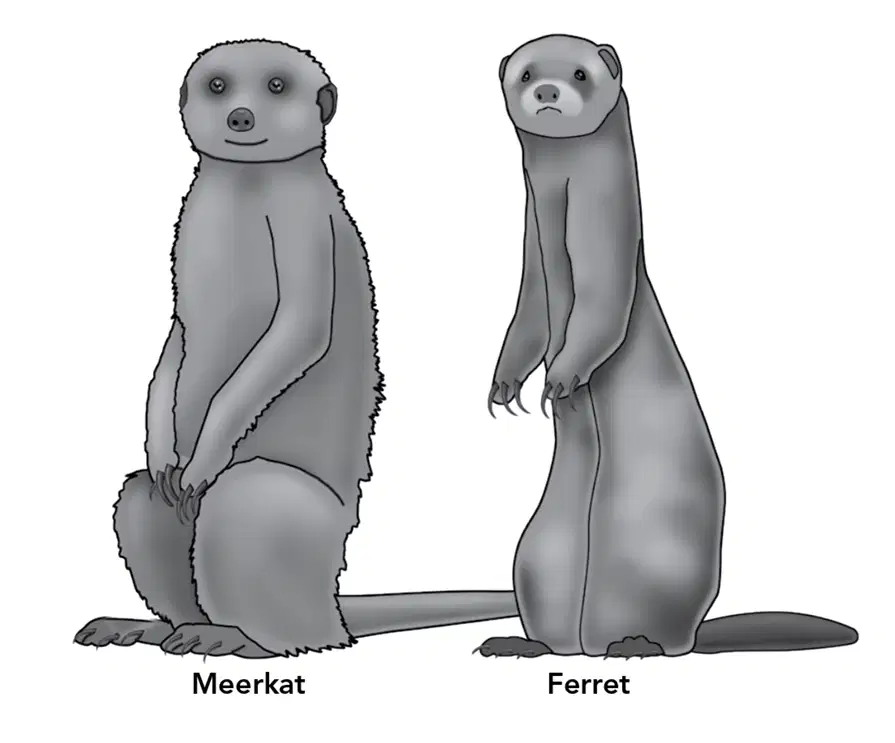
9. If meerkats and ferrets are in different families, why do they look so similar?
a)
Species from two different families can be very closely related.
b)
Two unrelated species can evolve similar characteristics through convergent evolution.
c)
Classification is an evolving process and the two animals are actually in the same family.
d)
The two species have the same binomial nomenclature.
10.
10. Puppies and kittens need shots to prevent viral infections. What type of shot would prevent a pet from a viral infection?
a)
A vaccine to trigger the body to produce chemicals that destroy the virus.
b)
An antibiotic to prevent the building of strong cell walls.
c)
An antiviral to keep the virus from replicating.
d)
An antivenom to neutralize harmful toxins.
11.
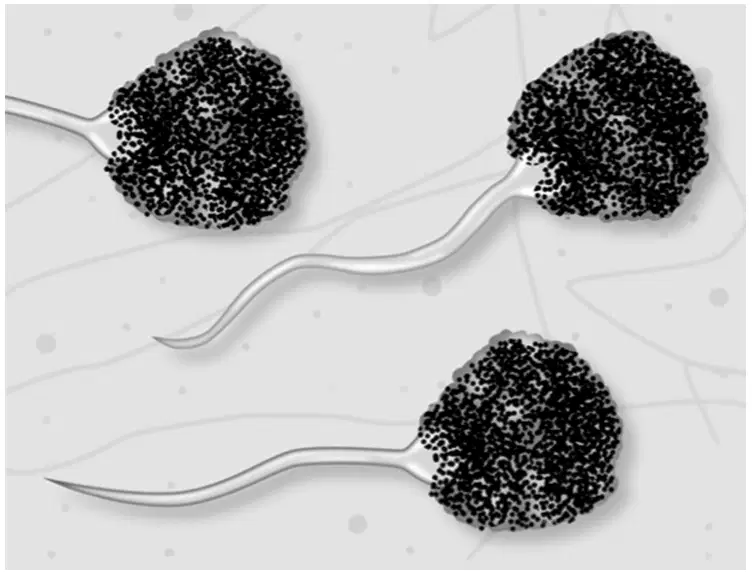
11. Dr. Snyder, a veterinarian, looks at a sample under the microscope and says “Aha! Yes, the tiny dots are spores and the long strings are hyphae. This dog probably has an Aspergillus infection.”
Based on Dr. Snyder's description and the image in the microscope, Aspergillus is a kind of _____________.
a)
virus
b)
fungus
c)
protist
d)
bacteria
12.
12. Only a small percentage of bacteria are harmful. Select a helpful role of bacteria.
a)
producing oxygen
b)
spoiling foods
c)
causing illness
d)
Curing pet cancers
13.
13. A major difference between plants and animals is that plants are _______________ while animals are _______________.
a)
autotrophs, heterotrophs
b)
eukaryotes, prokaryotes
c)
heterotrophs, autotrophs
d)
prokaryotes, eukaryotes
14.
14. Which structure is in a plant cell that would not be present in an animal cell?
a)
cell wall
b)
vacuoles
c)
cell membrane
d)
ribosomes
15.
15. Janell has an eye infection. The eye was a delicate organ. What works together to form the eye?
a)
multiple cells
b)
multiple tissues
c)
multiple organs
d)
multiple organisms
100 %

