Wayground logo

Free Printable Worksheets

Font size

S
M
L
XL
Worksheets

Introduction

Total questions: 97

Worksheet time: 2hrs 41mins
Name
Class
Date
1.
What medium does sound travel through slowest?
a)
gas
b)
solid
c)
liquid
d)
trees
2.
Sound is caused by....
a)
molecules
b)
vibrations
c)
people
d)
space
3.
Sound does not travel in space because
a)
Space is too far away.
b)
There is no matter in space.
c)
Space is the final frontier
d)
Space has planets.
4.
Sound is caused by? 
a)
force
b)
vibrations
c)
instruments
5.
What is vibration?
a)
how loud a sound is
b)
the back and forth movement of matter
c)
how high or low a sound is
d)
the loudness or softness of a sound
6.
What is frequency?
a)
the number of vibrations per second
b)
how high or low a sound is
c)
the loudness or softness of a sound
d)
the back and forth movement of matter
7.
Measure of how high or low a sound is
a)
amplitude
b)
compression
c)
speed of sound
d)
pitch
8.
A longer string makes a _______ pitch than a short string.
a)
louder
b)
softer
c)
higher
d)
lower
9.
The highest pitch is made by the _______ instrument.
a)
biggest
b)
wooden
c)
smallest
d)
shiniest
10.
An object that does not vibrate cannot produce
a)
sound
b)
light
c)
heat
d)
electricity
11.
What is volume?
a)
how high or low a sound is
b)
the loudness or softness of a sound
c)
the number of vibrations per second
d)
vibrations
12.
What medium (solid, liquid, gas) does sound travel fastest through?
a)
solid
b)
liquid
c)
gas
13.
Sound is a form of? 
a)
energy
b)
pitch
c)
volume
14.
Sound travels FASTEST through which of these materials?
a)
Air
b)
Empty space
c)
Metal
d)
Water
15.
Why is the school library covered with carpet?
a)
So everyone can make a lot of noise
b)
to help absorb sounds to keep it quiet
c)
because it looks good
d)
to help absorb sounds so it can stay noisy
16.
An ________ is a reflected sound.
a)
Vibration
b)
Echo
c)
Pitch
d)
Volume
17.

Sound is a form of energy produced by ______________.

a)

Vibrations

b)

Distances

c)

Prisms

d)

Forces

18.

Sound waves travel the FASTEST through _____________.

a)

Gases

b)

Liquids

c)

Solids

19.

An object that does not vibrate cannot produce

a)

Sound

b)

Light

c)

Heat

d)

Electricity

20.

A place where no sound exists is...

a)

in the air.

b)

under water.

c)

space.

d)

all of the above

21.

Why do we see lightning before we hear the thunder?

a)

Our eyes trick us.

b)

Light travels faster than sound.

c)

they're two separate things.

22.

When people speak their ________ vibrate.

a)

Ear drums

b)

Vocal chords

c)

Ears

d)

Tongue

23.

What is Pitch?

a)

How loud or soft a sound is.

b)

Muscle that holds vocal cords.

c)

Movement back and forth.

d)

How high or low a sound is.

24.

Which device measures sound waves?

a)

Oscilloscope

b)

Stethoscope

c)

Radio

d)

None of the above

25.

________ describes how LOUD a sound is.

a)

Amplitude

b)

Frequency

26.

____________ is determined by sound's frequency

a)

Compression

b)

Pitch

27.

A sound with a high frequency has a _____ pitch. A sound with a ____ frequency has a low pitch.

a)

high, low

b)

low, high

c)

medium, high

d)

high, medium

28.

______________ sounds have a larger amplitude

a)

Quiet

b)

Loud

29.

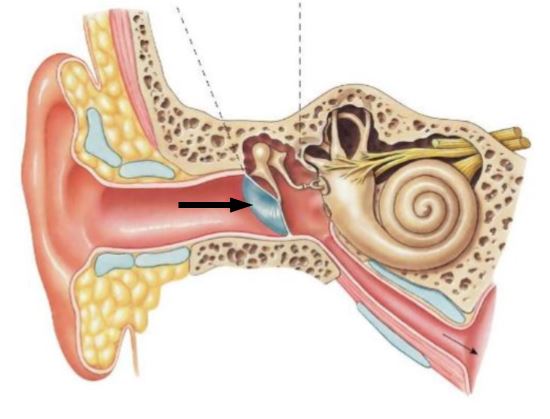
What is this?

a)

Ear Drum

b)

Ear Canal

c)

Nerve

d)

Cochlea

30.

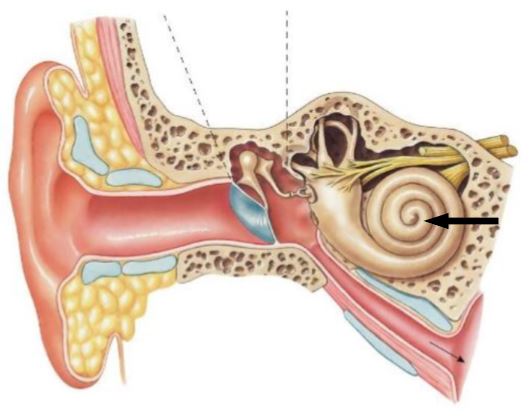
What is this?

a)

Nerve

b)

Ear canal

c)

Cochlea

d)

Ear Drum

31.
Sound moves in a _________.
a)
Transverse wave
b)
Longitudinal wave
32.
How is sound produced?
a)
By the vibration of particles
b)
By the transfer of particles 
33.
Area of a longitudinal wave where particles are CLOSE together.
a)
Compression
b)
Rarefaction
34.
Area of a longitudinal wave where particles are APART. 
a)
Compression
b)
Rarefaction
35.
Which device measures sound waves?
a)
Oscilloscope
b)
Stethoscope 
c)
Radio
d)
I don't know
36.
The reflection of sound waves off of a hard surface can create ______.
a)
A wave
b)
An echo 
37.
Soft surfaces _______ sound waves. 
a)
Reflect
b)
Absorb
38.
Sound travels FASTEST through which of these materials?
a)
Air
b)
Empty space
c)
Metal
d)
Water
39.
Sound is caused by? 
a)
force
b)
vibrations
c)
instruments
40.
What is vibration?
a)
how loud a sound is
b)
the back and forth movement of matter
c)
how high or low a sound is
d)
the loudness or softness of a sound
41.
Sound is a form of? 
a)
energy
b)
pitch
c)
volume
42.
Measure of how high or low a sound is
a)
amplitude
b)
compression
c)
speed of sound
d)
pitch
43.
A longer string makes a _______ pitch than a short string.
a)
louder
b)
softer
c)
higher
d)
lower
44.
To make a sound from a stringed instrument louder you must
a)
hit it
b)
pluck it harder
c)
hold it higher
d)
pluck it softer
45.
The highest pitch is made by the _______ instrument.
a)
biggest
b)
wooden
c)
smallest
d)
shiniest
46.
Why is sound able to travel faster through a solid than a gas?
a)
Gas molecules are packed tightly.
b)
Sound does not travel faster through a solid than a gas.
c)
Solid molecules are packed tightly.
d)
Gas molecules move slowly.
47.
An object that does not vibrate cannot produce
a)
sound
b)
light
c)
heat
d)
electricity
48.
What is volume?
a)
how high or low a sound is
b)
the loudness or softness of a sound
c)
the number of vibrations per second
d)
vibrations
49.

A kind of energy that travels in waves that you hear

a)

Sound

b)

Crest

c)

Light

d)

Pitch

50.

Each high point of a sound wave

a)

wavelength

b)

amplitude

c)

crest

d)

frequency

51.

The number of crests or troughs that pass by over a certain amount of time

a)

Frequency

b)

sound

c)

amplitude

d)

volume

52.

Each low point of a sound wave

a)

crest

b)

frequency

c)

trough

d)

acoustics

53.

Halfway between a crest and a trough

a)

resting point

b)

trough

c)

wavelength

d)

sound

54.

The distance between one crest or trough to the next

a)

volume

b)

acoustics

c)

sound

d)

wavelength

55.

The distance between the resting point and a crest or trough

a)

acoustics

b)

pitch

c)

amplitude

d)

volume

56.

How high or low a sound is

a)

pitch

b)

volume

c)

sound

d)

acoustics

57.

How loud or soft the sound is

a)

pitch

b)

acoustics

c)

wavelength

d)

volume

58.

The study of how sounds travel and how they can be controlled

a)

acoustics

b)

wavelength

c)

pitch

d)

trough

59.

Sound waves travel slowest through a _____

a)

solid

b)

liquid

c)

gas

60.

Sound waves travel fastest through a ______

a)

solid

b)

liquid

c)

gas

61.

Sound waves move faster when the medium is

a)

warm

b)

cold

62.

Sound waves move slower when the medium is

a)

warm

b)

cold

63.

What is a tool that makes sounds louder called?

a)

pitch

b)

wavelength

c)

outer ear

d)

amplifier

64.
Sound waves are what kind of wave?
a)
Longitudinal
b)
Transverse
c)
Surface
d)
Electromagnetic
65.
If you want to change the pitch of a sound, you have to change the ___
a)
frequency
b)
amplitude
c)
speed
d)
volume
66.
What happens when you increase the amplitude of a sound?
a)
it makes the sound louder
b)
it makes the sound travel faster
c)
it increases the wavelength of the sound
d)
it increases the frequency of the sound
67.
This is the unit used to measure the volume of a sound. 
a)
Decibel
b)
Medium
c)
Vibration
d)
Oscilloscope
68.
True or False: Can sound travel through a vacuum (space).
a)
True
b)
False
69.
True or False: Sound travels better through solids than through liquids
a)
True 
b)
False
70.
What is a pitch?
a)
highness or lowness of a sound
b)
the intensity of a vibration
c)
the amplitude of the sound wave
d)
volume of sound
71.
As a sound source approaches and then moves past a stationary observer, the observer will hear
a)
a steady rise in pitch
b)
a sudden drop in pitch
c)
a drop in pitch, then a rise in pitch
d)
a rise in pitch, then a drop in pitch
72.
The Doppler effect can cause an apparent change in...
a)
loudness
b)
intensity
c)
pitch
d)
reasonance
73.
Bats use ________ TO LOCATE MOSQUITOES IN THE AIR.
a)
solar
b)
ecology
c)
echolocation
d)
evolution
74.
Sound waves move more quickly through _________________ matter
a)
dense
b)
light
75.
Why is sound able to travel faster through a solid than a gas?
a)
Gas molecules are packed tightly.
b)
Sound does not travel faster through a solid than a gas.
c)
Solid molecules are packed tightly.
d)
Gas molecules move slowly.
76.
How does a sound wave interact with a human ear?
a)
vibrates the ear drum
b)
bounces off the ear canal
c)
rotates the ear drum
d)
vibrates the ear canal
77.
What unit is the intensity of sound measured in?
a)
decibels (dB)
b)
Hertz (Hz)
c)
meters per second (m/s)
d)
meters
78.
The number of wavelengths that pass a point each per second is:
a)
frequency
b)
period
c)
longitudinal 
d)
transverse wave 
79.
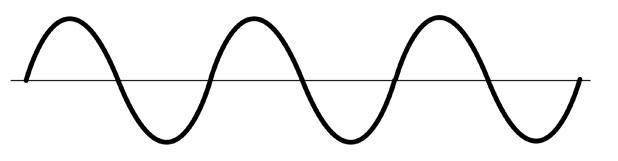
a)
Frequency
b)
Amplitude
c)
Wavelength
d)
Trough
80.
a)
Trough
b)
Crest
c)
Amplitude
d)
Wavelength
81.
a)
Crest
b)
Trough
c)
Height
d)
Frequency
82.
Sound is caused by....
a)
molecules
b)
vibrations
c)
people
d)
space
83.
Sound does not travel in space because
a)
Space is too far away.
b)
There is no matter in space.
c)
Space is the final frontier
d)
Space has planets.
84.
What is vibration?
a)
how loud a sound is
b)
the back and forth movement of matter
c)
how high or low a sound is
d)
the loudness or softness of a sound
85.
What is frequency?
a)
the number of vibrations per second
b)
how high or low a sound is
c)
the loudness or softness of a sound
d)
the back and forth movement of matter
86.
Measure of how high or low a sound is
a)
amplitude
b)
compression
c)
speed of sound
d)
pitch
87.
What is volume?
a)
how high or low a sound is
b)
the loudness or softness of a sound
c)
the number of vibrations per second
d)
vibrations
88.
Sound is a form of? 
a)
energy
b)
pitch
c)
volume
89.
Your __________ vibrate when you talk
a)
stomach
b)
lips
c)
ears
d)
vocal cords
90.
A sound with a high pitch would have
a)
a low frequency
b)
a high frequency
c)
a low amplitude
d)
a high amplitude
91.
A sound with a low pitch would have a:
a)
high frequency
b)
low frequency
c)
high amplitude
d)
low amplitude
92.
Sound travels as
a)
transverse waves
b)
longitudinal waves
c)
seismic waves
d)
air waves
93.
a)
Amplitude
b)
Crest
c)
Trough
d)
Wavelength
94.
when sound bounces off an object
a)
reflect
b)
frquency
c)
trough
d)
transmit
95.
When sound penetrates an object and passed through
a)
reflect
b)
transmit
c)
trough
d)
crest
96.
What unit of measure is used for volume?
a)
frequency
b)
pitch
c)
decibel
d)
wavelength
97.
During which part of the day should no sound be heard? ;)
a)
When Mrs. Mallon is talking
b)
After 2nd period
c)
When walking in the halls
d)
All of the above