Wayground logo

Free Printable Worksheets

Font size

S
M
L
XL
Worksheets

Series Circuits

Total questions: 35

Worksheet time: 56mins

Name
Class
Date
1.
What kind of circuit is this?
a)
series
b)
parallel
2.
What kind of circuit is this?
a)
series
b)
parallel
3.
When you remove a bulb from a three bulb circuit, and the other two bulbs go off, then the bulbs must have been connected in __________.
a)
parallel
b)
series
c)
open
d)
closed
4.
The picture shows an electrical circuit. This circuit is a series circuit because: 
a)
It has 3 light bulbs.
b)
The same current flows through all three light bulbs.
c)
It uses a single battery.
d)
The electrical current is divided between the three light bulbs.
5.

Current is measured in

a)

Volts

b)

Watts

c)

Seconds

d)

Amps

6.
A series circuit has ____ path(s) that the electric current can take. 
a)
One
b)
Two 
c)
Three 
d)
Four
7.
What 'flows' in a wire?
a)
Protons
b)
Neutrons
c)
Atoms
d)
Electrons
8.
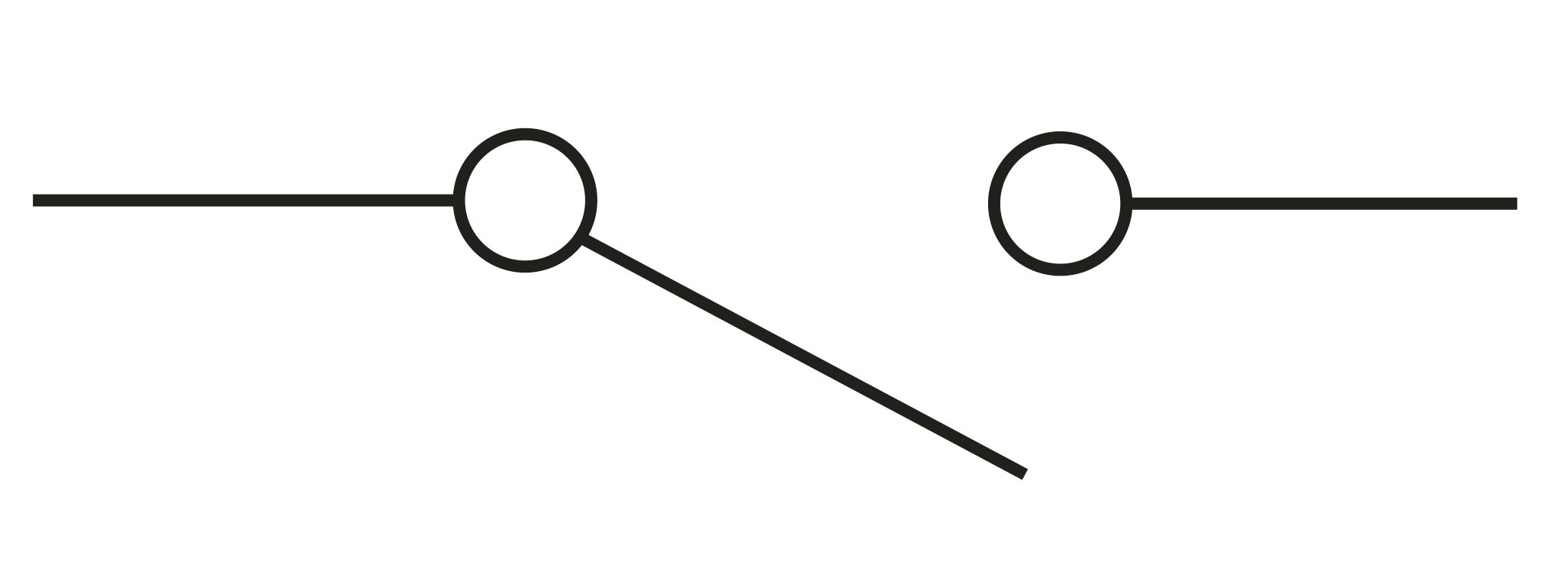
this is the symbol for a _____?
a)

switch

b)

light 

c)

battery

d)

wires

9.

A series circuit has ____ path(s) that the electric current can take.

a)

One

b)

Two

c)

Three

d)

Four

10.
Pick the correct sentence.
a)

This circuit will work because it is a closed circuit.

b)

Energy will freely flow in this circuit.

c)

This circuit will not work because there is no energy source.

d)

This circuit will not work because there is no switch.

11.
What is it called when a circuit is complete?
a)

Closed circuit

b)

Light bulb circuit

c)

Open circuit

d)

Series circuit

12.
Find Rt
a)
31.9 ohms
b)
3190 ohms
c)
31,900 ohms
d)
319,000 ohms
13.
Find the voltage across R1
a)
12 V
b)
4V
c)
3V
d)
2K
14.
One path for current to flow
a)
series
b)
parallel
c)
combination
d)
split
15.
Total resistance in a series circuit
a)
Rt = R1 + R2
b)
1/Rt = 1/R1 + 1/R2
c)
Rt = R1 X R2 / R1 + R2
d)
Rt = RN / RV
16.
Total current in a series circuit
a)
It = I1 = I2
b)
It = I1 + I2
c)
It = I1 / I2
d)
It = I1 X I2
17.
Find It
a)
450 amps
b)
2 amps
c)
20 mA
d)
9 amps
18.
In a series circuit which of the following is the same  throughout the circuit
a)
Resistance
b)
Voltage
c)
Current
d)
None of the above
19.
In a series circuit which of the following will vary based on the resistor
a)
Resistance
b)
Voltage
c)
Current
d)
None of the above
20.
3 resistors are connected to a 9 V battery n a series circuit, the first resistor uses 6 V, the second uses 2 V. How much voltage does the third resistor use?
a)
1 V
b)
2 V
c)
3 V
d)
9 V
21.
What is the total voltage (VTotal) across this circuit?
a)
1.5 V
b)
9 V
c)
3 kΩ
d)
10 kΩ
22.

Solve for the total resistance of the circuit shown

a)

50 V

b)

1970 ohms

c)

705 K ohms

d)

20 Amps

23.

Solve for the voltage drop at resistor 1

a)

38 volts

b)

60 Kvolts

c)

50 volts

d)

25 volts

24.

With three 10 resistors connected in series with a 30 volt power supply, the total circuit current will equal ____.

a)

300 amps

b)

1 amp

c)

150 amps

d)

1 millamp

25.

As you continue to add lightbulbs in series, what happens?

a)

The bulbs get brighter

b)

The bulbs get dimmer

c)

The bulbs remain the same brightness

d)

The bulbs explode and shards of glass get everywhere

26.

If one bulb goes out in a series circuit, the remaining bulbs...

a)

also go out

b)

get brighter

c)

get dimmer

d)

explode, leaving shards of glass everywhere

27.

What is the potential difference in this circuit?

a)

30 V

b)

60 V

c)

2 V

d)

9 V

28.

What is the total resistance (equivalent resistance) in this circuit? Respond with number only (no units)

(a)  

29.

What is the total current in this circuit?

a)

30 A

b)

60 A

c)

2 A

d)

0.5 A

30.

The current is the same through all 3 resistors

a)

True

b)

False

31.

The current through resistor one is greater than the current through resistor two.

a)

True

b)

False

32.

What is the current throughout the circuit? Respond with number only (no units)

(a)  

33.

What is the total resistance (equivalent resistance) throughout the circuit? Respond with number only (no units)

(a)  

34.

What is the potential difference of the battery? Respond with number only (no units)

(a)  

35.

In a circuit drawing, what does this symbol mean?

a)

A battery

b)

A maze for electrons