
 Worksheets
PH DRIVING NCII - Review
Total questions: 135
Worksheet time: 4hrs 47mins
What should you prepare for a long trip?
Plan your route
Prepare the necessary tools that can be used to repair the vehicle
Make sure the vehicle is running in good condition
All answers are correct
None of the above
A driver must park within the curb by putting the car in low gear and setting the parking brake for at least:
40 centimeters
35 centimeters
30 centimeters
Which of the following is the maximum speed limit on expressway for cars?
60 kph
80 kph
100 kph
What is the meaning of a blinking red traffic light?
Slow down, then go on safely
Stop, then proceed if it is safe
Wait for the yellow light
Which of the following driver's license requires salaries or wages while driving?
Non-professional driver's license
Student's permit
Professional driver's license
To avoid suspension or revocation, how many days must a driver with an apprehended license settle his case with LTO?
within 15 days
within 10 days
within 30 days
How long is the validity of a student permit?
3 months
6 months
12 months
What documents must you always bring while driving?
Driver's license
Driver's license and vehicle insurance paper
Driver's license, vehicle registration, and receipt of last LTO payment for the vehicle
which of the following is the age requirement for an applicant of a professional driver's license?
16 years old
18 years old
21 years old
What is the meaning of a traffic sign that has a triangle with red color?
Warning sign
Reminder sign
Information sign
When driving behind a school bus that is loading or unloading students, you should-
stay near the bus
stay at the right side of the bus
stay far enough back from the bus
What will you do if your car tire burst while at cruising speed?
maintain your speed
slow down your vehicle
depress the brake pedal immediately
It is more dangerous to drive at the maximum speed limit at night than during daytime because:
your reaction time is slower at night
the roadways are more slippery at night
you cannot see too far ahead at night
What is the meaning of an arrow painted on the road?
Slow down
You are allowed to change lanes
Follow the direction painted on the road

Which of the following best describes the picture?
Intersection warning
Train cannot pass
Train track
Throwing bottles, cans or anything from your vehicle windows is:
forbidden at all times
forbidden only in the province
forbidden only is the cities
What should you do when approaching a curve?
Speed up
Slow down
Abruptly push the brake
When you intend to drive faster than the other vehicles, you should use the:
outermost (right) lane
center lane
innermost (left) lane

Which of the following best describes the picture?
No right turn permitted
No left-turn permitted
You must not make a U-Turn

Which of the following best describes the picture?
No entry
Give way
Stop

gas
clutch
brake
When using the basic speed law as a guide, the choice of speed is based on the:
speed of the driver
fuel of car being driven
traffic and road condition
Whenever you are driving, especially when overtaking:
never overtake another vehicle from a tailgating position
never overtake another vehicle that has its hazard lights on
never overtake another vehicle that is on the passing lane
In case of an accident, the first duty of the driver involved is to:
pick-up the injured person and take him to the nearest hospital
report the accident to the nearest hospital
report the accident to the nearest police station

Which of the following best describes the picture?
Beware of falling rocks
Broken road
Steep road
At an intersection with no control device, two cars approach from perpendicular directions. Which driver must yield?
The driver going straight
The driver who gets there first
The driver turning right

What does this sign indicate?
Stay on the extreme right side of the highway
Road widens ahead
Winding road
Which of the following is the maximum speed limit on expressway for cars?
60 kph
80 kph
100 kph
What is the meaning of a blinking red traffic light?
Slow down, then go on safely
Stop, then proceed if it is safe
Wait for the yellow light
Which of the following driver's license requires salaries or wages while driving?
Non-professional driver's license
Student's permit
Professional driver's license
To avoid suspension or revocation, how many days must a driver with an apprehended license settle his case with LTO?
within 15 days
within 10 days
within 30 days
How long is the validity of a student permit?
3 months
6 months
12 months
What documents must you always bring while driving?
Driver's license
Driver's license and vehicle insurance paper
Driver's license, vehicle registration, and receipt of last LTO payment for the vehicle
What are the 3 types of distractions?
Visual, Manual and Feeling
Contact, Manual and Vision
Manual, Visual, and Cognitive
None of the above
Multi-Tasking should be called...
Attempting
Split Attention
Undivided Attention
Divided Attention
One of the critical driving behaviors is allowing time and space, to make speed and position adjustments.
True
False
While driving, you should always maintain a line of___________.
Sight
Defense
Distance
Position
Taking your eyes off the road is an example of what type of distraction?
Manual
Cognitive
Visual
Mental
Taking your hands off the wheel is an example of what type of distraction?
Manual
Visual
Cognitive
Handling
Taking your mind off the road is an example of what type of distraction?
Manual
Visual
Cognitive
All of the above
The number 1 cause of teen death's in cars are distractions.
True
False
Distractions are anything that...(check all that apply)
Inside the vehicle
Outside the vehicle
Takes the drivers focus away
Helps the driver focus

Turn right
Stop
Slippery road
Don't cross

Turn right
Stop
Slippery road
Speed limit

Turn right
T junction
Slippery road
Speed limit

Don't turn right
T junction
Slippery road
Speed limit

Don't turn right
T junction
Slippery road
No stopping

Don't turn right
T junction
Parking
No stopping

Don't turn right
T junction
Parking
Weight limit

What does this sign represents?
No pets allowed
Look both ways
Two way street
Narrow street ahead

What does this sign represents?
No "u" turn
No turn left
No turn right
Do not cross street

What sign is this?
Kids allowed
Work signed
School Zone
Walk with a partner

What sign is this?
Cross sign
Do not cross sign
Do not enter
Walk slow

What sign is this?
Go sign
Go slow sign
Stop sign
Go ahead sign
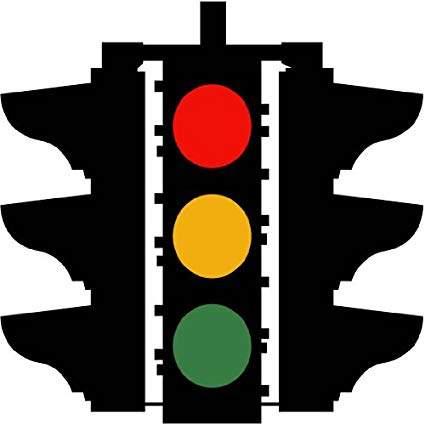
In a street light, what does the yellow light represents?
Go faster
Go
Go slower/stop
Stop

What does this sign represents?
Work site ahead
Excavation site
Archaeologists ahead
When driving on a steep grade, you should:
a. Shift into a lower gear while driving either uphill or downhill
b. Keep your foot firmly on the brake while driving downhill
c. Accelerate before driving uphill
On a curving road,
a. Slow down before entering the curve
b. Apply your brakes as you are driving in the curve
c. Speed up slightly before entering the curve
If your car begins to skid on a road, you should:
a. Immediately apply the brakes
b. Ease off the gas pedal and turn your steering wheel in the direction of the skid
c. Ease off the gas pedal and turn your steering wheel in the opposite direction from the skid
Use your horn:
a. To try and get "eye contact" with another driver in order to avoid a collision
b. To try and speed up motorists or cyclists who are moving too slowly
c. To alert other drivers to mistakes they have made
Roads are most slippery:
a. After a heavy rain
b. When it first starts to rain or drizzle after a dry spell
c. During heavy rain
When driving in darkness, you should:
a. Drive slowly enough to stop within the distance lighted by your headlights
b. Turn on your high beam headlights as cars approach from the opposite direction
c. Keep your eyes on the headlights of approaching vehicles
When driving in fog, you should:
a. Use your parking lights
b. Use your low beam headlights
c. Use your high beam headlights

What should you do when you see a "School Ahead" sign?
Zoom through the street
Go slowly through the street

What should you do when you're driving while it's a green light, and it turns yellow while you're in the middle of the street?
Stop in the middle of the street
Quickly go through the street

What do you do when you see this sign?
Make a U turn
DON'T make a U turn, instead try to find another route that you can make a U turn

What should you do when you see this sign?
Turn right
DON'T turn right

What do you do when you see this sign?
Turn left
DON'T turn left

What does this sign mean?
There is a narrow bridge ahead
The following street is narrow
The following car lines are narrow

What does the following sign represent?
There is a hole in the road
There is a dangerous dip in the road
There is a narrow road ahead

What does this sign represent?
There is a narrow bridge ahead
The following road is narrow
Roads on both sides ahead

What does this sign represent?
There is a Y intersection on left
There is a Y intersection on right
Side road left
What does the STOP sign mean?
Stop
Keep going
The three colors of the traffic lights are?
Red, green and yellow
Red, green and blue
Yellow, green and blue
Blue, green and yellow
Yellow triangular signs provide what kind of information?
Warning
Hospital accross
Speed limit
Informative
Which of the following traffic signs are color blue?
Regulatory signs
Informative signs
Danger warning signs
Road work signs
Steady green light means.
You must yield to all pedestrians and other motorists using intersection
Go, it is safe to do so
Proceed cautiously through the intersection before the lights changes to red.
Stop
A flashing yellow light at the road crossing signifies.
Slow down and proceed with caution
Stop and stay until lights stop flashing
Wait for the green light
Go
A solid white line on the right edge of the highway slopes in towards your left. This shows that:
There is an intersection joint ahead
The road will get narrower
You are approaching a construction area
You are in a no- passing zone when the center of the road is marked by:
A broken yellow line
A broken white line
Two solid yellow lines
When arrows are painted on the pavement, Drivers must:
Must go in the direction of the arrows
Slow down and prepare to yield right of way
Are not allowed to chance lanes
You may not drive across solid yellow lines expect to.
Change Lanes
Turn Left
Turn right
You may not cross a single broken white of yellow line:
When turning left into a driveway
When passing to the right on a one way street
When to do so would interfere with traffic
You may cross over a double line on the road to overtake another car if the line on your side is:
Solid white
Broken
Solid yellow
When you approach a flashing red signal light, you should:
Wait for the green light before before proceeding
Slow down and proceed with caution
Come to a full stop and proceed when it is safe to do so
When you approach a flashing red signal light, you should:
Wait for the green light before proceeding
Slow down and proceed with caution
Come to a full stop and proceed when it is safe to do so
Which of the following hand signal's must a driver give when he wants to slow down or stop?
Left is bent at elbow, hand pointing up
Left arm held straight in a horizontal position
Left arm held down and hand point at ground
The proper hand signal for right turn is:
Left is bend at elbow, hand pointing up
Left arm held straight in horizontal position
Left arm held down and hand pointing at ground
If the driver ahead of your extends,his left arm straight out, you are fairly sure that he is going to:
Turn left at the next intersection
pull off the side of the road to stop
Turn right at the next intersection
At what circumstances should you sound your horn?
As a safety warning
At school zones
At hospital zones
The road sign "Do not enter" is a
Regulatory sign
Guide sign
Warning sign
The right of way law provide us with:
Basic rights as drivers
Rules for when to yield to others
Rules for turning right
What does the lane require you to do upon approaching an intersection with stop sign?
Slow down and proceed when it is safe to do so
Stop and proceed to do so
Yield the right of way if necessary to vehicles approaching to the left or right
upon approaching an intersection marked with a yield sign, you are required to:
Stop before entering the intersection
Enter the intersection immediately
Slow down then enter the intersection when the way is clear
After passing or overtaking a car, you can safely move back into the lane,you left if:
The driver you have passed honks his horn
You can see in your rear view mirror the car you have pass
You can see in your side view view mirror the car you have pass
You may pass to the right of the car traveling in your direction:
If the highway is clearly marked for two or more lanes moving towards the same direction
On a road having one lane in opposite direction
By driving off paved roadway
You should begin signaling for a right or left turn before reaching the turning points by at least:
30 meters
60 meters
15 meters
You should normally begin a right turn on:
The lane nearest to the road center
The lane nearest to the right curb
The same lane as for a left turn
The car behind you wants to pass, you should:
Blow your horn to allow him to pass
Slow down slightly and pull to the right
Pull to the right and stop as he can pass
When driving in the highway at night, you should use low beam headlights when:
Another driver dim his lights
Blinded by the headlights of an approaching vehicle
All of the above
If the brakes light of several cars ahead of you flash on, you should:
Release accelerator and prepare to brake
Apply your brakes as soon as possible
Increase your speed
The driver must not overtake at the foot or approaching of a bridge because:
He cannot see oncoming vehicle form the other side of the bridge
There are pedestrian crossing
He might obstruct the flow of traffic
The best practice when turning left or right while travelling on highway is
To signal your intention as you make a turn
To give the electrical or hand signal at least 30 meters before you make the turn
To disregard signaling if there is no traffic ahead or behind you
Which of the following is not a safe place to overtake?
When approaching a bridge or upon a curve
At an intersection
Both
When you intend to drive slower than the other vehicles, you should use the:
Outermost or right lane
Center lane
Innermost or left lane
Which of the following is the maximum speed limit on expressway?
60 kph
80 kph
100 kph
The speed limit within the school zone during school days is:
20 kph
25 kph
30 kph
Night driving is dangerous because:
Street lights tend to blur your vision
More vehicles are on the road at night
The distance we can see ahead is reduced
When following behind another car , it is considered a safe rule at least:
Space for one car
15 feet of stopping distance
One car length per 10 miles of speed
Which of the following should you do if you feel drowsy while driving?
Pull off the road and rest
Move over to the right lane and continue driving
Increase your speed to get away from other vehicles
A good driving attitude of the driver is:
Drive slowly
Drive defensively
Take chances if possible

Identify the traffic sign
Road ends
Crossroads
Road goes left or right

Identify
You must give right of way
You have the right of way
Early warning device

Identify
No right turn permitted
No left turn permitted
No U turn permitted

Identify
Stop only if the other vehicle are approaching
Stop signs 150 meters ahead
Make a full stop and proceed when the way is clear

Identify
No overtaking
No parking
Bus stop

Identify
Indicate that you must not pass
No entry of any motor vehicle
No parking

Identify
No entry to all types of vehicles
Full stop
Dead end street ahead

Identify
School zone sign
Pedestrian crossing
Playground

Identify
Road bends, prepare to go right and then left
Road close ahead, go right
You may travel beyond 30 kph

Identify
You may travel beyond 30 kph
You must limit your speed to 30 kph
The distance to the next town is 30 kph

Identify
There is a winding road ahead
Road widens ahead
Barricade ahead prepare detour

Identify
Railroad crossing
Intersection
Highway ahead
What term refers to the signs erected at the side of or above roads to give instructions or provide information to road users?
Priority Signs
Road Signs
Speed Signs
Parking Signs
What term refers to the traffic signs that regulates traffics?
Priority Signs
Regulatory Signs
Speed Signs
Road Signs
What term indicates the order in which vehicles should pass intersection points?
Speed Signs
Priority Signs
Parking Signs
Road Signs
What term refers to any road signs used primarily to give information about the location?
Direction Signs
Speed Signs
Parking Signs
Priority Signs
What road signs are circular in shape with a Yellow, White, or Blue background?
PROHIBITIVE SIGNS
SPEED SIGNS
PARKING SIGNS
PRIORITY SIGNS
What regulatory sign indicates a speed limit or minimum speed limit on a certain road?
SPEED SIGNS
PRIORITY SIGNS
DIRECTION SIGNS
WARNING SIGNS
What type of regulatory signs are used to direct, inform, enforce traffic and parking rules?
WARNING SIGNS
SPEED SIGNS
PARKING SIGNS
DIRECTION SIGNS
What term refers to the traffic signs that warn road users of hazards or dangers ahead?
REGULATORY SIGNS
WARNING SIGNS
ROAD SIGNS
PRIORITY SIGNS
What road sign are used to indicate the type of road curve ahead of the motorist?
HORIZONTAL SIGNS
WARNING SIGNS
ROAD SIGNS
PRIORITY SIGNS
What road sign that is commonly used to alert or inform road users for intersections or merging traffics ahead?
INTERSECTION SIGNS
WARNING SIGNS
ROAD SIGNS
WARNING SIGNS
When driving in fog, you should:
a. Use your parking lights
b. Use your low beam headlights
c. Use your high beam headlights
When driving on a steep grade, you should:
a. Shift into a lower gear while driving either uphill or downhill
b. Keep your foot firmly on the brake while driving downhill
c. Accelerate before driving uphill

