
 Worksheets
Unit 2 Quiz Review: Macromolecules and Enzymes
Total questions: 20
Worksheet time: 11mins
Enzymes are an example of
Lipids
Carbohydrate
Protein
Nucleic Acid

What happens to an enzyme when it denatures.
High temperatures, changes in pH, or changes in salinity, disrupt the hydrogen bonds in the protein, which causes the shape of the active site to change resulting in a loss of function.
The activation energy of the reaction is raised.
The pH changes shape and the reaction no longer occurs.
High temperatures and pH change the substrate.
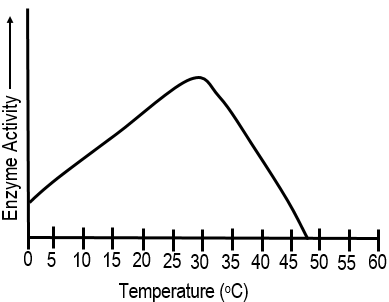
Which accounts for the great diversity of biological polymers?
There are trillions of basic monomers on earth.
Polymers come together in different combinations to form "mega molecules."
There is not a great diversity of biological polymers.
The monomers are arranged in different sequences.
Glucose, Fructose, Cellulose and Glycogen are all examples of
Carbohydrates
Lipids
Proteins
Nucleic Acids
Enzymes are _______________ that _____________________ chemical reactions by ____________ the amount of activation energy required to start the reaction.
carbohydrates, slow down, lowering
proteins, speed up, increasing
lipids, speed up, lowering
proteins, speed up, lowering
Which statements about enzymes are true (choose all that apply)
Enzymes are specific
Enzymes are reusable
Enzymes work at any temperature
All Metabolic reactions require enzymes

