
 Worksheets
Electron Test
Total questions: 20
Worksheet time: 2hrs 40mins
Identify the element with the following electron configuration: 1s²2s²2p⁶.
Be
Si
C
Ne
Identify the total amount of electrons in an element with this electron configuration: 1s²2s²2p⁶3s²3p³.
5
11
15
Identify the number of valence electrons in an element with this electron configuration: 1s²2s²2p⁶3s²3p³.
3
5
11
15
Identify the number of energy levels in an element with this electron configuration: 1s²2s²2p⁶3s²3p³.
1
2
3
5
Match the Heisenberg uncertainty principle with its correct definition.
It is impossible to determine the location and speed of an electron or other particle simultaneously.
No two electrons in the same atom will have the same set of quantum numbers.
Electrons will fill the lowest energy orbital first.
Orbitals of equal energy will each get one electron before any orbital gets a second.
Match Hund’s rule with its correct definition.
It is impossible to determine the location and speed of an electron or other particle simultaneously.
No two electrons in the same atom will have the same set of quantum numbers.
Electrons will fill the lowest energy orbital first.
Orbitals of equal energy will each get one electron before any orbital gets a second.
Match the Aufbau principle with its correct definition.
It is impossible to determine the location and speed of an electron or other particle simultaneously.
No two electrons in the same atom will have the same set of quantum numbers.
Electrons will fill the lowest energy orbital first.
Orbitals of equal energy will each get one electron before any orbital gets a second.
Match the Octet rule with its correct definition.
It is impossible to determine the location and speed of an electron or other particle simultaneously.
No two electrons in the same atom will have the same set of quantum numbers.
Electrons will fill the lowest energy orbital first.
The tendency of atoms to prefer to have eight valence electrons.
Match the Pauli exclusion principle with its correct definition.
It is impossible to determine the location and speed of an electron or other particle simultaneously.
No two electrons in the same atom will have the same set of quantum numbers.
Electrons will fill the lowest energy orbital first.
Orbitals of equal energy will each get one electron before any orbital gets a second.
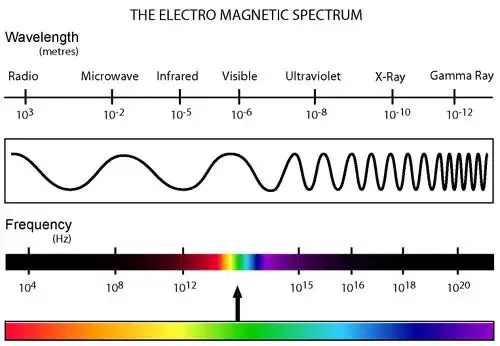
Which of the following has the greater frequency?
Yellow light
Blue light
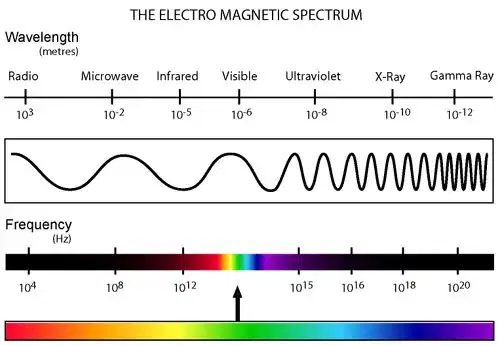
Which of the following has the greater frequency.
X-rays
Gamma rays
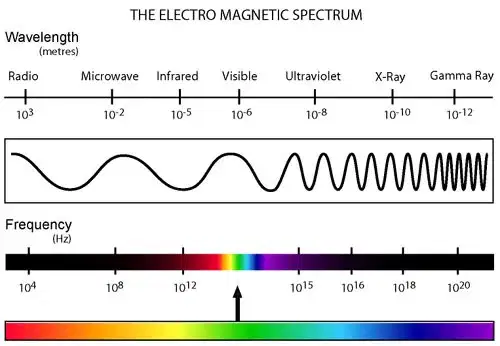
Which of the following has the longer wavelength.
Microwaves
Radio waves
Which of the following has the longer wavelength.
Infrared waves
Red light
Which of the following has the longer wavelength.
Red light
Green light
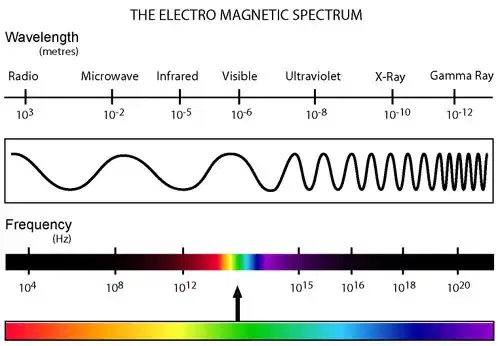
Which of the following has more energy.
Green light
Yellow light
Which of the following has more energy.
Orange light
Blue light
Which of the following has more energy.
Violet light
Red light
What is the electron configuration of Calcium (Ca)?
1s²2s²2p⁶3s²3p⁶4s²
1s²2s²2p⁶3s²3p⁶3d²
1s²2s²2p⁶3s²3p⁵
1s²2s²2p⁶3s²3p³
Draw the electron dot diagram for carbon (C).

What is the relationship between wavelength and frequency?
As wavelength increases, so does frequency.
They are directly related.
They are inversely related.
There is no relationship between wavelength and frequency.

