
 Worksheets
UNIT 4 REVIEW
Total questions: 64
Worksheet time: 2hrs 40mins
As culture changed during the 1920s, social tension began to develop. Rural Americans were more traditional and Urban Americans were more modern. This social tension showed up as:
Disagreements about currency
Resistance to more government regulations
Science vs. Religion
The Harlem Renaissance
Which of these resulted from the prohibition of alcohol during the 1920s?
A decline in immigration rates
A growing fear of communism
The expansion of the consumer economy
The rise of organized crime
Organized crime was on the rise in the 1920s due to this
prohibition
farm prices
child labor
rising tariffs

The Roaring 20s
The Best of Times
Harlem Renaissance
Great Migration

The Prohibition Era ended with
the passage of the Lindbergh Law.
the implementation of New Deal programs.
the ratification of the Twenty-first Amendment.
the Supreme Court's ruling in Nebbia v. New York.
What industry expanded as a result of the assembly line?
Automobiles
Banking
Textiles
Agriculture


The intent of the United States immigration laws of the 1920s was to
increase economic opportunities for recent immigrants
encourage cultural diversity
restore an open-door policy toward immigration
restrict immigration through the use of quotas
The 1920’s are sometimes called the “Roaring Twenties” because
foreign trade prospered after World War I
the United States assumed a leadership role in world affairs
widespread social and economic change occurred
political reforms made government more democratic
Which 1920s law was a part of Prohibition and outlined what liquors were illegal and that it was illegal to make, sell, transport, barter, import, export, deliver, and possess illegal liquors.
18th Amendment
Volstead Act
Vehicle Restriction Act
Vikander Act
WWI job openings, Jim Crow Laws, and an increase in racial violence in the South were all contributing factors to which of the following?
Great Migration
Growth of the KKK
Passing the 18th Amendment
The Red Scare
Speakeasy
A woman who rebelled against traditional views
The nickname for the growing market
An illegal bar that welcomed men and women
The Rebirth of African American culture
What invention connected the country in the 1920's?
radio
iPhone
walkie talkies
In Document 3, the New York Times writes, "Senator Long's career is also a reminder that material for the for the agitator and the demagogue is always ample is this country."
Which statement BEST describes the connotation of the word "demagogue" as it is used in Document 3?
A leader who preys on the ignorance of the lower classes.
A leader who misleads the citizenry about his presidential ambitions
A leader who shifts his political positions the reflect the public's wishes
A leader who enacts policies to improve the lives of the common people.
Which statement best explains why Huey P. Long's "Share Our Wealth" movement (Document 1) appealed to so many Americans during the 1930s?
Many Americans were concerned their taxes would increase .
Many Americans were concerned about the state of the economy.
Many Americans were about the Budget deficit.
Many Americans were concerned the government was too powerful.
In Source 4, Huey P. Long is portrayed in the costume of Napoleon Bonaparte. Which statement BEST explains the cartoonist's purpose in making this artistic choice?
To applaud Long for his accomplishments
To frighten citizens into obeying Long
To describe Long as insane
To characterize Long as a dictator
What major event had many Louisianians upset with their state and federal governments at the time of Long's election as governor of Louisiana?
World War II
Plessy vs Ferguson
the Flood of 1927
Mardi Gras
Which statement relating to the Flood of 1927 is NOT correct?
It was the worst national disaster in the nation’s history.
One million people were left homeless.
Dynamite was used to destroy the levee below New Orleans to protect the city from flooding.
Louisiana suffered minor damage from the flood.
What program was part of Huey Long’s efforts to help the people of Louisiana who were struggling with the Great Depression.
New Deal
Share Our Wealth
Share our Food
Share our Deal
What was the name given to the program enacted by Congress during President Roosevelt's first terms to deal with the problems of the Great Depression?
Share our Wealth
Works Progress Administration
New Deal
Civilian Conservation Corp
Louisiana is the leading producer in what industry?
Oil industry
Airplane industry
Cotton industry
Steamboat industry
The Flood of 1927 led to what Populist politician gaining power in Louisiana?
Abraham Lincoln
Andrew Johnson
Huey Long
Bobby Jindal
Why did the Flood of 1927 have less of an effect on New Orleans?
The flood did not occur along the Mississippi River.
The Louisiana legislature blew the levees to relieve pressure to save New Orleans
New Orleans is on high ground so the flood would not reach the city
The flood of 1927 was widely exaggerated and not actually a big deal.
What human factors led to the Flood of 1927?
Rainstorm swells in Northern U.S.
Building cities all along the Mississippi River led to the flood
The "levee-only" policy which built levees all along the Mississippi
Hurricanes causing coastal erosion led to the flood
After the Stock Market Crash of 1929, what did President Hoover recommend for Americans?
Withdraw all of your money from the banks
Take advantage of the stock "sale" and buy more
Handle business as usual
He Ignored it and didn't recommend anything
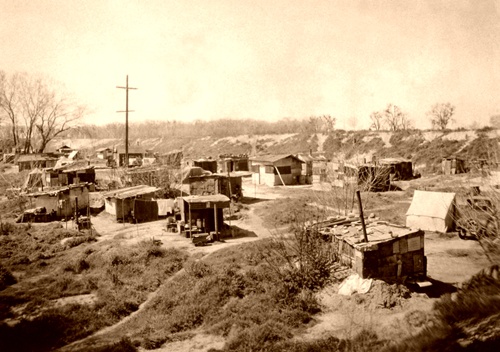
During the Great Depression, neighborhoods of shacks would be known as...
Shantytowns
Hoovervilles
Ghettos
Projects
Who primarily benefited from the 2nd New Deal (1934-1941)?
Big Pharma
Big Business
Small Farms + Labor
Oil industry
Where could people go to get free or reduced-price food?
Restaurants, right before closing
City Hall
Schools
Soup Kitchens
How did the Louisiana Constitution of 1921 affect African Americans?
It protected equal voting rights for all citizens
It removed segregation laws across the state
It continued policies that limited African American voting and supported segregation
It guaranteed equal education funding for Black and white schools
What was the bank run?
A 5k run sponsored by the big banks
People wanting to give as much money as possible
Banks running out of paper
Americans withdrawing all of their money from the banks
Unemployment reached its peak at what percentage?
10
25
50
75
What factor did NOT contribute to the Dust Bowl?
The Hoover Dam
Overgrazing
Unusual Weather Conditions
Overplowing
Who primarily benefited from the 1st New Deal (1933-1934)?
Consumers
Nobody
Agricultural Business + Big Business
banks
Which of these was NOT a reason Conservatives opposed the New Deal?
It increased the power of the presidency
It added to the National Debt
It didn't go far enough
It encouraged idleness


What is the best title for the list?
_____ is Louisiana's SECOND most money-maker!
Lumber (from trees)
Salt
Sulphur
Coal
More than 25% of the nations supply of ____ comes from Louisiana!
Natural Gas
Coal
Uranium
Wetlands
Two mineral resources that have helped Louisiana's Economy
Oil and Natural gas
Coal and Uranium
Lumber and Fish
Wildlife and Wetlands
Overproduction of goods by American companies contributed to the Great Depression by
encouraging business to hire more workers
creating large inventories of unsold products
causing an increase of prices in imported goods
paying employees high wages, leading to inflation
The main purpose of the CCC (Civilian Conservation Corps) was to
create jobs for young men and improve environment
open banks
to teach how to conserve energy
farm assistance program
Which writer of the Harlem Renaissance wrote in a style of blues and jazz, casting off the influences of white poets?
Jean Toomer
Claude McKay
Zora Neale Hurston
Langston Hughes

"Alphabet Soup" refers to
the name of the generic soup made for the homeless
the many stock options available during the 1920s
the many programs created in the New Deal
just soup

