
 Worksheets
States of Matter Test Review
Total questions: 42
Worksheet time: 23mins
A solid is a state of matter that has a(n)
indefinite volume and indefinite shape
definite volume and a definite shape
definite volume and an indefinite shape
indefinite volume and a definite shape
An uncovered pot of soup is simmering on a stove, and there are water droplets on the wall above the back of the stove. What sequence can you infer has occurred?
melting, then boiling
freezing, then thawing
vaporization, then condensation
condensation, then vaporization

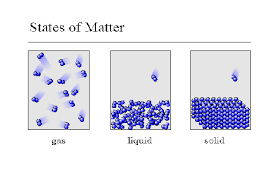
In which state of matter are the particles least able to move?
A
B
C

Which of these three states represents a liquid?
A
B
C
Match the following Phase Changes
Melting
Solid to Liquid
Condensation
Gas to Liquid
Freezing
Liquid to Solid
Deposition
Gas to Solid
Sublimation
Solid to Gas

TRUE or FALSE: In order to change the state of matter, you need increase or decrease the energy (heat).
TRUE
FALSE

When changing a substance from liquid to solid, the energy has to...
INCREASE
DECREASE
When changing a substance from liquid to gas, the energy has to...
INCREASE
DECREASE

Look at the picture. Which state of matter is in beaker A?
Solid
Liquid
Gas
Blue thingys
Look at the picture. Which state of matter is in beaker C?
Solid
Liquid
Gas
Blue thingys
It refers to the space that matter occupies.
volume
mass
weight
density
When an object undergoes phase change, its mass
increases
stays the same
decreases
The colder the temperature, the _______ the particle's motion.
Faster
Slower
Smaller
Larger

When heat is added -- Ice changes into water
melting
freezing
deposition
sublimation

When heat is added -- water changes into steam or water vapor
evaporation
freezing
deposition
condensation

When heat is removed -- water changes into ice
evaporation
freezing
deposition
condensation

When heat is removed -- water vapor changes into water. Drops form on the outside of the glass.
evaporation
freezing
deposition
condensation

The 3 states of matter are
solid
liquid
plasma
gas

When matter changes from a solid to a liquid and from a liquid to a gas, the number of particles does not change because
heat was added
matter cannot be created or destroyed
it was a physical change
it was a chemical change

Has a definite/fixed shape and definite/fixed volume. It holds its shape.
solid
liquid
gas
plasma

Has an indefinite shape. It takes the shape of its container.
Has a definite/fixed volume.
solid
liquid
gas
plasma

Has an indefinite shape and volume. It takes the shape of its container.
It has the volume of its container.
solid
liquid
gas
plasma

Particles are packed tightly together. Particles are held together by strong attractive forces (bonds). Particles vibrate in fixed positions.
solid
liquid
gas
plasma

Particles move more rapidly in a small area. Particles are still close to each other but are spread a little away from each other.
solid
liquid
gas
plasma

Particles move very rapidly in all directions. Particles are at great distances from one another. Attractive forces have less effect.
solid
liquid
gas
plasma

Examples - rock, ice, salt, wood, glass, concrete, metal
solid
liquid
gas
plasma

Examples - water, milk, blood, Mercury (element), oil
solid
liquid
gas
plasma

Examples - oxygen, carbon dioxide, helium, steam/water vapor, ozone, hydrogen, air
solid
liquid
gas
plasma

_______ is anything that has mass and takes up space
matter
solid
liquid
gas
Which image shows particles in a liquid?


Which image shows particles in a solid?
To change water from a solid to a liquid to a gas, you must...
add heat
remove heat
If I add heat to a solid, how will the motion of the particles be affected?
They will move slower
They will stop moving
They will move faster
They will move to a different container
Which process could cause a material to change state from gas to liquid?
Adding heat
Adding energy
Removing particles
Removing energy
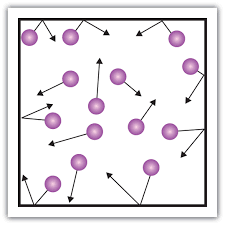
A gas typically consists of:
low energy particles that experience high attractive forces between them.
low energy particles that experience no attractive forces between them.
high energy particles that experience high attractive forces between them.
high energy particles that experience little attractive force between them


