
 Worksheets
Chemistry Final Review
Total questions: 40
Worksheet time: 40mins

Circling the atom, these parts of an atom hold a negative charge.
Neutron
Electron
Proton
Compound


Which of these is a compound?
Aluminium (Al)
Carbon Dioxide (CO2)
Nitrogen (N)
Sand
True or False: elements AND compounds are pure substances.
True
False

This is
a compound.
an element.
an atom.
a mixture.
In which mixture can you see all of the parts?
homogeneous
heterogeneous
In which mixture can you not see all of the parts?
homogeneous
heterogeneous

Which state of matter has both definite shape and definite volume?
Gas
Liquid
Solid
Volume is _______________________.
the amount of matter an object has.
the amount of space an object occupies.
anything that mass and volume.

What state of matter does the picture below represent?
solid
liquid
gas
plasma
How does thermal energy play a role in particle motion and changes of state?
Thermal energy is a term that refers to temperature
Increasing an object's thermal energy increases particle motion and can cause a change of state.
Decreasing an object's thermal energy increases particle motion and can cause a change of state.
Thermal energy is the energy added from a heat source.
What happens to particles during changes of state between solid and liquid.
Particles move so fast they break from their fixed position.
Particles melt and become a liquid.
Particles find a circular orbit around an atom's nucleus.
Particles stop vibrating and change into their liquid form.
The temperature at which a liquid turns to a gas is called the _____ point.
boiling
freezing
amorphous
crystalline

What happens to pressure as temperature increases?
pressure stays the same
pressure decreases
pressure increases

As the temperature of a gas goes up, the
volume of the gas will get larger
volume of the gas will get smaller
the atoms will slow down
the pressure of the gas will get lower
As the pressure of a gas goes up, the
volume of the gas will get larger
volume of the gas will get smaller
the atoms will slow down
the pressure of the gas will get lower

How many oxygen atoms are in this chemical formula?
6 oxygen atoms
2 oxygen atoms
3 oxygen atoms
4 oxygen atoms
Which Chemical Equation is Balanced?
Fe4+O2------4FeO2+O2
2H2+O2-----2H2O
3Cr+4O₂-----2Cr₂O₃
32 g of Oxygen completely reacts with 8 g of Hydrogen to produce _____ g Water
8
12
24
40
H2 + O2 --> H2O
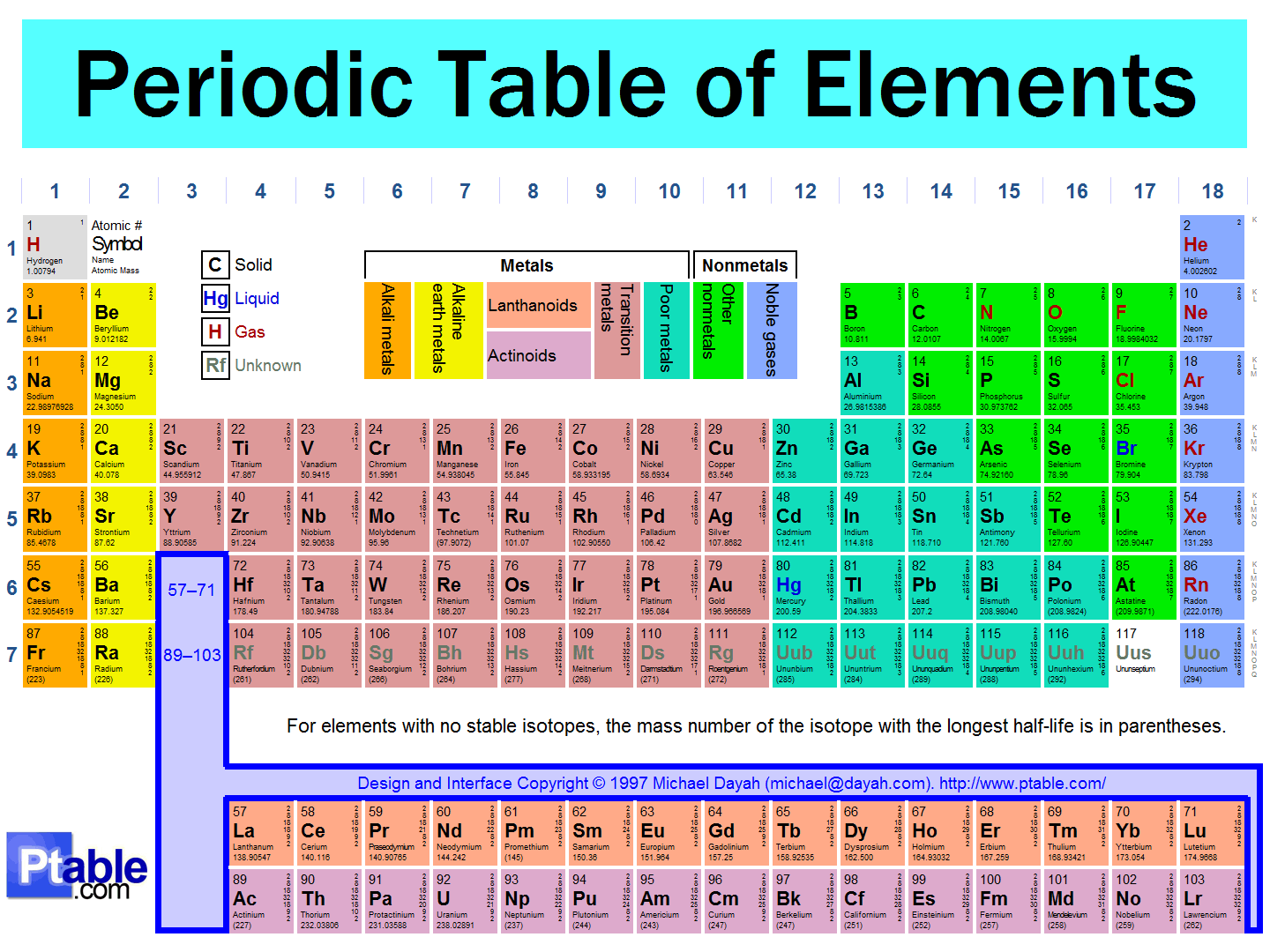
The vertical (up and down) columns in the Periodic Table are called
groups
towers
periods
atomic numbers
Name this group: These metals are the most reactive.


Name this group: These metals are the second most reactive.


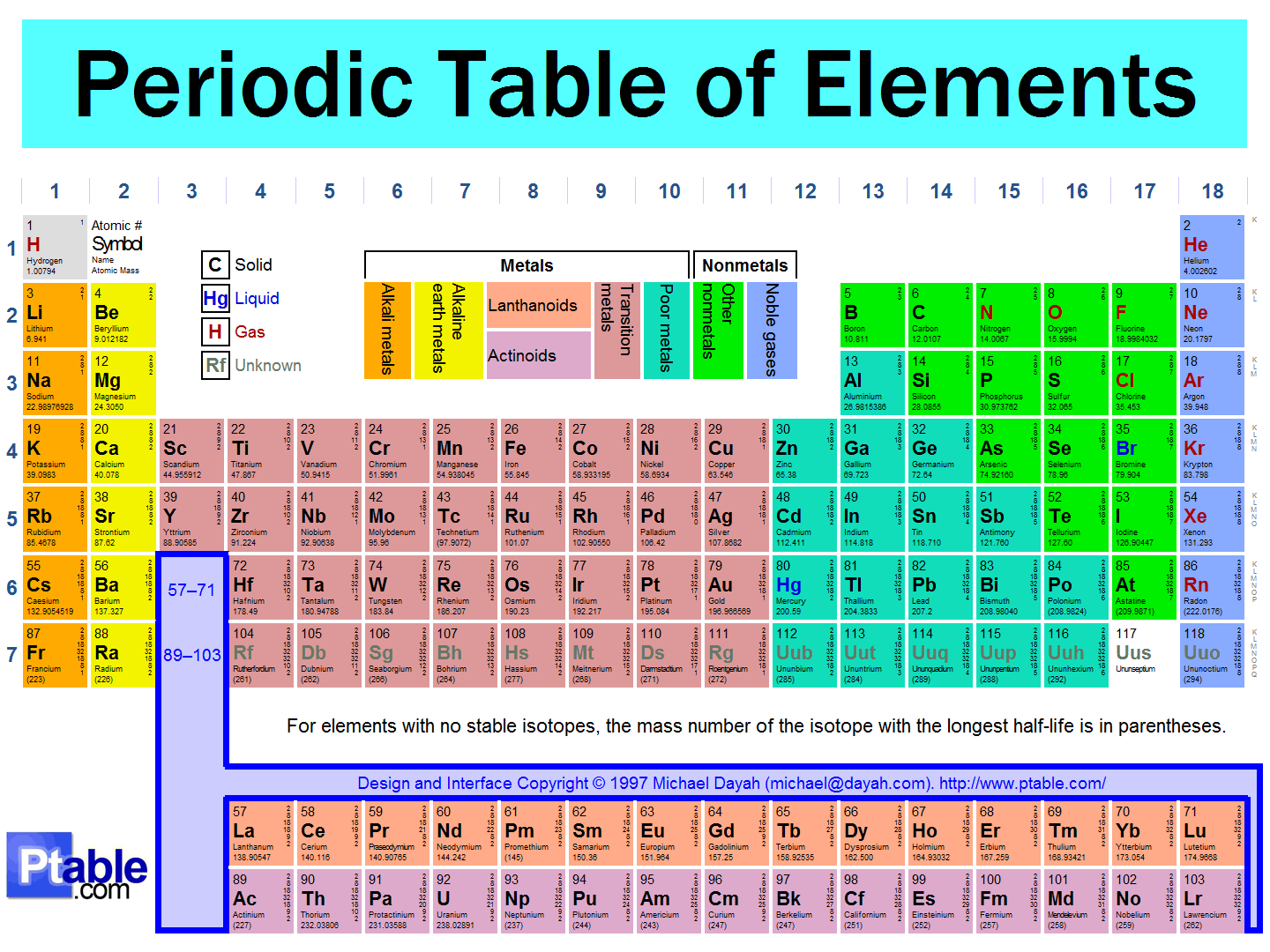
As you move left to right on a row or period what happens?
Atomic number increases by 1
Electrons decrease
Number of shells decrease
Nothing

Elements in the same group or column have the same ...
# of valence electrons
# of shells
# of protons
Mass Number

Rows on the periodic table are called ___________.
Periods
Sentences
Fences
Elements in the same group have __________
Similar Properties
Same number of shells
Similar Mass


Which elements are colored red?
nonmetals
metals
metalloids

Which elements are to the LEFT of the zigzag?
metals
nonmetals
metalloids
True or False: The reactivity of metals tends to decrease as you move from left to right across the periodic table.
True
False

