
 Worksheets
Genius (grade 4)
Total questions: 25
Worksheet time: 15mins
A ________ is a group of 2 or more organs working together to keep an organism alive.
cell
tissue
organ
Organ system
What is the biggest function of the respiratory system?
to pump blood
to help us digest food
to take in oxygen and release carbon dioxide
to help us fight disease and infection

This is a system in the body that includes the brain, spinal cord, and nerves. It coordinates and controls the body's actions.
digestive system
nervous system
circulatory system
muscular system

The movement that forces air out of the lungs is called...
inhalation
exhalation
gas exchange
pump blood

Which of the following statements about the human heart is correct?
It is located under the lungs.
it contracts voluntarily.
It expands and contracts to pump blood.
It is a tissue.

The body system that transports blood containing oxygen and nutrients around the body.
Circulatory System
Muscular System
Digestive System
Nervous System
The ability to do work is
friction
force
energy
speed
Energy that is stored in an object is called?
kinetic energy
inertia
potential energy
none of the above
kinetic energy is the ......
stored energy
energy of motion
both a and b
none of the above
a car has……………energy when it is moving.
Kinetic
Potential
Electric
Light
As tadpoles mature into frogs, they develop _________.
gills
a tail
legs
fingers
Adult frogs breathe using their ____________.
eyes
gills
lungs and skin
skin
Light waves can travel fast in......................while it moves slowly in............................. (select all that apply)
air, glass
glass, vacuum
vacuum, glass
vacuum, air

Sound waves cannot travel through ...................
solid
liquid
space
Gas
What geologic event is most likely to occur when two continental plates are moving far apart?
tsunami
earthquake
volcanic eruptions
Mountains

An image of the relative motion at a tectonic plate boundary is provided. What natural disaster is likely to occur at the boundary shown?
mountain formation
earthquake Formation
volcanic island formation
Hurricane formation
What is the process by which a caterpillar transforms into a butterfly?
Metamorphosis
Hibernation
Mitosis
Photosynthesis
A sudden shaking of Earth's surface?
Tsunami
Volcano
Earthquake
A mesosaurus walking by
The place where to plates meet?
Pattern
Plate Boundary
Mantle
Earthquake
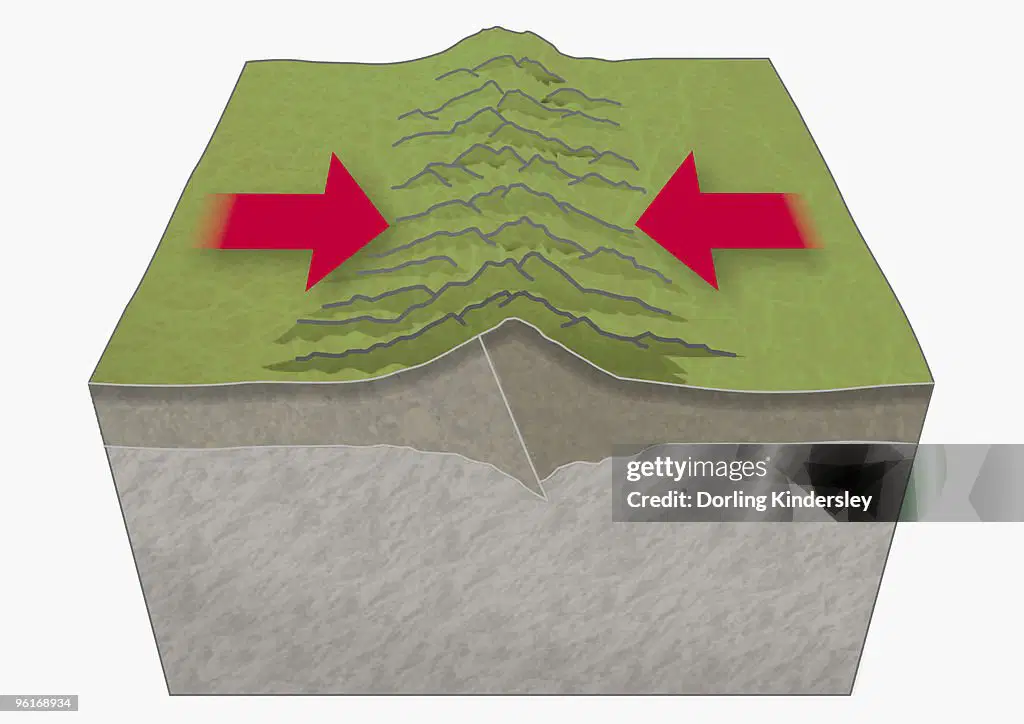
When two continental plates converge (collide) what type of crustal feature is formed?
Mid Ocean Ridge
Subduction Zone
Rift Valley
Folded Mountains


