
 Worksheets
Unit 3.3 Test Review
Total questions: 26
Worksheet time: 20mins
Why was the Miller-Urey experiment important?
It showed that the molecules needed for life could arise from early Earth conditions
It showed that life can only come from life
It showed that meat left uncovered will have growths on it
It proved that spontaneous generation was possible.
The endosymbiotic theory states that a nucleic acid was engulfed by another one, and DNA was formed
True
False

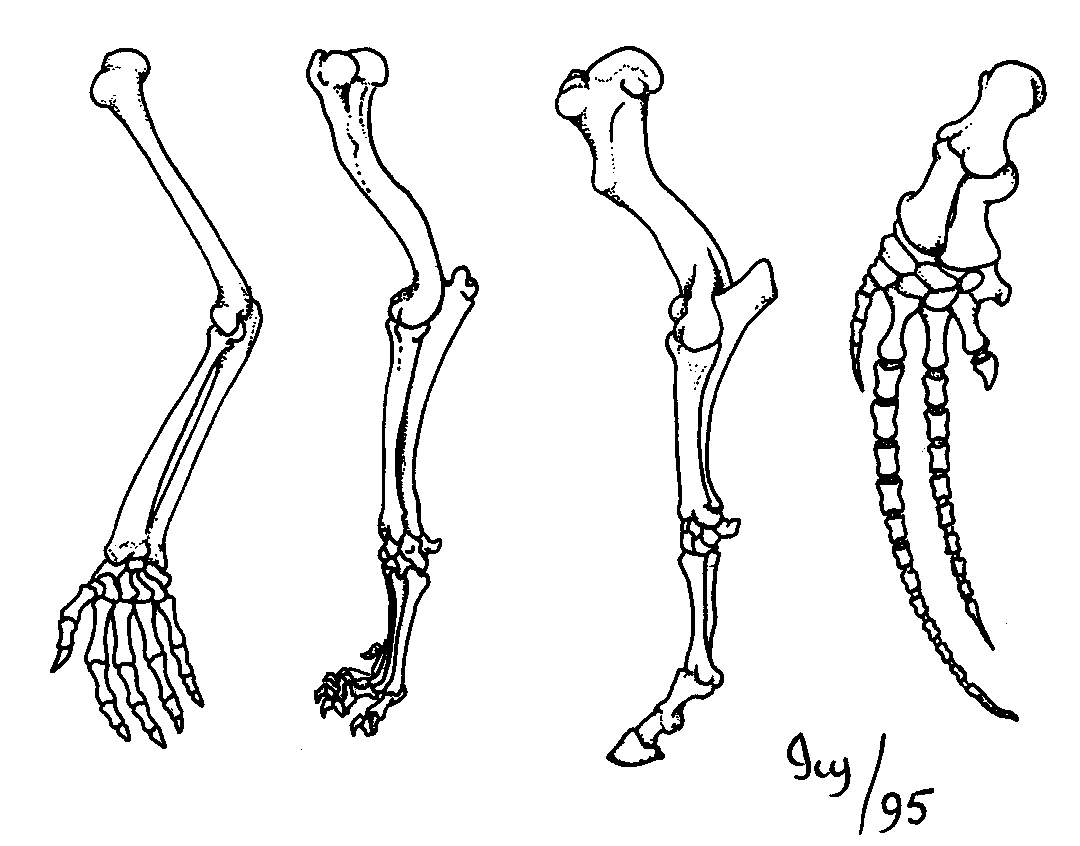
Does the presence of homologous structures in genetically different animals suggest common ancestry?
Yes
No

What type of evidence are shown in the picture above?
Fossils
Embryology
Homologous Structures
Vestigial Structures
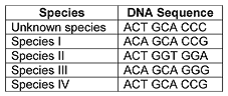
Recently, scientists have been able to use ___________to find common proteins and amino acids to determine how closely related species are.
DNA
Vestigial structures
Fossils
Homologous structures

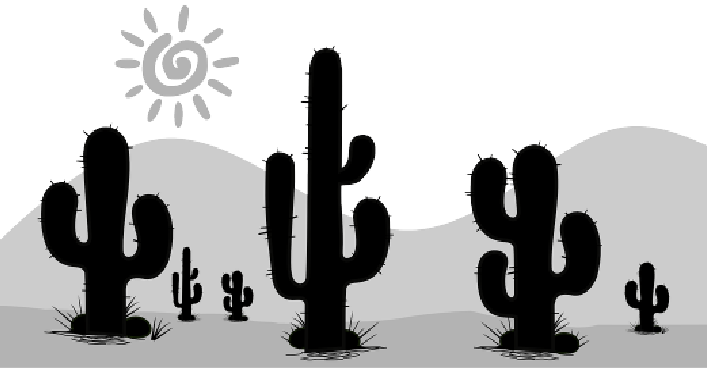
Natural Selection is driven by a change in the environment and survival of the
Smartest
Fastest
Most well adapted
Biggest
_______________ , harmful or helpful, is considered to be the source for new alleles and a main contributor to the diversity of life on Earth.
Mitosis
Mutation
Transcription
Translation
Evolution is change...(choose all that apply)
In individuals
In populations
Instantly
Over time

A forest fire ignites in the Sam Houston State Forest and kills many members of a population of pigmy rattlesnakes.
Gene Flow
Genetic Drift

Select the best answer based on the image.
Gene Flow
Genetic Drift

Select the best answer based on the image.
Gene Flow
Genetic Drift
Oysters lay 60-80 million eggs, only a few survive to reproduce. What condition of natural selection is this?
Overproduction of Offspring
Struggle to Survive
Non-random Mating
Inherited Variation
Enzyme is an example of protein. What is the function of this protein?
The function of the protein is to speed up chemical reactions.
The function of the protein is to provide structural support to the cell.
The function of the protein is to store genetic information.
What are the characteristics of nucleic acid?
Long chains of nucleotides composed of a sugar, a phosphate group, and a nitrogen base.
Which condition of natural selection shows when there is too much production of frogspawn in a pond?
Overproduction of Offspring
Inherited Traits
Nonrandom Mating
Struggle to Survive
If a farmer decides to plan only the same type of crop because it produces good harvest. What will happen to the genetic diversity?
What is the result of biogeography (separation of landmasses and movement to different locations)?
Extinction of species
Organisms Evolved
Decrease in biodiversity
Oldest fossil records are mostly found at the __________ of the rock layers.
Top
Bottom
Middle
Surface
What is endosymbiotic theory?
Endosymbiotic theory explains how life today could have originated from a single cell.

