wayground logo

Free Printable Worksheets

Font size

S
M
L
XL
Worksheets

Evolution Study Guide

Total questions: 23

Worksheet time: 38mins

Name
Class
Date
1.

What chemical elements are most found in DNA?

a)

Carbon, Nitrogen, Oxygen, Phosphorus, Hydrogen

b)

Phosphorus and Hydrogen

c)

Nitrogen and Phosphorus

d)

Hydrogen and Oxygen

2.
This scientist came up with the idea of natural selection.
a)
Jean Baptiste Lamarck
b)
Gregor Mendel
c)
Charles Darwin
d)
Thomas Malthus
3.
Inherited trait that helps an organism survive is a(n) __________.
a)
Fossil
b)
Adaptation
c)
Ancestor
d)
Natural selection
4.
Survival of the fittest or when favorable adaptations reproduce faster is called what?
a)
Evolution
b)
Adaptation
c)
Natural selection
d)
Fossilization
5.
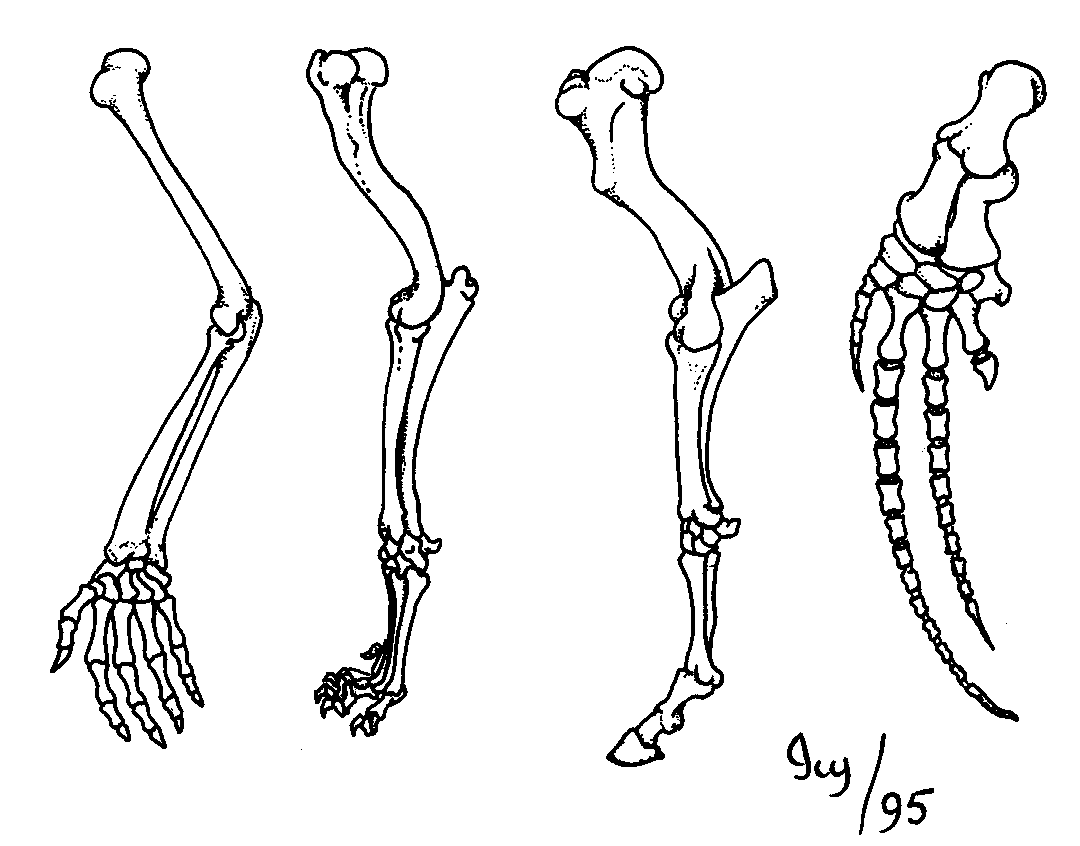
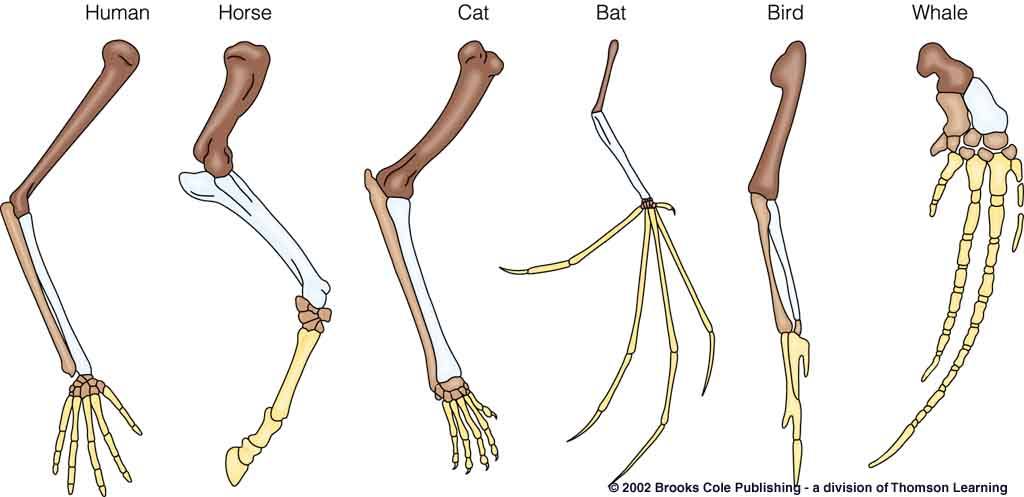
Structures with the same parts have different functions; suggests that organisms share a common ancestry
a)
vestigial structures
b)
homologous structures
c)
adaptive radiation
d)
fossil
6.
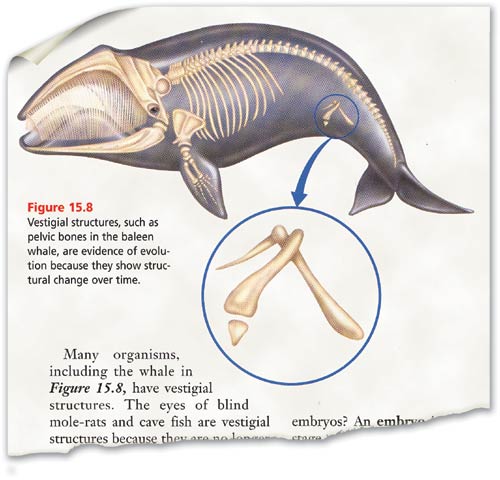
Which of the following is an example of a vestigial structure?
a)
the wings of a red-tailed hawk
b)
the hind limbs of a house cat
c)
the fins of sharks
d)
the tailbone of a human
7.
The diagram shows fossils in different rock layers. Which of these statements about the age of these fossils is most likely correct?
a)
Fossil A and C are the same age
b)
Fossil B is older than fossil C
c)
Fossils A is older than fossil B
d)
Fossil D is older than fossil C
8.

What do we call a change in a species over time?

a)

Adaptation

b)

Evolution

c)

Extinction

d)

Environmental influences

9.
Why do embryologist study embryos?
a)
to see if they are related
b)
to understand adaptations
c)
to determine the age
d)
to learn what parents are vestigial
10.
What is embryology?
a)
the age of organisms
b)
the oldest stage of development
c)
the life span of an organism
d)
the earliest growth stage of development
11.
The environment around Manchester, England, changed during the Industrial Revolution.  How did this change affect peppered moths living in the area?
a)
Natural selection favored moths with dark wings because predators could not see them on the soot-colored trees.
b)
Natural selection favored moths with white wings that were easy for predators to see.
c)
Natural selection favored moths with white wings because predators could not see them on the soot-colored trees.
d)
Natural selection caused moths with white wings to become extinct.
12.
When an organism completely dies out, it is called.....
a)
Adaption
b)
Extinction
c)
Fossilization
d)
Mutation
13.
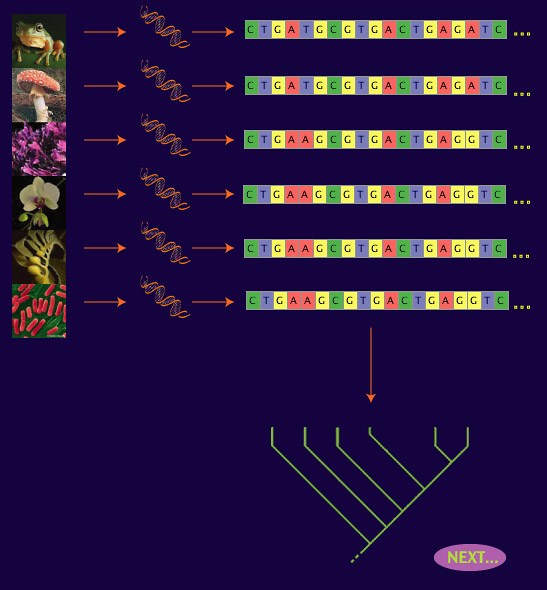
Two organisms that are closely related would have
a)
very similar DNA sequence
b)
exactly the same DNA sequences
c)
no proteins in common
d)
completely different DNA sequence
14.
Comparing human hemoglobin of chimpanzees, horses, kangaroos, and chickens, reveal that humans have the fewest amino acid differences with 
a)
Kangaroos
b)
Horses
c)
chickens
d)
chimpanzees
15.
The structures shown are_________
a)
homologous
b)
heterologous
c)
analogous
d)
vestigial
16.
Who hypothesized that human populations are kept in check by war, famine, and disease?
a)
Darwin
b)
Hutton
c)
Malthus
d)
Lamarck
17.

What is gene flow? Please describe an example.

4 lines
18.

What is Darwin's theory?

a)

All species of organisms arise and develop through natural selection

b)

All species are the same

c)

All species come from non-living matter

19.

What is mimicry?

a)

A species being born identical to another

b)

All species look the same

c)

A species imitating its environment to survive

d)

A species imitating another species to survive

20.

What is fitness in natural selection?

4 lines
21.

Genes for all organisms are composed of

(a)  

22.

What does camouflage do to a population?

a)

Helps their predators to find them

b)

Hides things

c)

Can reduce the likelihood of being recognized by predators

23.

What is genetic drift?

a)

The change in existing gene frequency

b)

Changes in clothes

c)

The change is drifting branches in water

d)

Changes in species