
Font size
 Worksheets
Characterizing and Defining Cities pt 1 & 2
Total questions: 69
Worksheet time: 42mins
Have distinct cultural (heterogeneity), economic, demographic, political characteristics.
Cities
Trading Centers
Market
Hotels
In the past, they are usually market or trading centers, and focal points from public administration of the state’s citizens.
Cities
Towns
Rural Areas
Hotels
City Characteristics:
- Choose 1 that is NOT in the PRIMARY characteristic of a city
Size and Density
Full-time specialization
Concentration of Surplus
State Organization
Monumental Public Works
City Characteristics:
- Choose 1 that is NOT in the PRIMARY characteristic of a city
Size and Density
Full-time specialization
Class-structured society
State Organization
Transportation
City Characteristics:
- Choose 1 that is NOT in the SECONDARY characteristic of a city
Monumental Public Works
Long-distance trade
Standardized monumental artworks
Writing
Communication
City Characteristics:
- Choose 1 that is NOT in the SECONDARY characteristic of a city
Monumental Public Works
Long-distance trade
Standardized monumental artworks
Arithmetic, geometry, astronomy
Environmental Considerations
Different views in defining/characterizing Cities
state of mind, a body of customs and traditions, a society of formal relations rather than a folk community.
Cultural
Economic
Political
Demographic
Ecological
Different views in defining/characterizing Cities
A place where more than half of the labor forces is engaged in non-agricultural work; or a site where there is a bulk of processing and services.
Cultural
Economic
Political
Demographic
Ecological
Different views in defining/characterizing Cities
The site of certain administrative functions; where governance is done.
Cultural
Economic
Political
Demographic
Ecological
Different views in defining/characterizing Cities
A place where certain number of people, with a certain density live.
Cultural
Economic
Political
Demographic
Ecological
Different views in defining/characterizing Cities
A place where the environment is modified to fit and enhance the living conditions of the inhabitants.
Cultural
Economic
Political
Demographic
Ecological
"A city is the people, resources, leaders and structures"
Plato
Aristotle
Christopher Morley
Walt Whitman
Anonymous
"A great city is that which has the greatest men and women"
Plato
Aristotle
Christopher Morley
Walt Whitman
Anonymous
"All cities are mad: but the madness is gallant. All cities are beautiful: but the beauty is grim."
Plato
Aristotle
Christopher Morley
Walt Whitman
Anonymous
"A great city is not to be confounded with a populous one"
Plato
Aristotle
Christopher Morley
Walt Whitman
Anonymous
"The city is what it is because our citizens are what they are"
Plato
Aristotle
Christopher Morley
Walt Whitman
Anonymous
City Characteristics:
- Choose 1 that is NOT in the OTHERS characteristic of a city
Size and Density
Transportation
Communication
Environmental Considerations
Early Civilizations Characteristics:
Ideologies of progress - Taxation
Centralization
Domestication
Specialization
City Classification:
min. population of 200,000 and latest annual income of PhP50 million (33)
Highly Urbanized Cities (HUCs)
Independent Component Cities (ICCs)
Component Cities
City Classification:
cities whose charters prohibit their voters from voting for provincial elective officials
Highly Urbanized Cities (HUCs)
Independent Component Cities (ICCs)
Component Cities
City Classification:
which do not meet the requirements for HUCs and ICCs (108).
Highly Urbanized Cities (HUCs)
Independent Component Cities (ICCs)
Component Cities
Early Civilizations Characteristics:
Supremacism - Farming
Centralization
Domestication
Specialization
Early Civilizations Characteristics:
Monumental Architecture - Expansionism
Centralization
Domestication
Specialization
– amenities that contributes to quality of urban life.
Networks
Buildings
Open Spaces
the most visible part of a city.
Networks
Buildings
Open Spaces

WHAT?
YES
NO
WHAT?
YES
NO
WHAT?
YES
NO
WHAT?
YES
NO
WHAT?
YES
NO
WHAT?
YES
NO
WHAT?
YES
NO
WHAT?
YES
NO
WHAT?
YES
NO
WHAT?
YES
NO
array of pathways to carry flows of people, goods, water, energy, and information.
Networks
Buildings
Open Spaces
economic advantage of an increasing rate of output of a single production unit (farm, firm, factory)
Internal Economy of Scale
Agglomeration Economies
Urban Economies
savings derived from the geographic activities of the same type/category.
Internal Economy of Scale
Agglomeration Economies
Urban Economies
savings derived from the concentration of various types of economic activities
Internal Economy of Scale
Agglomeration Economies
Urban Economies
Monitor their performance and assess the state of development for the purpose of influencing local and national decisions or actions essential in the provision of quality basic services to the constituents, and in addressing development gaps in the locality
LGUs
DILG
Other Users
Link the information generated from the system to Department plans and programs that impact on local governments as it pursues its mandate of supporting the capacity development of LGUs towards self-governance, and development and its administrative oversight role in advancing in the interest of public accountability.
LGUs
DILG
Other Users
(i.e.,other National Government Agencies (NGAs), Development Institutions, Investors, Non-Governmental Organizations (NGOs), Academe and the General Public - to facilitate research and the pulling of information about local governments as inputs to development studies, policy or project development
LGUs
DILG
Other Users
agriculture, mining, forestry, fishery
Primary
Secondary
Tertiary
Quaternary
industries, manufacturing, construction
Primary
Secondary
Tertiary
Quaternary
retail, wholesale, finance, professional services, business, repair services
Primary
Secondary
Tertiary
Quaternary
information processing services, tourism
Primary
Secondary
Tertiary
Quaternary
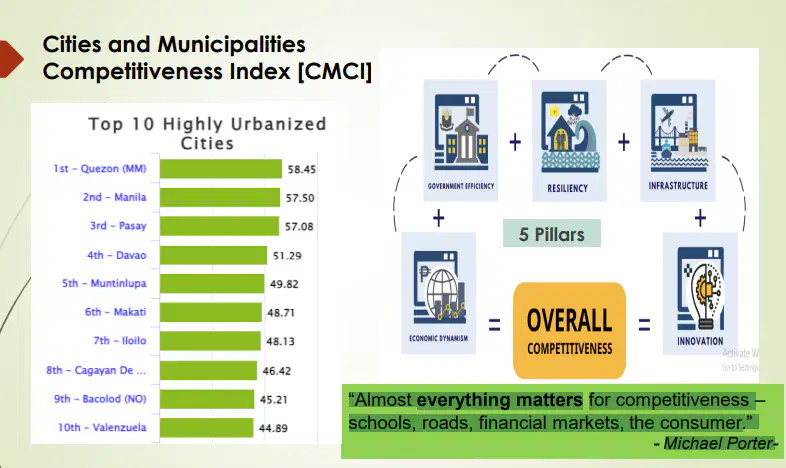
A diagnostic tool by LGU officials to assess the competitiveness of their city or municipality and identify areas for improvement and collaboration. Data provide insight for policy making, development planning and investment promotion.
Public Sector
Private Sector
Academe
A guide in deciding where to locate. Data on the different indicators will prove valuable depending on the specific needs of their business.
Public Sector
Private Sector
Academe
A general picture of Philippine cities and municipalities may be used by the academe, civil society and even tourists as a take-off point for further research.
Public Sector
Private Sector
Academe
that of or pertaining to a city; structures and ways of life that are characteristics of cities and/or living in a city.
Urban
Metropolis/Metropolitan
Megalopolis
(areas) region (from the Greek “mother city”) – a big city, in most cases with at least 1M inhabitants. A relatively large area that could have formed through the gradual expansion of the urban core.
Urban
Metropolis/Metropolitan
Megalopolis
an extended metropolitan area, or a chain of roughly continuous metropolitan areas. Coined by geographer Jean Gottman, 1915-1994.
Urban
Metropolis/Metropolitan
Megalopolis
a term coined in 1915 by Patrick Geddes, Scottish biologist/botanist (1854-1932) to describe a builtup area created by the coalescence of once a separate urban settlements. It is nowadays often used to describe multi-nodal functional urban units.
Conurbation
Megacity
World City/Global City
a city with a direct and tangible effect on global affairs by socio-economic means; it may have been coined, or at least used by American sociologists and economists.
Conurbation
Megacity
World City/Global City
- urban development with more than 10M inhabitants. Metro Manila, an agglomeration of 17 cities with 11.5M population (2007 census) is a megacity by UN definition.
Conurbation
Megacity
World City/Global City
Large number of people requires some form of (a)
_______ __________ are requirements approved by laws to guide physical development in a particular area at a particular time or the minimum standard required to achieve benefits for public;
(a)
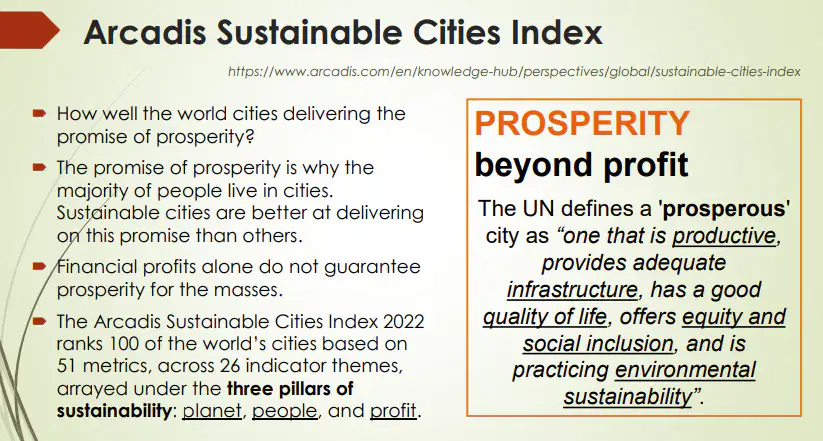
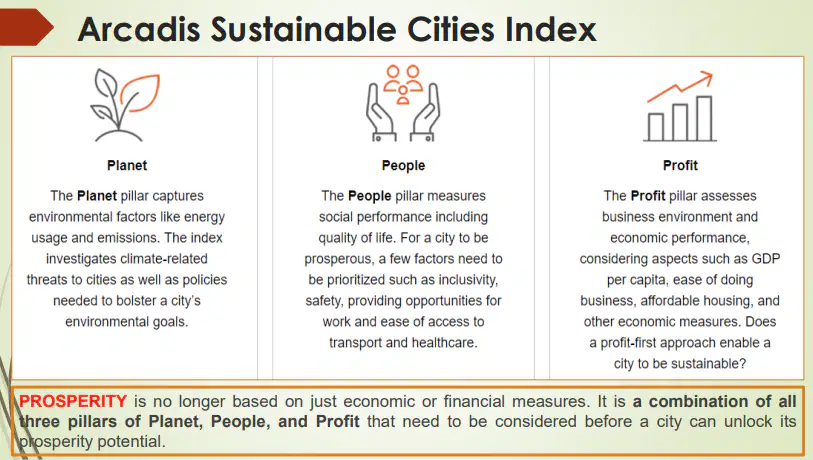
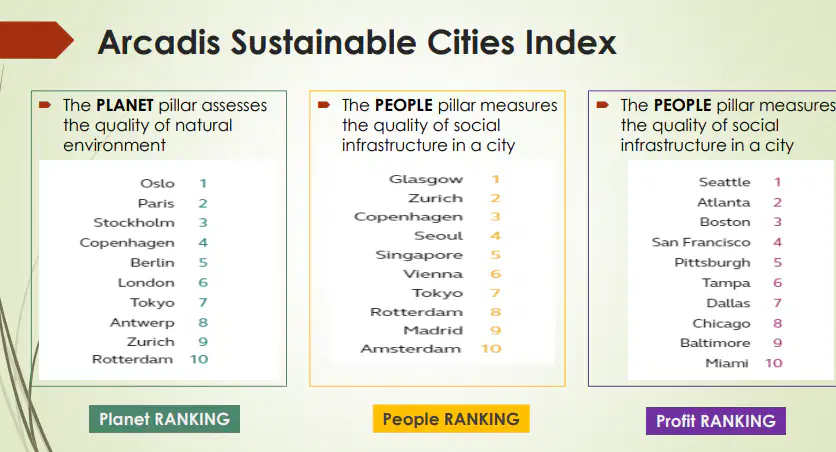
three pillars of sustainability?
____, ______, and ______
(a)
Conurbation - a term coined in 1915 by ______ __________, Scottish biologist/botanist (1854-1932) to describe a builtup area created by the coalescence of once a separate urban settlements. It is nowadays often used to describe multi-nodal functional urban units.
(a)
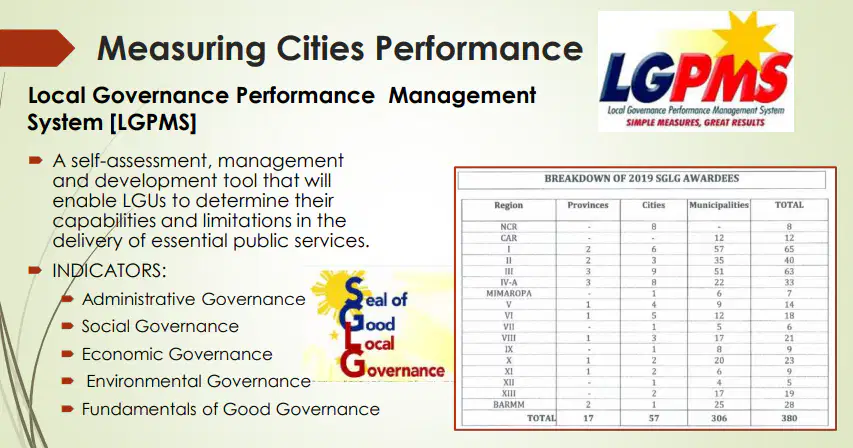
A self-assessment, management and development tool that will enable LGUs to determine their capabilities and limitations in the delivery of essential public services.
[LGPMS]
(a)
MEGALOPOLIS - an extended metropolitan area, or a chain of roughly continuous metropolitan areas. Coined by geographer _____ _______, 1915-1994.
(a)
(a) is a term commonly used in the UK, and its former colonies in place of cities.
(a) (COUNTRY) – areas outside the poblacion.
(amended RA 7160 by increasing the income requirements)
(a)
(a) leading to development of technology, science and wide variety of institutions
The competitiveness is focused on the idea of (a) .
An annual ranking of Philippine cities and municipalities developed by the National Competitiveness Council through the Regional Competitiveness Committees (RCCs) with the assistance of the United States Agency for International Development.
CMCI
(a)
“Almost everything matters for competitiveness – schools, roads, financial markets, the consumer.” - M P
(a)
(a) may be created in other areas in order to exchange agricultural goods.

