
Font size
 Worksheets
*Types of Freshwater
Total questions: 30
Worksheet time: 15mins
If water is not able to flow through the rock, the rock is?
permeable
impermeable
geyser
aquifer
What is the line between the saturated and unsaturated zones?
geyser
aquifer
water table
well
Which of these are permeable?
sand
metal
diamond
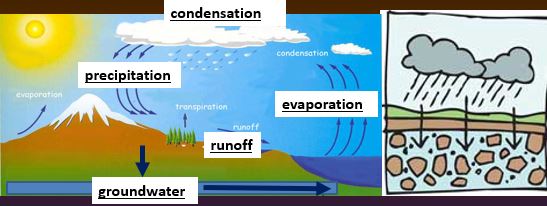
Water that is found underground in the cracks and spaces in soil, sand and rock is called:
Groundwater
River
Surface water
Snow

A natural, underground area where large quantities of groundwater fill the spaces between rocks is a/an:
ocean
river
aquifer
Runoff picks up whatever is on the ground including
fertilizer and pesticides
household chemicals and soap from washing cars
chemicals from factories
oil
all the above
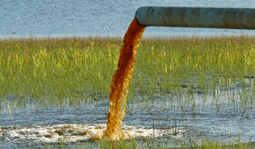
______________________ is water waste/pollution discharge from a single source.
Can be traced back to the point of origin.
Point Source Pollution
Non-point source pollution
Cannot easily be traced to the source of the pollution.
Point Source Pollution
Non-point source pollution

A ship carrying gasoline runs into shore and spills large amount of gasoline.
Point Source Pollution
Non-Point Source Pollution
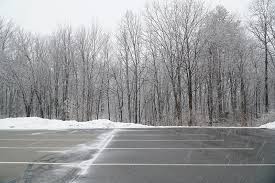
Snow melts in parking lots and carries oils into nearby waterways
Point Source Pollution
Non-Point Source Pollution

What is the best description of a wetland?
An area where the ground is always covered by water, and the water is saltwater.
An area where the ground is polluted and flooded.
An area where the ground is soaked or covered for most of the year.

These are three important roles of wetlands? SELECT 3 ANSWERS
provide habitats
store flood waters
generate hydroelectric power
filter and purify water
ice and glaciers
an area underground with water filled pores
saturation zone
recharge zone
unsaturation zone
underground rock layers that store and allow the flow of water
permeability
aquifer
porosity
provide habitats, help control floods, purify water
purify the land, help control flood, provide habitats

Wetlands help control flood. How is this beneficial? Choose the best answer.
Its not really beneficial because this may flood peoples homes.
It releases the water is increments which will really increase the wildlife in that area.
Absorbs waters from heavy rains.
Its really not beneficial because this will flood the habitats of the wildlife living there.
Pollution that cannot be traced to a single point because comes from many sources
estuary
water shed
non point source pollution
point source pollution
A _____ is an artificial lake built for storage of water fpr human use
running water
reservoir
storage
What percent of the earth is covered by water?
20%
50%
70%
85%
Where is most of the freshwater found on Earth?
lakes
glaciers
oceans
rivers
Approximately what percentage of Earth's water is SALT water?
97 %
71%
30%
3%
Why is MOST of the freshwater on Earth NOT available for our use?
All freshwater on Earth is easily accessible for use.
It is frozen in the icecaps and glaciers.
It is surface water.
It is underground.
What does it mean for the ground to be saturated?
If the ground is dry.
The ground cannot absorb any more water.
The ground cannot take in water at all.

Materials that water can pass through are called...
impermeable
runoff
pores
permeable
Surface water moves through the soil to form groundwater.
All surface water begins as groundwater that moves upwards.
All surface water is saltwater, which becomes fresh upon percolating into soil.

