
 Worksheets
Wave Behavior Review
Total questions: 44
Worksheet time: 26mins

This is a real picture of a polar taken at a zoo. Fortunately for the polar bear, its head is actually connected to its body. Why does it look like the head is separate from the body?
Light waves are bouncing as they pass from air to water.
Light waves are not passing from the air to the water.
Light waves are traveling in a straight line as they pass from air to water.
Light waves are bending as they pass from air to water.
Why is it a good idea to wear dark colors in the winter and not the summer?
Light waves are striking the dark material and bouncing off of it. Energy from the wave gets converted to thermal energy.
Light waves are striking dark material and going through it. Energy from the wave gets converted to thermal energy
Light waves are striking the dark material and being absorbed. Energy from the wave gets converted to thermal energy.
Light waves are striking the dark material and being bent as they pass through. Energy from the wave gets converted to thermal energy.

Most rooms have hard flat walls. However, music studios have soft, foam-like material on them. Studios use these materials to prevent...
sound waves hitting the walls from bouncing back.
sound waves hitting the wall from staying in the walls.
sound waves hitting the wall from passing all the way through them.
sound waves hitting the wall from bending.

Why does the dog think he is looking at another dog?
Light waves are striking the mirror and bouncing off of it. (reflecting)
Light waves are striking the mirror and going straight through it. (transmitting)
Light waves are striking the mirror and going into it without going out the other side. (absorbing)
Light waves are striking the mirror and being bent as they go through it. (refracting)

Why does the arrow appear to change direction as water is poured into the glass? You can try this experiment at home.
Light waves are bouncing as they pass through air, glass and water. (reflecting)
Light waves are traveling in a straight line as they pass through air, glass, and water. (transmitting)
Light waves are not passing through the air, glass, and water. (absorbing)
Light waves are bending as they pass through the air, glass, and water. (refracting)

Which two wave behaviors are responsible for us seeing different colors?
Refraction
Reflection
Diffraction
Transmission
Absorption
Which wave behavior describes the process that occurs when a wave goes through a new substance?
Absorption
Reflection
Diffraction
Refraction
Transmission
Which wave behavior describes the process that occurs when a wave enters a new substance but stays in the new substance?
Absorption
Reflection
Diffraction
Refraction
Transmission
Which wave behavior describes the process that occurs when a wave encounters a new substance and bounces off in the opposite direction?
Absorption
Reflection
Diffraction
Refraction
Transmission

Sunglasses lenses are normally darker colored so they can __________ light getting to your eyes, but it is also important they can ___________ light since you need to see through them.
absorb; transmit
refract; diffract
reflect; transmit
diffract; absorb
What color will an object be to humans if the object absorbs all visible light?
Rainbow
White
Black
Gross Brown
What color will an object be to humans if the object reflects all visible light?
Rainbow
White
Black
Gross Brown
Occurs when light or sound is converted into energy
Reflection
Transmission
Absorption
Diffraction
What is an example of light waves being absorbed?
White light
Black pavement
Plane mirrors
Pencil in water
What is an example of sound waves being absorbed?
Microphone
Megaphone
Speakers
Ear Plugs
Occurs when waves pass through a surface or medium.
Transmission
Reflection
Absorption
Diffraction
T/F: Light waves need a medium to travel through.
True
False
If a substance is _________, it allows MOST of the light to pass through.
Transparent
Translucent
Opaque
If a substance is _________, it allows SOME of the light to pass through.
Transparent
Translucent
Opaque
If a substance is _________, it allows NONE of the light to pass through.
Transparent
Translucent
Opaque
Images are CLEAR
Transparent
Translucent
Opaque
Images are UNCLEAR (blurry)
Transparent
Translucent
Opaque
Images are NOT VISIBLE
Transparent
Translucent
Opaque
Which is an example of a transparent material?
Water
Lamp shade
Rock
Which is an example of a translucent material?
Water
Lamp shade
Rock
Which is an example of a opaque material?
Water
Lamp shade
Rock
T/F: Sound waves cannot travel through a vacuum.
True
False
Sound waves travel fastest in which medium?
Solid
Liquid
Gas
Vacuum
Light waves travel fastest in which medium?
Solid
Liquid
Gas
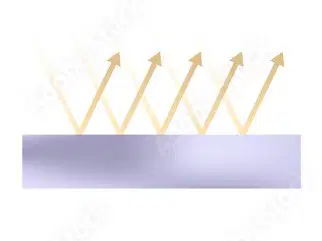
Which behavior of waves is being shown here?
Reflection
Refraction
Transmission
Absorption
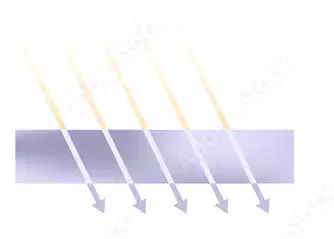
Which behavior of waves is being shown here?
Reflection
Transmission
Absorption
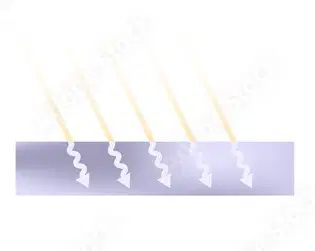
Which behavior of waves is being shown here?
Reflection
Transmission
Absorption
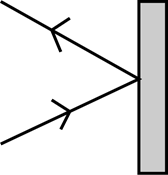
In the illustration, the light ray striking the object is-



Why do we see grass as green?
Green light is absorbed
Green light is reflected

Light waves bouncing off of this lake is an example of:
Reflection
Refraction
Absorption
The substance that a wave is passing through
medium
frequency
wavelength
gravy

Sonar and echolocation use ----- to detect objects under water.
Refraction
Reflection

