Worksheets
Unit 7 Nationalism, Industrialism, and Imperialism
Total questions: 70
Worksheet time: 35mins
Vittorio Emmanuel II
Base your answers to the following two questions on the speakers’ statements below and on your knowledge of social studies.
Speaker A: Government should not interfere in relations between workers and business owners.
Speaker B: The workers will rise up and overthrow the privileged class.
Speaker C: Private property will cease to exist. The people will own the means of production.
Speaker D: A favorable balance of trade should be maintained by the use of tariffs.
Which two speakers represent Karl Marx’s ideas of communism?
Speakers A & B
Speakers B & C
Speakers B & D
Speakers C & D
This is the name of the man who led German unification:
Otto von Bismarck
Guiseppe Garibaldi
Count Cavour
Mikhail Gorbachev
These were the methods that Bismarck used to unite Germany --
Militarism and realpolitik
Truman doctrine and militarism
Containment policy and militarism
creoles and mestizos
Which of the following is the best definition for realpolitik?
The use of any means to get and hold power
trying to contain the spread of Communism
Telling the European empires that they may not colonize in the Western Hemispere
the use of indigenous peoples to work on European plantations
This was the last part of Italy to become unified:
Papal States
north
south
Hapsburg empire
Who most likely said the following: "it is not by speeches and majority resolutions that the great questions of the time are decided – that was the big mistake of 1848 and 1849 – but by iron and blood."
Garibaldi
Cavour
Simon Bolivar
Bismarck
After the reign of Napoleon, what took root in Europe?
Nationalism
Desperation
Defeat
Conservative ideologies
What was "blood and iron"?
unification happened through war and military
unification from peace
militarism and rebellion
What war started from an altered telegram sent by Bismarck? The German nations supported Prussia in this war and it ended with the creation of the country of Germany.
Crimean War
Austro-Hungarian War
Russo-Japanese War
Franco-Prussian War
What is the belief that each ethnic group should have their own sovereign nation?
colonialism
imperialism
nationalism
militarism
Who was the founding member of Young Italy and was instrumental in the early unification process of Italy? He believed that common ideals and a single nationality is better for the well being of the nation.
Sylvester Stallone
Giuseppe Garibaldi
Giuseppe Mazzini
Count Cavour
Who was the "Brain" of Italian unification? He was Victor Emmanuel II's prime minister and brought Piedmont to the world stage when he sent Italian troops to fight in the Crimean War on the side of the French and British. This political move ensured French and British support getting the Austrian's out of Northern Italy.
Giuseppe Mazzini
Giuseppe Garibaldi
Count Cavour
Benito Mussolini

Which item best completes the chart?
A. development of railroad systems
B. electric-powered assembly lines
C. invention of the automobile
D. the light bulb

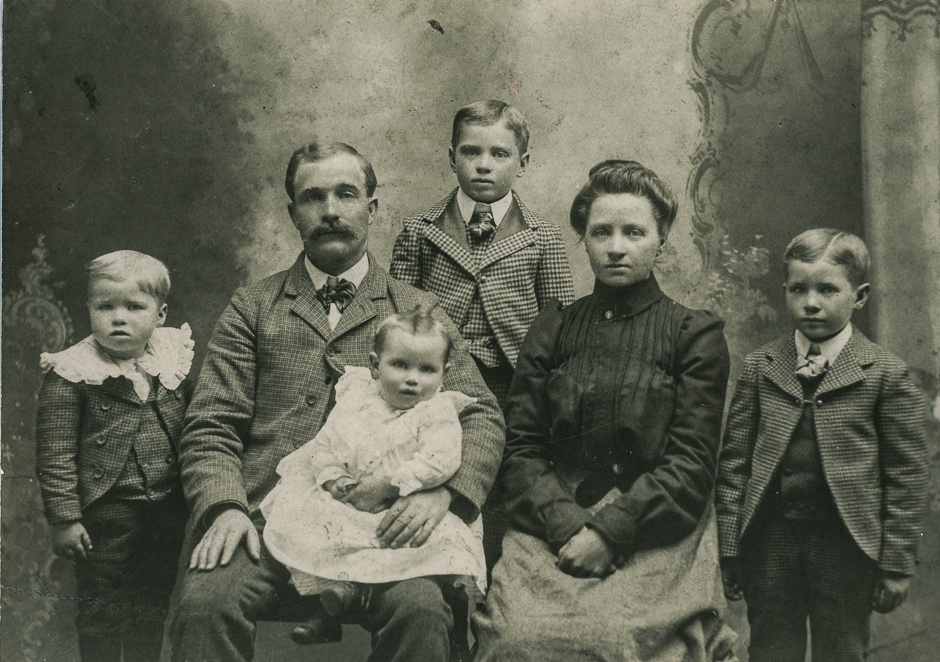
The image best depicts which effect of the Industrial Revolution?
3.
A. child labor
B. colonialism
C. urbanization
D. increased wealth
Why did the Industrial Revolution lead to an expansion of European colonialism in Africa in the late 1800s?
A. European countries competed for control over the slave trade.
B. European countries competed for control of an overabundance of natural resources.
C. India and China refused to allow European powers to trade with Africa.
D. India and China gained control of large regions in Africa at the Berlin Conference.

__________ is known as the Father of modern economics, who theorized Laissez-Faire, the idea that the market should have no political interventions?
Adam Smith
Karl Marx
Thomas Malthus
Frederick Engels

What is the movement of people from farms to cities?
Utilitarianism
Urbanization
Proletariat
Enclosure Movement

A place where people and machines join together to mass produce goods.
Cartel
Corporation
Factory
Urbanization
The Industrial revolution created a new ____________ class.
Upper
Poor
Lower
Middle
__________ is known as the Father of modern economics, who theorized Laissez-Faire, the idea that the market should have no political interventions?
Adam Smith
Karl Marx
Thomas Malthus
Frederick Engels

In which European country did the Industrial Revolution begin?
France
Britian
Prussia
Spain

Some of the machines invented in the 18th and 19th centuries are:
telephones, geographic positioning system, radios, airplanes
steam engine, railroads, flying shuttle, phonograph, steam ships, light bulb
sailboats, automobiles, wheel barrels, clocks, word processors
automatic washer, hair dryer, rockets, space shuttles

Which of the following is considered an impact of Industrialization during the 18th and 19th centuries?
Increased competition between industrialized nations
Rise of global inequalities
Transformation of society.
All of the above

Capitalism is
An economic system in which the means of production are privately owned and money is invested to make profits.
An economic system in which the means of production are owned by the public (government) and operate for the welfare of all.
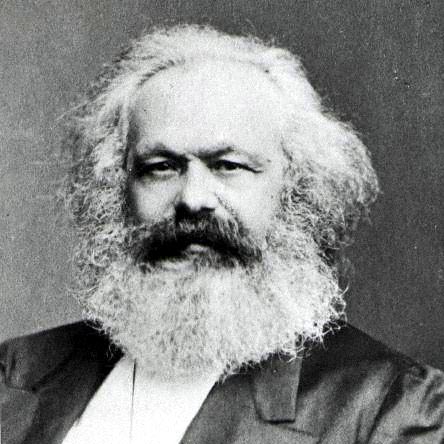
__________________ predicted a violent revolution that would result in the working class taking over in a classless political and economic systems known as communism.
John Adams
Thomas Smith
Karl Marx
Edward Jenner

The Steam engine
was originally invented to pump water out of coal mines
originally used petroleum to function
was originally invented to improve transportation
originally used electricity to function
Which of the following is considered an impact of Industrialization during the 18th and 19th centuries?
Increased competition between industrialized nations
Rise of global inequalities
Transformation of society.
All of the above
Why did the Industrial Revolution begin in Great Britain?
Mercantilism
Abundant natural resources
The free market economy
They were a bunch of bad dudes who knew how to boogie
How did the industrial revolution change the economy in Europe?
It fell to communism
Mercantilism remained strong
Production moved from the countryside to factories
Less goods were produced leading to inflation
What were labor unions?
People who worked together for better working conditions
People who unified their labor to produce more
A band founded in the Industrial Revolution
Violent terrorist factions fighting for capitalism
What are the spinning jenny, locomotive, and steam boat are all
Modes of transportation in the Industrial Revolution
New technologies in the Industrial Revolution
Nicknames of people in the Industrial Revolution
Engines in the Industrial Revolution
What were Tenements?
The tenth Doctor in "Doctor Who"
Tents used by the poor in the Industrial Revolution
Another term for factory owners
Cramped, overcrowded housing for Factory workers
Which of the following described history as a conflict between the "haves" (bourgeoisie) and the "have-nots" (proletariat)?
Adam Smith
John Stuart Mill
Voltaire
Karl Marx
The European desire to spread civilization to 'less advanced' areas of the world is known as-
Social Darwinism
Imperialism
Nationalism
Communism
What was the main economic reason behind the "scramble for Africa?"
Slavery
Social Darwinism
Raw materials
Finished Goods
Which of the following was a reaction to a rumor that the British were greasing their magazines with pig and beef fat?
The Salt March
The Sepoy Mutiny
The Raj
The Indian Rebellion
Which was a negative effect British Imperialism had on India?
Railroads
Cash crop centered economy
Improved education
A common language
During the 1800s, reform legislation passed in Great Britain, France, and Germany led to
formation of zaibatsu, greater equality for men, and establishment of a banking system
legalizing trade unions, setting minimum wages, and limiting child labor
government-owned factories, establishment of five-year plans, and limits placed on immigration
bans on overseas trade, mandatory military service, and universal suffrage for women
In the years following the Meiji Restoration in Japan and the unification of Germany in the 19th century, both nations experienced
an increase in military production and strengthened military forces
a reduction in tensions with neighboring nations
a restructuring of government that included popularly elected monarchs
a decrease in the reliance on industrialization and trade
Which heading best completes this partial outline?
I. _________________________________
A. Rivalries between powerful countries over colonies
B. Breakup of large empires
C. Demand for self-determination by ethnic groups
Reasons for Communist Revolutions
Effects of Nationalism
Methods of Propaganda
Formation of Democratic Governments
What did the Sepoy Rebellion, the Boxer Rebellion, and Anglo-Zulu War, hope to achieve?
protect its sovereign (ruler) from Japanese expansionism
stop traditional leaders from protecting its culture
overthrow their king in order to westernize their culture
drive oppressive foreigners from their homeland to protect their culture
• Sino-Japanese War 1894–1895
• Russo-Japanese War 1904–1905
• Annexation of Korea 1910
The above historical events in Japan reflect its
resistance to trade
abundance of natural resources
vulnerability to attacks by neighbors
emergence as an imperialist country
Someone who takes the risk of setting up a new business is called
an aristocrat
a muckraker
a partner
an entrepreneur
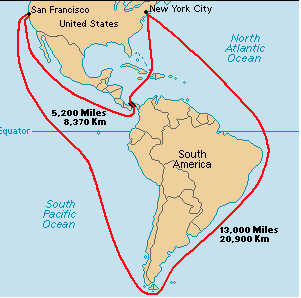
Similar to Egypt's Suez Canal, the Panama Canal received imp
abundant resources
geographic location
Social Darwinism
wealthy investors
Japan, Britain, and Prussia shared a vision of
maintaining feudal privileges
modernizing and industrializing their lands
creating a democracy based on the consent of the goverend
promoted gender equality and ending child labor
Adam Smith's "Laissez-Faire" economics stemmed from French economic philosophers during the Enlightenment. The term "laissez-faire" refers to
demanding all industry and business be government-owed and operated
allowing for mercantilist policies to influence working conditions for industry and trade
letting investors and business owners to create working conditions without government interference
requiring producers and investors to ignore working conditions
Resulting from Nationalist Movements, there was a shift in Europe's balance of power in which
Italy and Prussia emerged as European powers
England took Russia's political place
France replaced Prussia as an autocracy
Germany replaced Russia as a global power
According to the communists, the conditions of workers can improve only through
laws to give better wages and hours
organization of trade unions
negotiating with employees
ending capitalism, overthrowing business owners and establishing communal ownership

What is the type of sensational reporting where writers exaggerated or even invented stories?
muckraking
yellow journalism
journalism
reporting
The explosion on the USS Maine started...
WWI
WWII
Spanish American War
Mexican American War
Why did the Age of Imperialism and the Scramble for Africa begin?
European populations were growing at an unsustainable rate
African kingdoms invited European nations to govern their land
European nations wanted raw materials and markets for finished goods
East Asian nations needed new routes to the Americas
Who benefited most from imperialism?
European nations
Native Americans
African Kingdoms
Indian Kingdoms
Which of the following is a political reason for European Imperialism?
access to raw materials
access to new markets
desire for cheap labor
need to compete with other nations
Besides resources such as gold and diamonds, what else did access to Africa offer European nations?
Strategic access to the sea
A new route to the Americas
New sources of coal
New political systems
Imperialism is __________.
when a powerful nation uses its resources to help a weaker nation
when a weaker nation invites a powerful nation to help it industrialize
when a powerful nation takes control of the economy and government of a weaker nation
when weak nations join together to fight a strong nation
The race for European countries to claim land in Africa was called the _________.
Scramble for Africa
African Marathon
Great Competition
Monopoly
Which of the following is true about the Boxer Rebellion?
The rebellion took place in Japan.
The Boxers were trying to keep Christianity in China.
The Boxers were defeated by the foreign countries of Russia, Japan, United States, France, Great Britain, and Germany.
The Boxers were able to drive out the foreigners from China.
Why did the Society of Harmonious Fists want to get rid of all foreigners in China?
To preserve Chinese culture
To help save the Chinese money
To gain power in China
To end the Opium War
What does it mean that India was Britain's "Crown Jewel"
India was loaded with diamonds
India controlled all of Asia
India was Britain's first colony
India was the most valuable economically
What directly led to the Opium War?
Britain colonizing India
Britain colonizing Africa
Britain selling Opium
Britain taking control of Hong Kong
The Sepoys were
Indian soldiers
Bengal Hindus
Mughal princes
Sikh civil servants
One effect of the Sepoy Mutiny was that
The British East India Company went bankrupt
The British government took control over India
The British stopped trying to convert Indians to Christianity
British officials became more sensitive to the needs of Indians
Why were the Opium Wars significant?
It forced China to change to a democratic government
It forced Great Britain to recognise the importance of Confucian values
It forced China to open its doors to trade with the western world
It forced Great Britain to open its doors to trade with the Qing dynasty.