Worksheets
Unit 6 - Solar System
Total questions: 156
Worksheet time: 2hrs 50mins
What is the solar system?
The sun
The planets
The sun and planets ONLY
The sun, planets, and all other objects that orbit the sun
Which planet is the closest to our sun?
Mars
Earth
Mercury
Venus
Why do the planets orbit the sun?
They don't, the planets orbit the Earth
Because Science
The sun is so massive that it has a very large gravitational pull, which causes objects to orbit it
Because they want to
Which planet is the farthest away from our sun?
Mars
Jupiter
Neptune
Uranus
Our Solar System_________
Is an arrangement of 8 planets that are very close together
Has 8 planets, but is mostly empty space
Has 9 planets that are very close together
Has 9 planets and is mostly empty space
T/F: the sun is the biggest star in our galaxy
True, that is why we have the only solar system
False, there are much bigger stars than our sun
T/F: The definition for what a planet is has never changed
True, what makes a planet a planet has always been the same
False, the standards for what makes a planet a planet has changed several times

The earth is....
the 3rd rock from the sun
closest to the sun
called the Red planet
the only planet we know that sustains life

Which are the four terrestrial planets? (a) (b) (c) (d)


Earth

Mars

Saturn

Jupiter

Sun

The Solar System contains
8 planets
milky way
the universe
4 rocky planets and 4 gas planets
What is the largest planet?
Jupiter
Saturn
Uranus
Neptune
A force of attraction between any two objects is called (a) .
Which planet's average temperature make it the hottest planet in the solar system?
Mercury
Venus
Earth
Mars
The inner planets in order from the Sun are (a) , (b) , (c) , and then (d) .

The Sun and other stars orbit (a) .
The inner planets in order from the Sun are (a) , (b) , (c) , and then (d) .
The inner planets are mostly gas.
false
The orbital paths of the planets are perfect circles.
true
false
The solar system contains the Sun, 8 planets, moons, asteroids, and comets.
true
false
Mercury is the (a) planet while Jupiter is the (b) planet.
Reorder the following planets according to the distance from the Sun.
Venus
Mars
Jupiter
Saturn
Neptune
What is at the middle of a Heliocentric system?
Mars
Moon
Sun
Earth
What is at the middle of a Geocentric system?
Sun
Neptune
Earth
The Universe
Who proposed the Heliocentric system?
Copernicus
Ptolemy
Aristotle
Galileo
What does the Heliocentric system look like?


What does the Geocentric system look like?
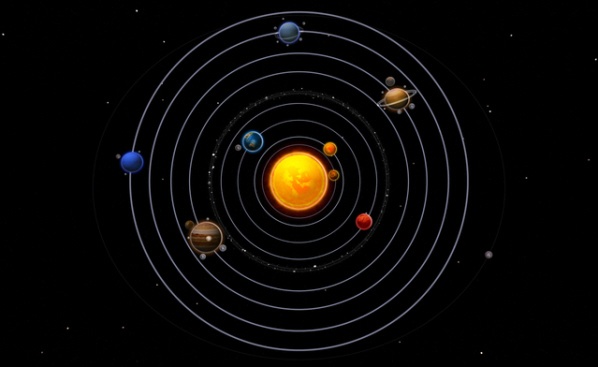
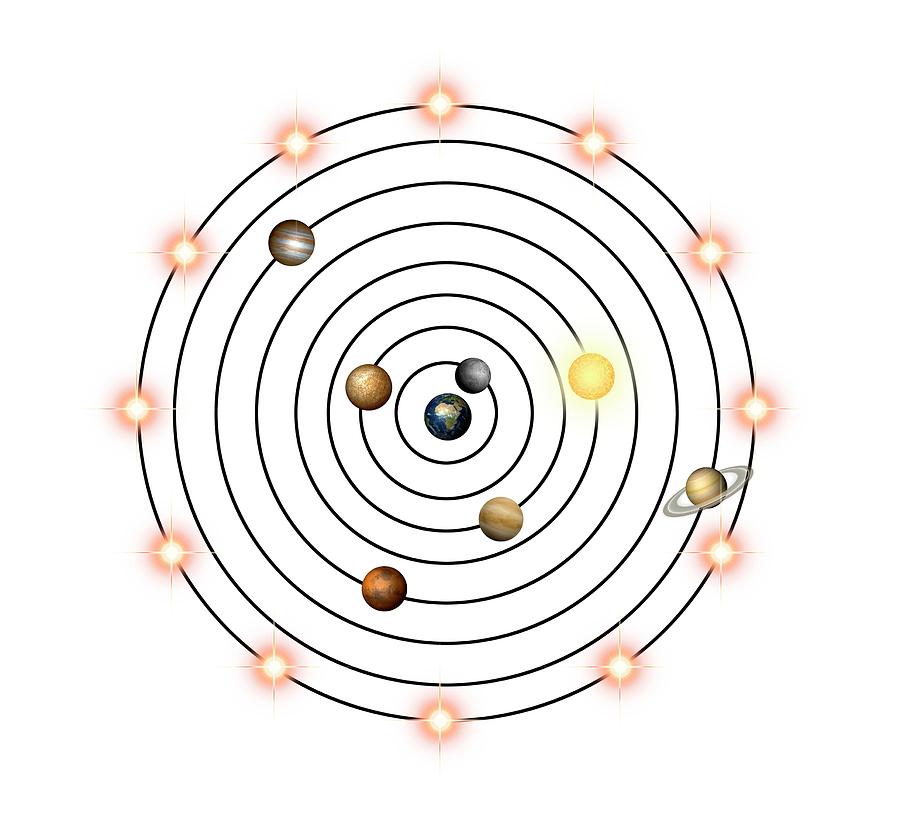
Which has the Sun at the center of the solar system?
Heliocentric
Geocentric
Which theory has Earth in the center?
heliocentric
geocentric

Which of the following is NOT a terrestrial planet?
Venus
Earth
Mars
Jupiter
Terrestrial planets and gas giants are all relatively the same size (a)

The 4 gas giants take _____________ to orbit the sun than the 4 terrestrial planets
the same amount of time
longer
less time
What are the 4 gas giants in order?
Uranus, Saturn, Neptune, Venus
Jupiter, Saturn, Venus, Neptune
Jupiter, Saturn, Uranus, Neptune
Mercury, Venus, Earth, Mars
What are the 4 planets farthest from the sun called?
Terrestrial planets
Gas giants
Which two facts describe Earth?
largest inner planet
outer planet
terrestrial planet
gas giant
What are the four terrestrial (inner) planets?
Earth, Uranus, Mercury, Venus
Mercury Venus Earth Saturn
Mars, Earth , Mercury, Venus
Mars, Earth, Neptune, Mercury

Which planet was once known as the ninth planet?
Pluto
Mercury
Mars
Earth
Which is the farthest planet from the sun?
Neptune
Saturn
Jupiter
Uranus
Which is the smallest planet?
Mercury
Mars
Earth
Venus
Uranus is different that other planets because it rotates on (a) side.

The surface of this planet appears red due to rusting iron in the rocks.
(a)The largest known volcano in the solar system, Olympus Mons, is located on (a) planet.
This is the only planet in the solar system with oceans of liquid water.
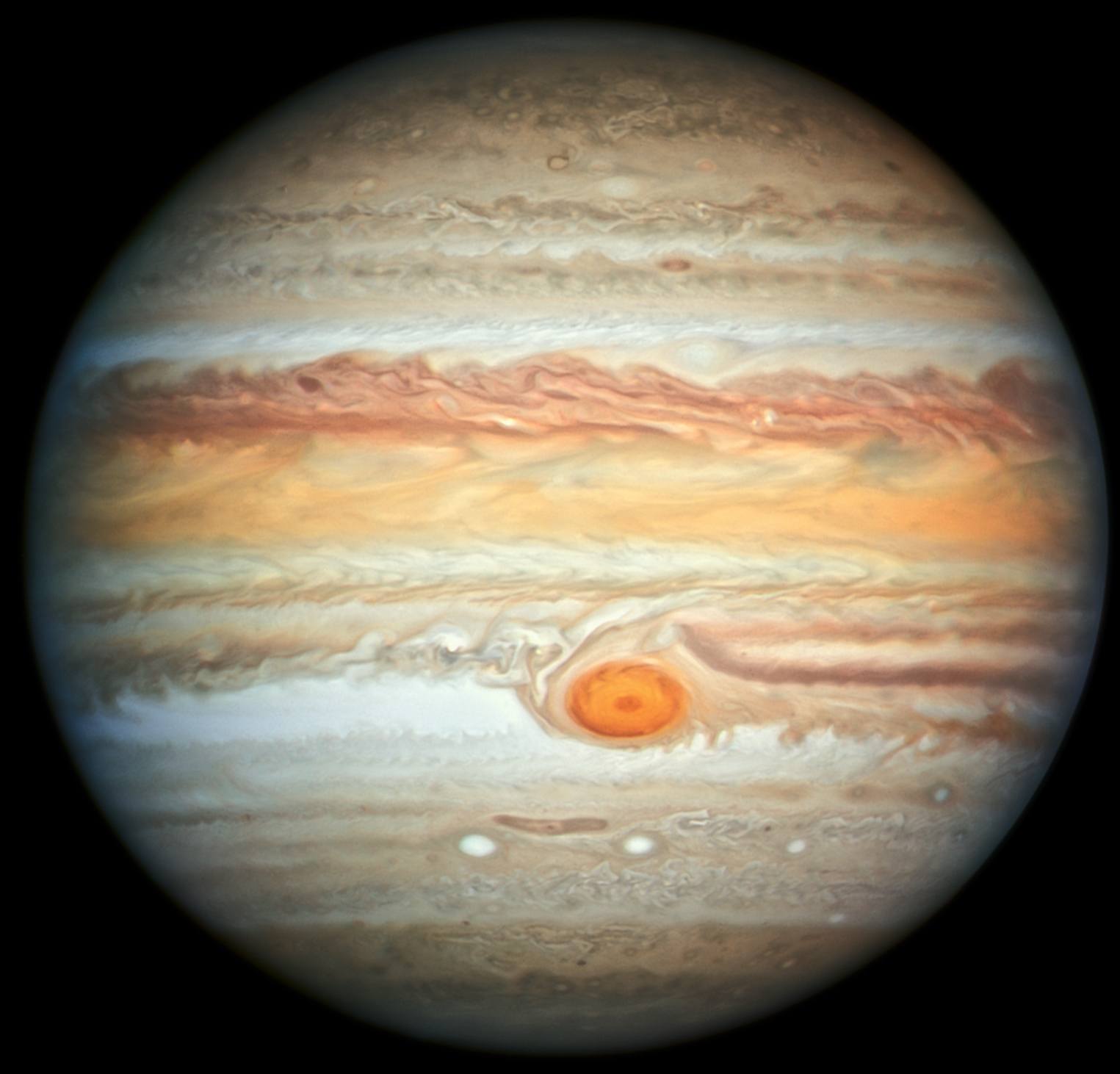
(a)This gas giant has a large storm in its atmosphere known as The Red Spot
(a)Which of the following statements is correct?
Pluto was once classified as a dwarf planet, but is now classified as a main planet
Pluto was never classified as a planet
Pluto has always been considered a planet
Pluto was once considered a planet, but no longer is
The planets are spaced
evenly throughout our solar system
unevenly throughout our solar system
evenly throughout with a gap in between the inner and outer planets
spaced out according to size, the bigger they are the further away from the sun
The mass of an object does not change from one planet to the next.
True
False
The asteroid belt is located between the orbits of Jupiter and Saturn.
True
False
The outer planets have solid, rocky surfaces.
True
False
The inner planets consist of Mercury, Venus, Earth, and Mars.
True
False
The inner planets are known as “gas giants” and the outer planets are known as “terrestrial planets.”
True
False
The outer planets are larger in size than the inner planets.
True
False
An AU is the average distance between
The Sun and Pluto
any two planets
The Sun and Earth
The Earth and the moon
What accounts for 99% of the mass in our solar system?
Asteroids
Jupiter
The Sun
All of the planets, moons, asteroids and comets combined.
The closest star to Earth is
Jupiter
Alpha Centauri
The Sun
The Milky Way
Something unique about Venus is that the (a) are shorter than the (b)
What makes Earth so special?
It supports life
It is red
It is the closest to the Sun
It is the furthest from the Sun
(a) is the fourth planet from the Sun.
(a) is the third planet from the Sun.
Planet known for big red spot storm
Jupiter
Uranus
Earth
Neptune
The (a) planets are Mercury, Venus, Earth, and Mars. The (b) planets are Jupiter, Saturn, Uranus, and Neptune.
Order the outers planets from closest to the Sun to furthest.
Jupiter
Saturn
Uranus
Neptune
Order the inner planets from closest to the Sun to furthest.
Mercury
Venus
Earth
Mars
Jupiter, Saturn, Uranus, and Neptune are all (a)
Pluto is considered a (a) planet
The sun is a (a) .
Earth's sister planet is (a)
called Red planet (a)
home to the tallest mountain
Mercury
Venus
Earth
Mars
What are Jupiter, Saturn, Uranus, and Neptune?
The Sun
The Asteroid Belt
The Outer Planets
The Inner Planets
What makes the Outer Planets different than the Inner Planets?
They're made of rock and move slow
They don't exsist
They're made of gas and move fast
They're made of gas and rock and move fast
What planet takes the longest to orbit the sun?
Uranus
Jupiter
Neptune
Saturn
The Outer Planets are extremely (a)
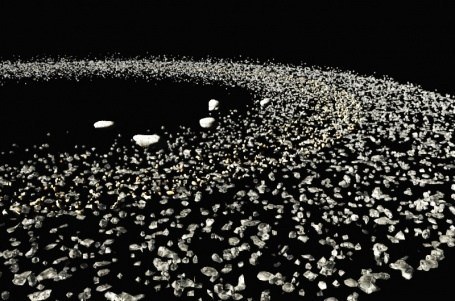
(a) are similar to planets but are not large enough to have cleared their orbital region of other objects.
___________ are objects made of ice, dust, and rocks that orbit the Sun.
dwarf planets
comets
Asteroid belt
Kuiper belt
Oort Cloud
The _________ is a region between the planets Mars and Jupiter containing thousands of rocky objects that orbit the Sun.
dwarf planets
comets
Asteroid belt
Kuiper belt
Oort cloud
The ___________ is a region of thousands of small bodies that exists outside the orbit of the planets. Objects in this area consist of "ices" such as ammonia, water, and methane.
dwarf planets
comets
Asteroid belt
Kuiper belt
Oort cloud
Large chunks of rock and ice that orbit the sun.
Comet
Dwarf Planet
Terrestrial Planets
Gas Giant Planets
The area beyond Mars made up of millions of chunks of rock and iron.
Asteroid Belt
Comet
Celestial Body
Kuiper Belt
The disk-shaped zone beyond the gas giants made of icy objects
Milky Way
Kuiper Belt
Asteroid Belt
Dwarf Planet
The idea presented by Ptolemy that states the Earth is the center of the universe and all celestial objects orbited the Earth
(a)
The idea presented by Copernicus and later proved by Galileo, that states the sun is the center of the universe and all celestial objects orbited the sun.
(a)
I am a (a) entering a planet's atmosphere.
They are sometimes called shooting stars, (a)
One similarity between asteroids, comets and meteoroids is that they all (a) .


Meteoroids are broken off pieces of ...... (select two)
Asteroids
Stars
Comets
The Sun
Space Junk
Which space rock is often called a shooting star?
meteroite
asteroid
meteor
Where are most asteroids found?
Asteroid belt
Asteroid region
Kuiper belt
Orion's belt
This is a broken piece of space rock that is still in space.
meteoroid
meteor
meteorite
asteroid
I am a large rock that revolves around the Sun
planet
meteorite
meteor
asteroid
A rock that burns up in the Earth's atmosphere
meteor
asteroid
meteroite
What is a the space rock that collides into Earth's surface?
meteor
asteroid
meteorite
Which of the following describes a Meteor?
Found between Mars and Jupiter
Have an elliptical orbit of the sun
Orbit the sun like a planet
Burn up as they enter the atmosphere


Identify part 2: (a) .
What are the inner layers of the Sun?
Core, Radiative zone, and Convection zone.
Crust, mantle, and core.
Core, Photosphere, and Radiative Zone.
The Sun doesn't have inner layers.
What is the hottest part of the sun and the solar system.
The Sun
The Core
The Earth
The Corona
What are the outer layers of the Sun?
The Sun has only inner layers.
Photosphere, Chromosphere, and Corona.
Core, Radiative zone, and Convection zone.
Crest, Corona, Mantle.
Why is the sun brighter then other stars?
Its bigger
Its yellow
Its closer to Earth
Its hotter then other stars

What is layer 1, the innermost layer of the sun called?
Core
Radiative Zone
Convective Zone
Photosphere
Chromosphere
What is layer 2 of the sun called?
Core
Radiative Zone
Convective Zone
Photosphere
Chromosphere
Looking at the picture, what is layer 3 of the sun called?
Core
Radiative Zone
Convective Zone
Photosphere
Chromosphere
Which layer does nuclear fusion occur?
Core
Radiative Zone
Convective Zone
Photosphere
Chromosphere


It is the amount of matter in an object.
volume
mass
weight
density
What statement is true?
Mass never changes. Weight does.
Weight never changes. Mass does.
Both mass and weight change because they are affected by gravity.
Neither mass nor weight change. They are always the same.
Weight is the measure of the force of (a) on an object.
6) Which measurement would be different if you were on the Moon versus on Earth?
Mass
Weight
There is a gravitational force between you and your desk. This gravitational force is very small because _____.
the masses are tiny compared to Earth's mass
it doesn't need to be large
the distance between the objects is small
it is a noncontact force
Mass and weight are different. Mass depends on (a) . Weight depends on (b) .
Which planet has the weakest gravitational pull?
Earth
Mercury
Jupiter
Venus
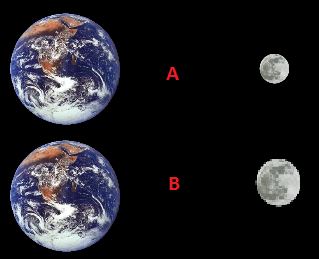
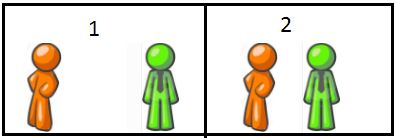

The force of gravity acting
on an object is the object's ______.