wayground logo

Free Printable Worksheets

Font size

S
M
L
XL
Worksheets

Revision of mixtures and solutions

Total questions: 191

Worksheet time: 1hrs 16mins

Name
Class
Date
1.
What is a mixture?
a)
elements chemically combined
b)
a combination of different things
c)
it is found on the Periodic Table 
d)
it is made of chemical
2.
What does it mean if a mixture is heterogeneous?
a)
you can see the different parts
b)
cannot tell one part from another
c)
very well blended
d)
made of elements
3.
What does it mean if a mixture is homogeneous?
a)
you can see the different parts
b)
cannot tell one part from another
c)
chunks of particles
d)
made of elements
4.
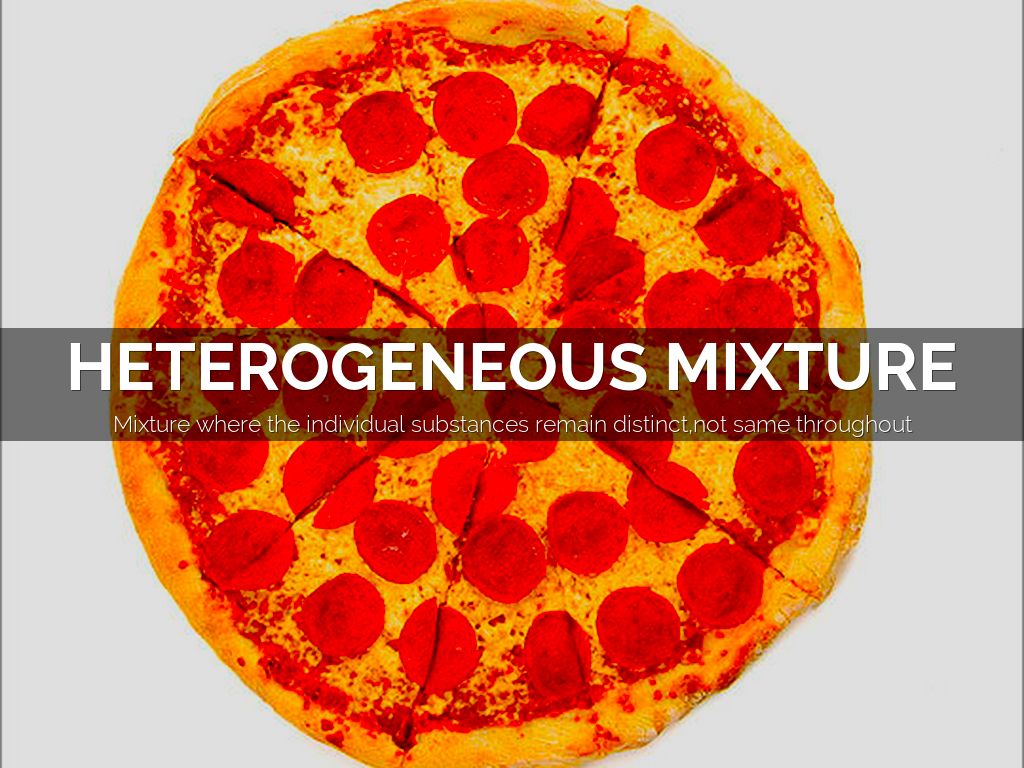
What type of mixture is this?
a)
heterogeneous 
b)
homogeneous
5.
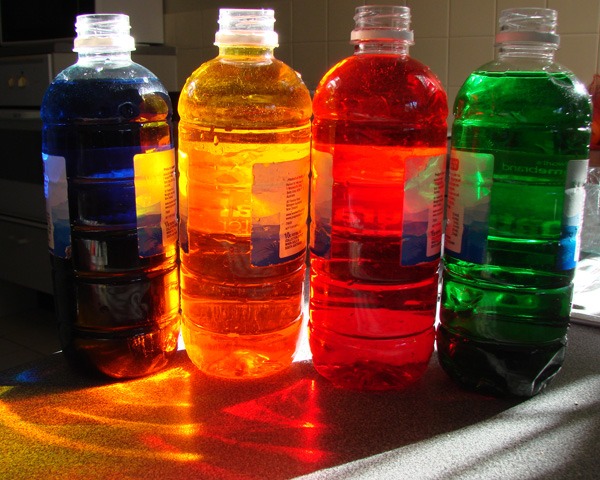
What type of mixture is this?
a)
heterogeneous 
b)
homogeneous
6.
What type of mixture is this?
a)
heterogeneous 
b)
homogeneous
7.
What type of mixture is this?
a)
heterogeneous 
b)
homogeneous
8.
To separate the sugar and lemonade what method should you use?
a)
filtration 
b)
sorting
c)
magnet
d)
boiling
9.
To separate trail mix what method should you use?
a)
filtration 
b)
sorting
c)
magnet
d)
boiling
10.
To separate iron filings and sulfur what method should you use?
a)
filtration 
b)
sorting
c)
magnet
d)
boiling
11.
To separate noodles from water what method should you use?
a)
filtration with a strainer
b)
boiling while it is cooking
c)
magnet for the noodles
12.
What is the measure of how much a substance dissolves in a given volume?
a)
atom
b)
element
c)
solububble
d)
solubility 
13.
Which mixture separation method uses a net?
a)
filtration 
b)
magnet
c)
boiling/evaporation
d)
sorting physically
14.
Which mixture separation method would work with picking up nails?
a)
filtration 
b)
magnet
c)
boiling/evaporation
d)
sorting physically
15.
Which mixture separation method would use to separate sugar from water?
a)
filtration 
b)
magnet
c)
boiling/evaporation
d)
sorting physically
16.
Which mixture separation method would use to sort trail mix?
a)
filtration 
b)
magnet
c)
boiling/evaporation
d)
sorting physically
17.
Elements and compounds are always ___.
a)
pure
b)
mixed
18.
Mixtures are always ___.
a)
pure
b)
mixed
19.
Which list is made of mixtures?
a)
soil, water, soup
b)
carbon dioxide, soil, soup
c)
salt, water, air
d)
atoms, cereal, pizza
20.
What happens when you mix dirt and water?
a)
The dirt will float on top of the water.
b)
The dirt will settle to the bottom.
c)
The dirt will dissolve.
d)
The water will begin to bubble.
21.
Type of mixture that has the SAME COMPOSITION in every part.
a)
Homogenous
b)
Heterogeneous
22.
Type of mixture that DOESN'T HAVE the same composition in every part.
a)
Homogeneous
b)
Heterogeneous
23.
Chocolate milk is an example of a
a)
homogeneous mixture
b)
heterogeneous mixture
24.
Sand and sugar is an example of a
a)
homogeneous mixture
b)
heterogeneous mixture
25.
M&M's is an examples of a
a)
homogeneous mixture
b)
heterogeneous mixture
26.
Salad is an example of a
a)
homogeneous mixture
b)
heterogeneous mixture
27.
Coloured water is an example of a
a)
homogeneous mixture
b)
heterogeneous mixture
28.
Dishwasher soap is an example of a
a)
homogeneous mixture
b)
heterogeneous mixture
29.
Chicken noodle soup is an example of a
a)
homogeneous mixture
b)
heterogeneous mixture
30.
Soil is an example of a
a)
homogeneous mixture
b)
heterogeneous mixture
31.
Lemonade is an example of a
a)
homogeneous mixture
b)
heterogeneous mixture
32.
Based on THE DISTRIBUTION OF ITS COMPONENTS, we can divide mixtures in
a)
Homogeneous and Heterogeneous mixtures
b)
Pure substances and Mixtures
33.
What is a mixture?
a)
elements chemically combined
b)
a combination of different things
c)
it is found on the Periodic Table 
d)
it is made of chemical
34.
What does it mean if a mixture is heterogeneous?
a)
you can see the different parts
b)
cannot tell one part from another
c)
very well blended
d)
made of elements
35.
What does it mean if a mixture is homogeneous?
a)
you can see the different parts
b)
cannot tell one part from another
c)
chunks of particles
d)
made of elements
36.
What type of mixture is this?
a)
heterogeneous 
b)
homogeneous
37.
What type of mixture is this?
a)
heterogeneous 
b)
homogeneous
38.
What type of mixture is this?
a)
heterogeneous 
b)
homogeneous
39.
What type of mixture is this?
a)
heterogeneous 
b)
homogeneous
40.
To separate the sugar and lemonade what method should you use?
a)
filtration 
b)
sorting
c)
magnet
d)
boiling
41.
To separate trail mix what method should you use?
a)
filtration 
b)
sorting
c)
magnet
d)
boiling
42.
To separate iron filings and sulfur what method should you use?
a)
filtration 
b)
sorting
c)
magnet
d)
boiling
43.
To separate noodles from water what method should you use?
a)
filtration with a strainer
b)
boiling while it is cooking
c)
magnet for the noodles
44.
What is the measure of how much a substance dissolves in a given volume?
a)
atom
b)
element
c)
solububble
d)
solubility 
45.
Which mixture separation method uses a net?
a)
filtration 
b)
magnet
c)
boiling/evaporation
d)
sorting physically
46.
Which mixture separation method would work with picking up nails?
a)
filtration 
b)
magnet
c)
boiling/evaporation
d)
sorting physically
47.
Which mixture separation method would use to separate sugar from water?
a)
filtration 
b)
magnet
c)
boiling/evaporation
d)
sorting physically
48.
Which mixture separation method would use to sort trail mix?
a)
filtration 
b)
magnet
c)
boiling/evaporation
d)
sorting physically
49.
Elements and compounds are always ___.
a)
pure
b)
mixed
50.
Mixtures are always ___.
a)
pure
b)
mixed
51.
Which list is made of mixtures?
a)
soil, water, soup
b)
carbon dioxide, soil, soup
c)
salt, water, air
d)
atoms, cereal, pizza
52.
What happens when you mix dirt and water?
a)
The dirt will float on top of the water.
b)
The dirt will settle to the bottom.
c)
The dirt will dissolve.
d)
The water will begin to bubble.
53.
Solubility is defined as
a)
the ability to catch on fire
b)
the ability to be dissolved
c)
the ability to fly.
d)
the ability to get on Mrs. D's nerves.
54.
The substance being dissolved in a solution.
a)
sands
b)
solute
c)
solvent
d)
alloy
55.
The substance in which a solute is dissolved
a)
sands
b)
solvent
c)
alloy
d)
negative particles
56.
Solutions are composed of __________ .
a)
salts and solutes
b)
solvents and salts
c)
solutes and alloys
d)
solutes and solvents
57.
In a sample of salt water, NaCl would be considered the ______.
a)
Solution
b)
Solute
c)
Solvent
d)
Solvation
58.
If we are making Kool-aid with sugar, Kool-aid powder, and water, which part is the solvent?
a)
water
b)
powder
c)
sugar
d)
powder and sugar
59.
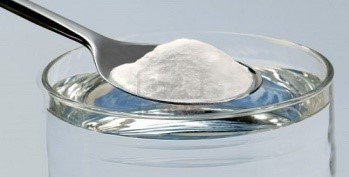
In this mixture, which of the following will be the solute?
a)
The water in the glass
b)
The glass that holds the final mixture
c)
The solution containing both powder and water
d)
The powder on the spoon
60.
Lemonade - Water, lemon juice, and sugar
Identify the solute
a)
water
b)
lemon juice
c)
sugar and lemon juice 
61.
What is a solvent?
a)
The substance that does the dissolving in a solution.
b)
The substance that is being dissolved in a solution.
c)
The mixing of different substances.
d)
The process in which neutral molecules lose or gain electrons
62.
What is a compound? 
a)
 the simplest form of a substance 
b)
a combination only of 3 elements 
c)
a combination of 2 or more elements 
d)
a place where people are held 
63.
What is the simplest form that cannot be broken down to anything simpler? 
a)
element 
b)
solution
c)
compound
64.
The flammability of a substance is 
a)
A. a chemical property.
b)
B. related to the density
c)
C. a physical property.-
d)
D. changeable.
65.
What is a pure substance made of two or more elements that are chemically combined called?
a)
A. element
b)
B. compound     
c)
C. mixture
d)
D. solution
66.
When materials combine to form a mixture, they
a)
A. keep their original properties.
b)
B. react to form a new substance with new properties.
c)
C. combine in a specific ratio.
d)
D. always change their physical state.
67.
If a spoonful of salt is mixed in a glass of water, what is the water called?
a)
A. solute
b)
B. solution
c)
C. solvent
d)
D. element
68.
A pure substance that cannot be separated into simpler substances by chemical or physical means.  
a)
Element
b)
Compound
c)
Mixture
d)
Chemical
69.
Which of the following is not a compound?
a)
HCl
b)
Cl
c)
NaCl
d)
CO2
70.
What is Newton's First Law
a)
F=ma
b)
Every action has an equal and opposite reaction
c)
An object at rest stays at rest, an object in motion stays in motion. 
d)
Friction 
71.
What is the speed of an object that travels 20 meters in 4 seconds?
a)
80 m/s
b)
0.2 m/s
c)
5 m/s
d)
24 m/s
72.
What pulls a ball back to earth?
a)
Gas
b)
Gravity
c)
Friction
d)
Molecules
73.

Water is the universal ____.

a)

solute

b)

solvent

c)

solution

74.

solute + solvent =

a)

solution

b)

equation

75.
a)

solvent

b)

solution

c)

solute

76.
a)

solvent

b)

solute

77.
a)

solute

b)

solvent

78.
a)

solvent

b)

solute

79.

Solutes dissolve quicker in _________ water.

a)

cold

b)

warm

80.

Solutes dissolve quicker if you stir them.

a)

true

b)

false

81.
a)

solute

b)

solvent

c)

solution

82.
a)

solvent

b)

solute

83.
a)

solution

b)

solute

c)

solvent

84.
The substance being dissolved in a solution.
a)
sands
b)
solute
c)
solvent
d)
alloy
85.
The substance in which a solute is dissolved
a)
sands
b)
solvent
c)
alloy
d)
negative particles
86.
Solutions are composed of __________ .
a)
salts and solutes
b)
solvents and salts
c)
solutes and alloys
d)
solutes and solvents
87.

If I dissolve carbon dioxide in water, what is the solvent?

a)

Carbon Dioxide

b)

There is no solvent

c)

Oxygen

d)

Water

88.

what is a solvent

a)

water

b)

sugar

c)

powder

d)

tea

89.

If a solute dissolves in water than it is_____.

a)

soluble

b)

insoluble

c)

solute

d)

solvent

90.

what is a solvent

a)

water

b)

sugar

c)

powder

d)

air

91.

You make a pitcher of lemonade by adding lemon juice, sugar, ice and water. Which of the following are the 2 solutes in the solution?

a)

Lemon juice

b)

Sugar

c)

Water

d)

Lemon seeds

92.
a)

solvent

b)

solution

c)

solute

93.
a)

solute

b)

solvent

94.

gravel

a)

soluble

b)

insoluble

95.

______ refers to the ability of a substance to combine and form a solution

a)

solvent

b)

solute

c)

solution

d)

solubility

96.
__________ are made up of solutes and solvents.
a)
Solutions
b)
Suspension
c)
Colloid
97.

True or False. If you add heat to a solution, more solute will dissolve

a)

True

b)

False

98.

a)

soluble

b)

insoluble

99.

Fish breathe oxygen, which is dissolved in water. Is the oxygen the fish breathe considered to be the solute or solvent?

a)

Solute

b)

Solvent

100.

What is able to dissolve other substances?

a)

Solute

b)

Solution

c)

Salt

d)

Solvent

101.

If you put a tea bag in water, the water is the_____.

a)

Solute

b)

Solvent

c)

Solution

102.
What is a solute?
a)
The substance that does the dissolving in a solution.
b)
The substance that is dissolved into the solution.
c)
The mixing of different substances.
d)
The process in which neutral molecules lose or gain electrons
103.
Which is an example of a solute?
a)
Egg whites
b)
Sugar
c)
Water
d)
Acetone
104.
Which is an example of a solvent?
a)
Salt
b)
Egg whites
c)
Water
d)
Sugar
105.

What is a solvent

a)

A liquid that will dissolve a solid solute

b)

Another word for solution

c)

A thing that make drinks change colour

d)

Usually the solid about to be dissolved

106.

The ___ is the thing being dissolved.

a)

solute

b)

solvent

c)

mixture

d)

solution

107.

The substance being dissolved in a solution is the?

a)

solution

b)

solute

c)

solvent

d)

mixture

108.

The substance in which a solute is dissolved is a?

a)

solution

b)

solvent

c)

alloy

d)

mixture

109.
Solutions are composed of __________ .
a)
salts and solutes
b)
solvents and salts
c)
solutes and alloys
d)
solutes and solvents
110.
If I dissolve sugar in water, what is the solute?
a)
Water
b)
Hydrogen
c)
Sugar
d)
Carbon
111.

If I dissolve carbon dioxide in water, what is the solvent?

a)

Carbon Dioxide

b)

There is no solvent

c)

Oxygen

d)

Water

112.

If I dissolve salt in water, what is the solvent?

a)

salt

b)

water

c)

salt & water

d)

none of the above

113.

If I dissolve sugar in water, what is the solution?

a)

water

b)

sugar

c)

sugary water

d)

none of the above

114.

If I dissolve salt in water, what is the solute?

a)

water

b)

salty water

c)

none of the above

d)

salt

115.

Define the term soluble.

a)

Can dissolve in water

b)

Cannot dissolve in water

c)

Partially dissolves in water

116.

Define the term insoluble.

a)

Can dissolve in water.

b)

Cannot dissolve in water.

c)

Partially dissolves in water.

117.

Is water the only solvent that can dissolve solutes?

a)

Yes

b)

No

118.

What is a solvent

a)

A liquid that will dissolve a solid solute

b)

Another word for solution

c)

A thing that make drinks change colour

d)

Usually the solid about to be dissolved

119.

The ___ is the thing being dissolved.

a)

solute

b)

solvent

c)

mixture

d)

solution

120.
Solutions are composed of __________ .
a)
salts and solutes
b)
solvents and salts
c)
solutes and alloys
d)
solutes and solvents
121.

If I dissolve salt in water, what is the solvent?

a)

salt

b)

water

c)

salt & water

d)

none of the above

122.

If I dissolve sugar in water, what is the solution?

a)

water

b)

sugar

c)

sugary water

d)

none of the above

123.

If I dissolve salt in water, what is the solute?

a)

water

b)

salty water

c)

none of the above

d)

salt

124.

Define the term soluble.

a)

Can dissolve in water

b)

Cannot dissolve in water

c)

Partially dissolves in water

125.

Define the term insoluble.

a)

Can dissolve in water.

b)

Cannot dissolve in water.

c)

Partially dissolves in water.

126.

gravel

a)

soluble

b)

insoluble

127.

a)

soluble

b)

insoluble

128.

a)

soluble

b)

insoluble

129.

______ refers to the ability of a substance to combine and form a solution

a)

solvent

b)

solute

c)

solution

d)

solubility

130.
Solvent is best defined as-
a)
a mixture in which the substances are spread out evenly between one another and cannot be told apart
b)
the ability of a substance to dissolve in another substance
c)
a substance that dissolves in another substance
d)
a substance into which another substance dissolves
131.
What is a solute?
a)
The substance that does the dissolving in a solution.
b)
The substance that is dissolved into the solution.
c)
The mixing of different substances.
d)
The process in which neutral molecules lose or gain electrons
132.
A solution that can hold more solute  is called
a)
saturated
b)
supersaturated
c)
unsaturated
d)
insoluble
133.

When no more solute dissolves the solution is _________

a)

supersaturated

b)

unsaturated

c)

saturated

d)

supercalifragilisticexpialidocious

134.

The substance being dissolved is called the ________

a)

solvent

b)

solid

c)

solute

d)

solvate

135.
If an electrical current can run through a solution, it is said to contain
a)
magic
b)
nonelectrolytes
c)
electricity
d)
electrolytes
136.
A solution that has more solute than it can hold is called
a)
saturated
b)
supersaturated
c)
unsaturated 
d)
suspension
137.
Contains the maximum amount of dissolved solute
a)
unsaturated solution
b)
supersaturated solution
c)
saturated solution
138.
You can make a solution more concentrated by adding more __________.
a)
solute
b)
solvent
c)
water
139.
Which technique could increase or speed up the rate of dissolving?
a)
Allowing the mixture to settle
b)
Stirring the mixture
c)
Adding more powder
d)
Adding more water
140.
What does it mean to dilute a solution?
a)
lower the concentration of solute per solvent
b)
increase the concentration of solute per solvent
141.
How does a solution become supersaturated?
a)
dissolve lots of solute in it.
b)
dissolve a little solute in it. 
c)
dissolve more solute than you should be able to. 
d)
dissolve a super amount of solvent in it. 
142.

A student is preparing solutions for a laboratory experiment by dissolving solid solutes in liquid solvents. Which action will increase the rate of solubility

a)

lowering the temperature of the solvent

b)

stirring the solute in the solution

c)

increasing the pressure on the solution

d)

increasing the particle size of the solute

143.

What is the percent by mass of a sugar solution where 10 grams of sugar is added to 100 grams of water?

a)

.10%

b)

0.091%

c)

9.1%

144.
What is the concentration, in percent by volume, of 15.3 mL of solute in 2.65 L of solution?
a)
0.58%
b)
0.0058%
c)
5.8%
145.
Matter cannot be created or destroyed.
a)
True
b)
False
146.
The model of the atom has remained mostly unchanged since the idea of atoms was first proposed.
a)
True
b)
False
147.
Atoms contain mostly empty space.
a)
True
b)
False
148.
All atoms contain at least one neutron.
a)
True
b)
False
149.
Two atoms of the same element might contain different numbers of neutrons.
a)
True
b)
False
150.
If you are given the element name , you can determine the mass number of neutrons.
a)
True
b)
False
151.
A mixture is a type of substance.
a)
True
b)
False
152.
Substances that contain the same elements will have the same chemical and physical properties.
a)
True
b)
False
153.
Both compounds and mixtures contain more than one type of element.
a)
True
b)
False
154.

The periodic table lists all the ______________ in order.

a)

groups

b)

elements

c)

symbols

155.

The letter "C" is the _____________________ for the element carbon.

a)

atomic number

b)

element

c)

atomic symbol

d)

atom

156.

Elements with the smallest ___________________ are near the top of the periodic table.

a)

atomic number

b)

element

c)

atomic symbol

157.

Which of the following are true about atoms?

a)

atoms have no mass

b)

atoms are mostly empty space

c)

electrons have more mass than protons or neutrons

158.

Which two things in an atom have the same mass?

a)

protons and atoms

b)

atoms and electrons

c)

neutrons and protons

d)

electrons and protons

159.

Which did scientists understand FIRST?

a)

all matter is made of atoms

b)

electrons circle the nucleus

c)

atoms are mostly empty space

d)

atoms are made of electrons, protons, and neutrons

160.

_________ circle the nucleus.

a)

nucleus

b)

protons

c)

electrons

d)

neutrons

161.

The ____________ is made of neutrons and protons.

a)

electrons

b)

nucleus

c)

empty space

d)

volume

162.

___________ have a plus or positive charge.

a)

nucleus

b)

protons

c)

electrons

d)

neutrons

163.

Most of the mass of an atom is in the _____________.

a)

electrons

b)

protons

c)

nucleus

164.

Atoms have the same number of _______________ and _________________.

a)

eletrons

b)

protons

c)

neutrons

d)

nucleuses

165.

Molecules have more than one atom.

a)

true

b)

false

166.

Where are protons found?

a)

Inside (Nucleus)

b)

Middle (Empty Space)

c)

Outer Shells (Rings)

167.

Where are electrons found?

a)

Inside (Nucleus)

b)

Middle (Empty Space)

c)

Outer Shells (Rings)

168.

Where are neutrons found?

a)

Inside (Nucleus)

b)

Middle (Empty Space)

c)

Outer Shells (Rings)

169.

_____________ have no charge.

a)

electrons

b)

neutrons

c)

protons

170.

What kind of charge do electrons have?

a)

positive

b)

negative

c)

no charge

171.

What kind of charge do protons have?

a)

positive

b)

negative

c)

no charge

172.

What kind of charge do neutrons have?

a)

positive

b)

negative

c)

no charge

173.

List the scientific method in order:

a)

Identify, form hypothesis, record and interpret data, form conclusion, experiment

b)

Identify, form hypothesis, experiment, record and interpret data, form conclusion

174.

The weighted average mass of an element.

a)

mass number

b)

atomic number

c)

isotope

d)

element

175.

A sample of matter that has the same composition and properties throughout.

a)

substance

b)

atom

c)

element

d)

isotope

176.

States that matter is neither created nor destroyed, only changed in form.

a)

Law of conservation of matter

b)

Law of energy

c)

Law of gravity

177.

Negatively charged subatomic particle

a)

proton

b)

neutron

c)

electron

178.

Positively charged particle in the nucleus of an atom.

a)

proton

b)

neutron

c)

electron

179.

Uncharged particle in the nucleus of an atom.

a)

proton

b)

neutron

c)

electron

180.

Positively cahrged central part of the atom.

a)

nucleus

b)

electron cloud

c)

orbit

d)

energy level

181.

Elements that generally have a shiny or metalllic luster

a)

metals

b)

nonmetals

c)

metalloids

d)

noble gases

182.

Elements that have characteristics of both metals and nonmetals.

a)

metals

b)

nonmetals

c)

metalloids

d)

noble gases

183.

Elements that are usually dull in appearance and poor conductors of heat and electricity .

a)

metals

b)

nonmetals

c)

metalloids

d)

noble gases

184.

Matter made up of only one kind of atom

a)

element

b)

compound

c)

substance

d)

isotope

185.

Tells you the number of protons in the nucleus of each atom of an element

a)

atomic number

b)

atomic mass

c)

isotopes

d)

atoms

186.

Anything that has mass and takes up space

a)

matter

b)

atom

c)

element

d)

compound

187.

Atoms of the same element that have different numbers of neutrons

a)

element

b)

compound

c)

isotope

d)

metals

188.

The sum of an atom;s protons and neutrons.

a)

atomic number

b)

atomic mass

c)

compound

d)

element

189.

Small particles that make up most types of matter on earth

a)

atoms

b)

elements

c)

molecules

d)

compound

190.

A pure substance whose smallest unit is made up of atoms of more than one element

a)

atoms

b)

elements

c)

molecules

d)

compound

191.

Formed when two or more substances come together but don;t combine to form a new substance

a)

compound

b)

element

c)

mixture

d)

substance