
 Worksheets
8202L3SANPPT2Q2
Total questions: 29
Worksheet time: 15mins
For what size of domestic application are larger domestic pumping stations recommended?
Up to 5 people
Up to 8 to 13 people
Up to 20 people
Up to 30 people
What is the purpose of the alarm in larger domestic pumping stations?
To indicate power failure
To signal maintenance checks
To alert in the event of high fluid levels
To warn of potential intruders
Why are compact pump systems used in small domestic waste water applications?
When high water pressure is needed
When foul drainage by gravity is possible
When foul drainage by gravity is not possible
When there is a need for portable solutions
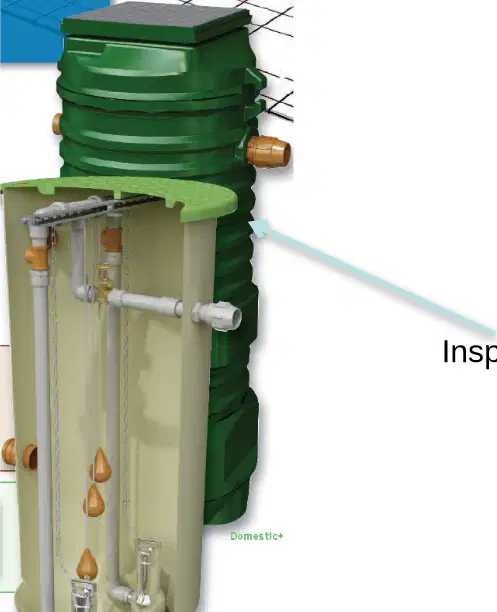
What is the construction material of the domestic pump station depicted in the diagram?
PVC
GRP
Steel
Concrete
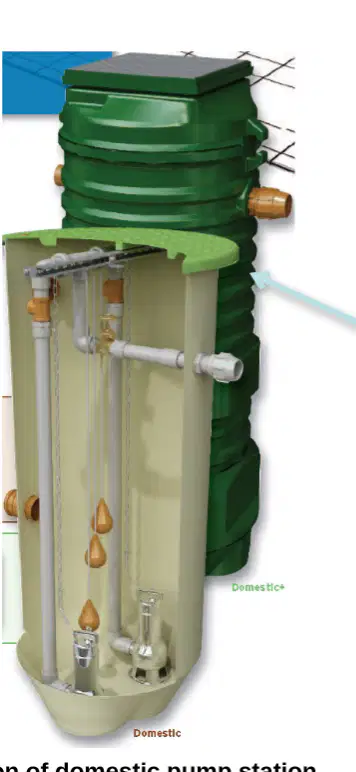
What is the size of the inlet pipe for the domestic pump station shown in the diagram?
110 mm
160 mm
100 mm
150 mm
According to the diagram, what is the invert depth 'B' of the chamber in the domestic pump station?
0.5 m
0.8 m
1.0 m
1.5 m
What is the diameter 'd' of the domestic pump station chamber as shown in the diagram?
600 mm
800 mm
1000 mm
1200 mm
What is a wet room in the context of plumbing?
A room specifically designed for laundry purposes.
A waterproofed area usually equipped with a walk-in shower.
A bathroom with a tub and a separate shower area.
A kitchen area that includes a sink and dishwasher.
Why might a wet room be considered attractive to people with physical impairments?
Because it requires climbing over a high threshold.
Because it has a complex design that is difficult to navigate.
Because it offers easy access and a spacious layout.
Because it is only suitable for houses with multiple floors.
What is the purpose of tanking in the installation of a wet room?
To provide electrical insulation for underfloor heating.
To ensure there is no water leakage from the wet room area.
To make the room soundproof.
To enhance the visual appeal of the room.
What feature of a wet room makes it suitable for underfloor heating?
The presence of a conventional shower tray.
The use of a high threshold.
The free floor area.
The installation of a bathtub.
What is the purpose of low-level grates in walk-in wet rooms?
To provide ventilation to the room
To allow water to be removed from the showering area
To supply water to the showering area
To increase the aesthetic appeal of the showering area
What is the purpose of the strainer in the drainage system of a walk-in wet room?
To reinforce the floor membrane
To heat the floor
To filter waste water before it enters the removable water trap
To support the grate
At what level does the grate sit in the installation of a walk-in wet room's drainage system?
Below the finished floor level
Above the finished floor level
At the finished floor level
At the wall membrane level
Where is the outlet located in the linear drain wall mounted option for a walk-in wet room?
At the beginning of the showering area
In the centre of the showering area
At the end of the showering area
Outside the showering area
What is fitted below the grate to accommodate the flow of waste water in a walk-in wet room?
A water pump
A water trap
A water filter
A water heater
What is the purpose of grates in walk-in wet rooms?
To provide structural support to the walls
To assist even discharge and full removal of waste water
To increase the aesthetic appeal of the room
To regulate the temperature of the waste water
What is included in the design of walk-in wet rooms to provide easy access?
Adjustable frames
Special traps
Decorative tiles
Heating elements
How would you know if the fluid level was too high in pumping station?
The unit stops working
The fluid overflows
There is an alarm system
The fluid level is visibly low
When considering installing a wet room, why would you need to tank the floor and showering walls?
To create a dry storage area
To prevent water damage and leakage
To make the room look bigger
To reduce the cost of installation
Can a walk-in wet room be installed on the first floor of a house with a wooden floor?
Yes, with additional structural support
No, it's impossible
Only if the house is new
Yes, without any modifications
How does the water disperse in the showering area if there is no shower tray?
It is absorbed by the floor
It pools in the center of the room
It flows towards a drain
It evaporates immediately
Does the wet room discharge system utilise water traps?
No, they are not necessary
Yes, to prevent odors
Only in commercial installations
Yes, but only for aesthetic reasons
What are the advantages and disadvantages of walk-in wet rooms?
Advantages: Easy to clean; Disadvantages: Potential for leaks
Advantages: Cost-effective; Disadvantages: Time-consuming
Advantages: More space; Disadvantages: Lower property value
Advantages: High-tech look; Disadvantages: Difficult to install
For what application would you use a pumping station in small domestic waste water applications?
Where foul drainage by gravity is possible
Where foul drainage by gravity is not possible
Only in commercial buildings
Only outdoors
Where can a walk-in wet room be installed in a house?
In the basement
On the first floor with a wooden floor
On the second floor with a concrete floor
Outside the house
What triggers the motor to operate in a sealed plastic receptacle unit connected to a WC pan and waste connections?
The motor operates continuously.
The motor operates when a switch senses a decrease in water level.
The motor operates when a switch senses the new level of water and solids.
The motor operates based on a timer.
What happens to the solids entering the macerating drum in the sealed plastic receptacle unit?
They are stored until manually removed.
They are broken down into a mass and pumped out.
They are incinerated.
They are compacted and remain in the drum.
After being pumped to an outlet at the higher part of the unit, where does the mass go in a sealed plastic receptacle unit?
Directly into the soil stack.
Into a storage tank.
Horizontally to a soil stack after running a minimum height.
Out to an open drainage field.

