wayground logo

Free Printable Worksheets

Font size

S
M
L
XL
Worksheets

Unit 1 Refresh

Total questions: 19

Worksheet time: 10mins
Name
Class
Date
1.
A person is running a race. Which of the following will happen to their vital signs as they’re running?
a)
Blood pressure will decrease, pulse will increase, respiratory rate will increase
b)
Blood pressure will increase, pulse will increase, respiratory rate will increase
c)
Blood pressure will increase, pulse will decrease, respiratory rate will increase
d)
Blood pressure will decrease, pulse will decrease, respiratory rate will decrease

2.
If a person's blood pressure is 134/72, which number represents the systolic reading and what does the systolic number represent? Select all answers that apply.
a)
134
b)
72
c)
The measure of the pressure in the arteries when the heart contracts.
d)
The measure of the pressure in the arteries when the heart is at rest.
3.
A researcher is interested in performing an experiment to determine whether listening to classical music while taking a quiz helps students do better. The researcher has two comparable classrooms with one classroom of students taking a quiz while listening to classical music and the other taking the same quiz without listening to classical music. What is the independent variable in this experiment?
a)
Different classrooms
b)
Listening to classical music
c)
Taking a quiz
d)
How students do on the quiz
4.
What was wrong with Experiment 1?
a)
They didn’t include a control group.
b)
They didn’t include multiple trials.
c)
They included more than one independent variable.
d)
They should’ve only had one test subject.
5.
This microorganism causes the common cold. It can only multiply when inside a human host. It is so small, it can’t be seen with microscopes you will use in school, and it has the ability to mutate or change. What type of disease agent is this microorganism?
a)
Bacteria
b)
Virus
c)
Fungus
d)
This microorganism is not a disease agent.
6.
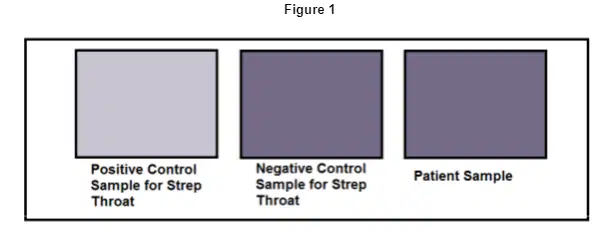
Does the patient have strep throat?
a)
There is not enough information, more tests need to be run
b)
Yes
c)
No
d)
Test is inconclusive
7.
Based on the information you have from the chart above and the symptoms below, what illness does this patient most likely have? Disease Dictionary Here
a)
Common cold
b)
Influenza (Flu)
c)
Pneumococcal pneumonia
d)
Tuberculosis (TB)
8.
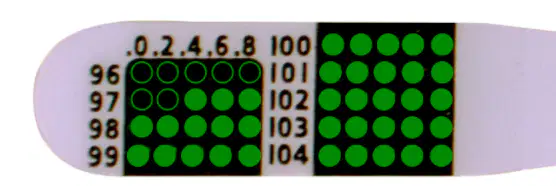
What is the correct temperature shown on the thermometer?
a)
97.2
b)
97.4
c)
97.6
d)
97.8
9.
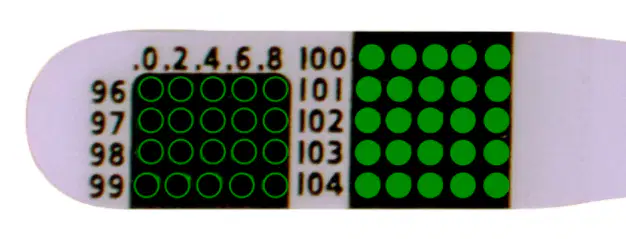
What is the correct temperature shown on the thermometer?
a)
99.6
b)
99.8
c)
100.0
d)
100.2
10.
If a person's heart rate is between 35-50 beats per minute, then they are probably what?
a)
A baby
b)
An athlete
c)
A teenager
d)
An actor
11.
What is it called when you have high blood pressure?
a)
Hypoxemia
b)
Hypertension
c)
Hypotension
d)
Homeostasis
12.
Which of the following is not a step in the Scientific Method?
a)
Hypothesis
b)
Observation
c)
Iterate
d)
Analysis
13.
Select all of the true statements about viruses.
a)
You can see them with a regular classroom microscope.
b)
They need a host to multiply.
c)
They can mutate, making them difficult to prevent or treat.
d)
They can be passed from person to person.
14.

Which of the following is a way to prevent contamination of your sample when working with bacteria?

a)
Use dirty gloves
b)
Sterilize all equipment and work surfaces
c)
Work in a crowded area
d)
Leave equipment uncovered
15.

What is the purpose of a control in an experiment?

a)

The control is not important.

b)

It tells us what effect the dependent variable had on the experiment.

c)

It is the normal part of the experiment.

d)

It is the standard of comparison for checking the results of a survey or experiment.

16.


Which step of the scientific method is the step by step process?

a)

Experiment

b)

Hypothesis

c)

Data Analysis

d)

Conclusion

17.

Why is a step by step detailed procedure in an experiment so important?

a)

Because the teacher said so.

b)

Because it tells you what to do.

c)

So that the audience can read it.

d)

So that the experiment is repeatable and will produce the same results each time.

18.

What is an independent variable in an experiment?

a)

A variable that does not depend on the state of another variable.

b)

A group or individual used as a standard of comparison for checking the results of a survey or experiment.

c)

A variable that depends on the state of another variable.

d)

A student

19.

A person is riding a bike on a challenging trail. Which of the following will happen to their vital signs as they’re biking?

a)

Blood pressure will increase, pulse will increase, respiratory rate will increase

b)

Blood pressure will decrease, pulse will increase, respiratory rate will increase

c)

Blood pressure will increase, pulse will decrease, respiratory rate will increase

d)

Blood pressure will decrease, pulse will decrease, respiratory rate will decrease