
 Worksheets
Driver Education: Chapter 7 Pre and Post Drive Procedure Test
Total questions: 2
Worksheet time: 23mins
How many feet is the length of the longest blind spot of a truck in feet?
(a)
When transporting cargo or valuables you should store these:
in the back seat
in the trunk
in the passenger seat
in the bed of your truck
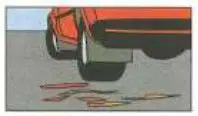
This diagram illustrates the need to:
(Notice the debris under the car)
check under the vehicle for leaks.
make sure the path of travel is clear.
check the tires for inflation and wear.
check the body of the vehicle for damage.
An external check of the vehicle should be performed:
each time you use the vehicle.
only on a busy road.
once a week.
only when you stop for fuel.
Approaching your vehicle, visually check tires for:
the position of the front wheels.
the tire inflation.
the tire tread wear.
all of these.
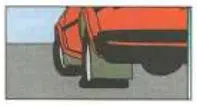
The diagram illustrates the need to:
check under the vehicle for leaks.
make sure the path of the vehicle are clear.
check the tires.
check the vehicle.
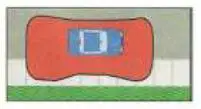
This diagram illustrates the need to:
check under the vehicle for leaks
make sure the blind zone is clear.
check the tires.
check the vehicle.
Your pre-drive protocol (readiness tasks) should include:
physical preparedness
emotional preparedness
making the proper adjustments
all of these
Approaching a vehicle parked at the curb of the roadway, you should:
approach the driver's door from the rear of the vehicle.
approach the driver's door from the front of the vehicle.
signal to the traffic before approaching the driver's door.
all of these.
Before turning or changing lanes, turning your head to check the blind spot is:
not necessary if there are no vehicles visible in the mirrors.
not necessary if the maneuver is performed slowly.
only necessary when other road vehicles are nearby.
always necessary.
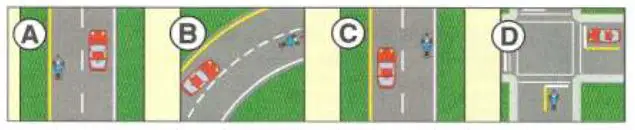
Which diagram shows the red vehicle in the motorcyclist's blind spot?
A
B
C
D
To prevent "whiplash" in rear-end collisions, vehicles are equipped with:
air bags which release on impact.
passive restraint systems that do not require adjustment.
headrests that may require adjustment for height.
all of these.
When driving, ensure proper ventilation of the passenger compartment by activating the outside air mode of the climate controls (not recirculation) or by opening one window slightly:
whenever you drive.
to prevent frost in the winter.
to prevent mist in rainy weather.
to prevent fatigue at night.
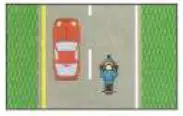
To check the blind spot, the driver in the red car must:
look into the interior rear-view mirror.
glance through the right side rear window.
check in the right exterior rear-view mirror.
look into the left exterior rear-view mirror.
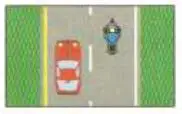
Driving the red vehicle in this situation you should:
honk and warn of your presence.
brake and change lanes to the right.
reduce speed or accelerate.
accelerate and change lanes to the right.
Head restraints should be adjusted (where adjustment is possible) so that the top of the headrest reaches:
the top of your head.
the top of your ears.
the base of your skull.
any of these would be correct.
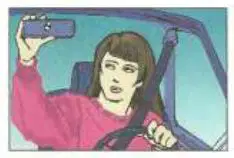
Adjust the interior mirror, without moving your head from the driving position, with the:
mirror centered on the back window.
left edge aligned with the left edge of the back window.
right edge aligned with the right edge of the back window.
lower edge aligned with the bottom edge of the back window.
The left (outside) rear-view mirror should be adjusted, with a minimum of head movement, so that you can see:
to the left rear and edge of your vehicle.
as far to the left as possible.
the whole side of your vehicle.
everything that cannot be seen in the inside mirror.
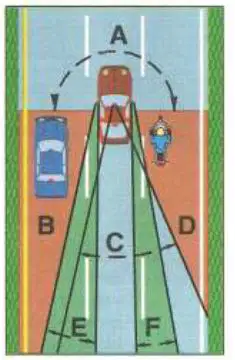
Area A, in the diagram, depicts:
the right blind spot.
the view in the interior rear-view mirror.
your forward field vision.
the view in the left exterior mirror.
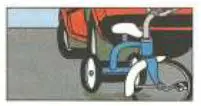
The diagram illustrates the need to:
check under the vehicle for leaks.
make sure the path of travel is clear.
check the tires.
check the vehicle.
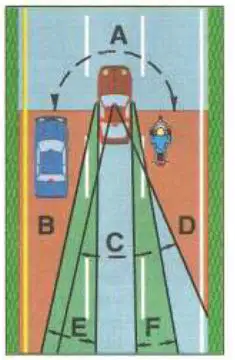
Area C, in the diagram, depicts:
the view in the interior rear-view mirror.
the right blind spot.
your forward field of vision.
the view in the left exterior mirror.
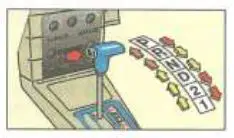
When you intend to start the engine, the first thing you should do is:
check that the accelerator pedal operates properly.
check the service brake pedal.
Shift the selector lever to neutral.
check that the parking brake is applied.
Before shifting to neutral to start the engine, the driver of standard vehicle must:
check that the parking break is applied.
depress the clutch pedal.
check the gauges and warning lights.
depress the brake pedal.
After turning the ignition switch to the "ON" position, you should:
shift to neutral.
check that the parking brake is applied.
depress the brake pedal.
check the gauges and warning lights.
To start a diesel engine, after turning the ignition switch to the "ON" position, you should:
depress the accelerator pedal.
wait for the glow plug indicator light to go off.
wait for the warning lights to go off.
turn the ignition switch to the "start" position.
As you release the ignition switch from the "start" position, with the engine running you should:
shift to the "D" -Drive-position.
release the parking brake.
re-check the gauges and warning lights.
release the brake pedal.
When starting the engine in the very cold weather, you should:
activate the parking lights for a few seconds.
press and release the accelerator.
hold the accelerator slightly depressed.
all of these.
In frigid weather of you are going to enter traffic immediately after starting the motor, you should:
allow the engine time to warm up.
rev the engine several times.
depress the accelerator and disengage the choke.
keep the accelerator slightly depressed.
When the engine is "flooded", you should:
wait an hour to try re-starting.
pump the accelerator while cranking the engine.
keep the accelerator fully depressed while you crank the engine.
crank the engine without touching the accelerator.
To enter traffic, you should check the interior and exterior mirrors and the blind spot, signal, then:
re-check the mirror and blind spot.
advance slowly.
signal your intention.
advance slowly and re-check the mirror and blind spot.
When parking, once the vehicle is at a complete stop in the parking space, you should:
shift the selector lever into "PARK" position.
turn the ignition switch to the "LOCK" position.
apply the parking brake.
all of these in order.
To exit your vehicle when parked on a busy road check the mirror and the blind spot, and then:
open the door with your right hand.
exit and lock the door.
walk towards the rear of the vehicle.
all of these in order:
open, exit, walk towards rear
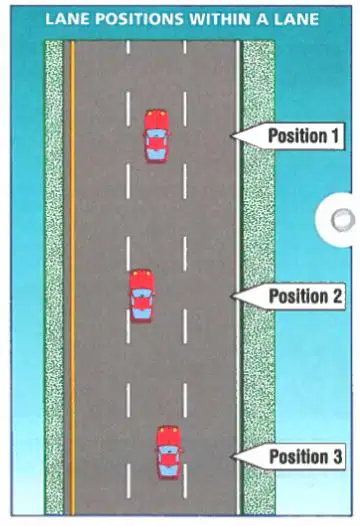
You should drive in lane position 1 (the center of the lane) when there:
are no hazards on either side.
is a hazard left or to turn right.
is a hazard right or to turn left.
are all of these.
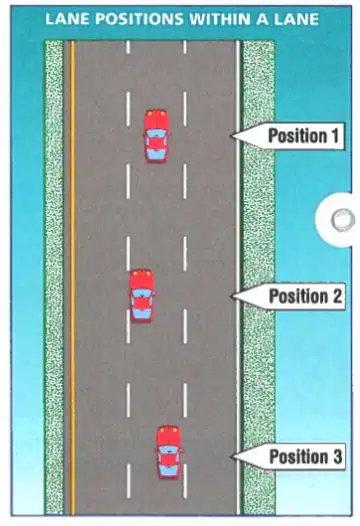
You should drive in lane position 2 (the left part of the lane) when:
no hazards on either side.
hazard left or to turn right.
hazard right or to turn left.
all of these.
Organize these options into the right categories.
(EACH CATEGORY HAS FOUR ANSWERS)
Check around vehicle for debris
Set parking brake
Check tire pressure with a tire gauge
Change oil
Verify lights, turn signals, license plate are clean
Visually check tires
Check for fluid leaks under the vehicle
Check wiper fluid
Check levels of coolant
Check the brake fluid level
Shift selector level to PARK
Turn off headlights
Lock your doors
Check tire wear pattern
Check wiper blades
Check emergency lights

