
Font size
 Worksheets
US and The World I Creating a Government & Early US Presidents
Total questions: 105
Worksheet time: 2hrs 30mins
What was the name of the United States' first plan for government?
The Constitution
Articles of Confederation
George Washington
Who was the president during the Articles of Confederation?
George Washington
Thomas Jefferson
no one
Donald Trump

The Articles of Confederation was important because it –
created a means for establishing the executive branch
provided every citizen in America the right to vote
enabled each of the 13 states to make separate treaties with foreign nations
was the first form of government for America
What was the MAIN problem with the Articles of Confederation?
They had too many laws.
The Articles were too strong.
The Articles were too weak.
What was one EFFECT of a weak government?
They could not write a constitution.
They could not raise money.
People went to war.
Since the Articles were weak and the nation had problems, _____________.
They decided to be a colony again.
They met again to make a new plan.
They added on more ordinances.
Who had more power with the Articles of Confederation?
National Governments
State Governments

One negative effect of the Articles of Confederation was that-
all citizens did not have the right to vote
the Supreme Court held ultimate power over the government
unalienable rights of the people were revoked
no executive branch was provided to enforce the laws

The Articles of Confederation did not allow the federal government to tax citizens. This led to -
states taxing their citizens then giving all their funds to the federal government
the federal government seizing lands from Loyalist during the American Revolution to generate revenue
the federal government being unable to pay off its war debts
a protest by members of congress because of their lack of funding
Which one is NOT an achievement of the Articles of Confederation?
gave power to the national government
created a peace treaty with Great Britain
helped settle lands out west
expanded foreign trade
Shays' Rebellion represented...
a success of the Articles of Confederation
a failure of the Articles of Confederation
The main cause for many of the rules in the Articles of Confederation was that the delegates at the Continental Congress...
did not want to give the states too much power because they'd proven they were willing to rebel against a government.
wanted to create a government that was identical to England's government.
were concerned about giving the central government too much power because the King had used his power unfairly.
wanted to unify the states together, which included creating one army and one type of currency.
Representatives
Why were southern delegates to the Constitutional Convention willing to accept the Three-Fifths Compromise?
It increased the political influence of the South
It allowed indentured servants in the South to become citizens
It decreased the federal tax on property in the South
It allowed the South to expand its industrial output
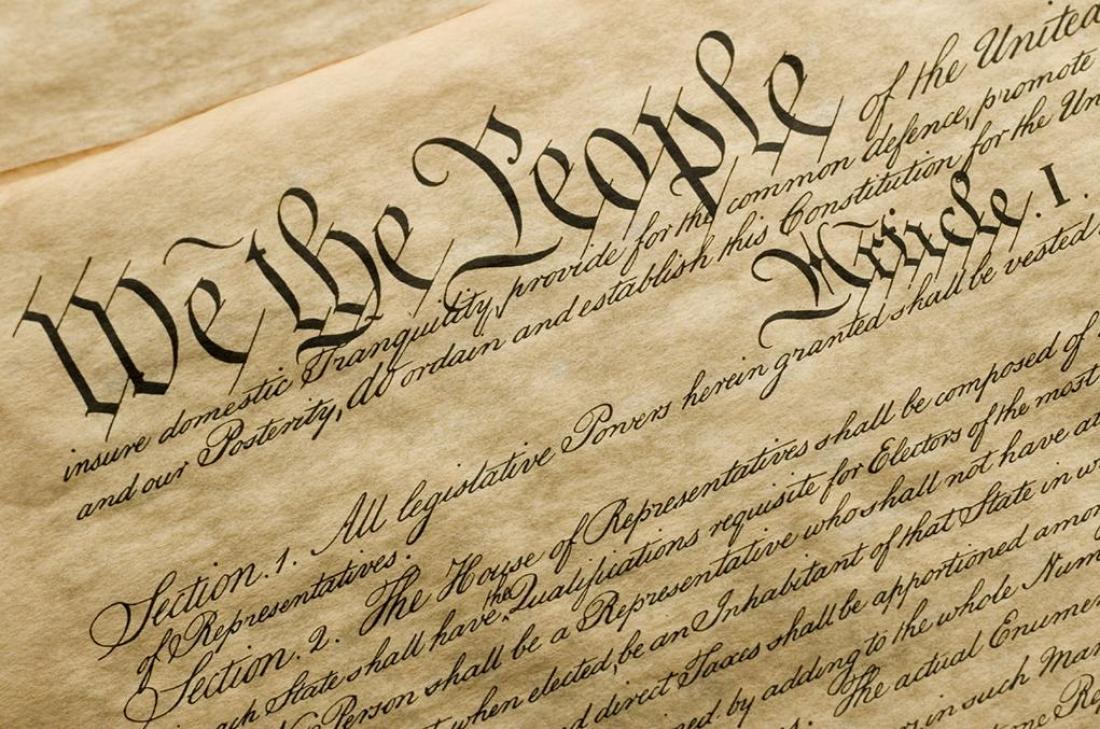
What are the first 3 words of the Constitution?
"We are people..."
"We the people..."
"We as people..."
"We are the people..."
What was the purpose of the Constitution?
It was created to break away from England.
It was a plan for how the government would run that guaranteed our rules, rights, and responsibilities.
It freed the slaves
It said that England and the U.S. would always be enemies.
Based on the US Constitution, the government is run by _________.
The President
Congress
The Supreme Court
"The People"
This branch of the Federal Government contains the office of the President and Vice President. The duty of this branch is to represent and enforce the nation's laws.
Judicial Branch
Supreme Court
Executive Branch
Legislative Branch
A system of __________ and __________ is used to keep any one branch of the government from being dominant, or having too much power.
checks and balances
power and authority
politics and philosophy
life and liberty
An Anti Federalist believed...
There should be a weak central government
There should be a powerful central government
A strong central government would be able to...
Create rules and regulations for the entire nation
Give power to the states to create their own rules and regulations
A federalist....
Wanted a strong Executive Branch- Executive Branch has more authority than the other branches of government.
Supported the idea of Checks and Balances
An anti-federalist
Supported checks and balances, separation of powers
Wanted the executive branch to have ultimate power
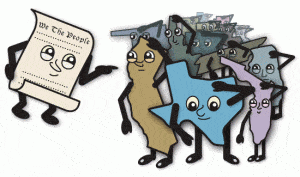
Anti-Federalists were in favor of:
States Rights and the protection of individual rights.
A strong Central Government.
A Monarchy (King & Queen) to rule over the country.
a powerful National Government
How did the Federalists and Anti-Federalists "compromise" to ratify (approve) the U.S Constitution?
The added the Bill of Rights (First 10 Amendments)
They outlawed cruel and unusual punishment.
Ensured due process of the law.
The Federalists threatened the Anti-Federalists to war.
Which amendment protects the rights of every American, such as Freedoms of Speech, Religion and Press?
Second Amendment
First Amendment
27 Amendments
Third Amendment
Which amendment guarantees Americans right to bear arms (own weapons)
Second Amendment
First Amendment
27 Amendments
Third Amendment
What does the third amendment say?
Protects the rights of every American, defines the Freedoms of Religion, Speech and Press
Prevents the government from forcing citizens to shelter soldiers in their homes
Guarantees Americans right to bear arms (own weapons)
The idea that anyone accused of a crime is innocent until proven guilty is in which amendment?
First
Second
Fifth
Third
Under the Fifth Amendment, can someone be put on trial twice for the same crime?
Yes
No
What does the Sixth Amendment say?
It prevents the government from forcing citizens to shelter soldiers in their homes
It discusses the need for search warrants
It describes freedom to protest
It outlines a right to a speedy public trial
Which amendment protects people from having to pay unreasonably high bail in order to be released from jail while awaiting trial?
Eighth
Second
Fifth
Fourth
Under the Eighth Amendment, is cruel and unusual punishment allowed for criminals?
Yes
No
Which amendment recognizes the Americans have rights that are not listed in the Constitution?
Seventh
Eighth
Ninth
None of them
Washington is the only President voted in unanimously which means ...
he got every single vote in the electoral college.
he got every single vote of the people.
How did Washington wish to be addressed?
Your Highness
Mr. President
Hey George!
George Washington was the _______ President of the United States.
Sixteenth
Third
First
Fourth
Who was George Washington's Vice President?
George Clinton
Thomas Jefferson
John Adams
a ceremony that officially makes someone president in the United States
a group of individuals who are chosen to help the President run the executive branch
groups of people who have similar ideas about how the government should act
political party led by Thomas Jefferson that favored more states rights and less federal government power
political party led by Alexander Hamilton that wanted a strong Federal government and encouraged trade and manufacturing
What traditions for future presidents did George Washington set during his Presidency?
Serving only two terms in office
living in the White House
Inauguration ceremony and swearing an oath to the country on a bible
Selecting a cabinet to help him run the executive branch
fighting a war with Great Britain
Washington thought it was best for our country to have a strong central government to keep our country unified
True
False
Washington was in favor of political parties because he wanted divide our country
True
False
Why did Jefferson oppose the establishment of a national bank?
He thought it would be too weak.
He thought it was unconstitutional.
He wanted a more powerful government.
He believed in the implied powers of Congress.
Hamilton believed that a national bank was constitutional based on
express powers and a strict interpretation of the Constitution.
implied powers and a loose interpretation of the Constitution.
express powers and a loose interpretation of the Constitution.
implied powers and a strict interpretation of the Constitution.

Something that may be used as an example in the future is known as what?
A lesson
A precedent
Knowledge
An example

Started by Washington, what speech is given as a tradition after the president is inaugurated?
Appointment Speech
Presidential Address
State of the Union Speech
Inauguration Speech
As our first president, George Washington established many precedents for our nation. Which of the following was one of the traditions he established?
Presidential inauguration in January
State of the Union address speech
three-term presidency
Not choosing his cabinet member
How often does the United States hold a presidential election?
Every 5 Years
Every 3 Years
Every 6 Years
Every 4 Years

As the first president, George Washington set many ________ which were seen as examples for future presidents to follow. This created a tradition for the next presidents to follow.
Examples
Precedents
Standards
What precedent regarding presidential terms did George Washington set?
No term limits
One term limit
Two term limit
Three term limit
What was George Washington's advice on Foreign Policy?
The Nation should remain neutral and avoid permanent alliances
The Nation should end slavery
The Nation should expand from East to West
The Nation should colonize Latin America
George Washington believed Political Parties were beneficial to the nation
True
False
What was George Washington's Advice on Political Parties?
Political Parties are necessary to run a government
Political Parties could divide and weaken the Nation
Political Parties should create jobs and businesses
Political Parties should only exist in State Governments
He warned the country to avoid debt as it would only hurt
themselves
the future who had to pay it off
other countries
their credit score


Andrew Jackson's election victory in 1828 depended on support from
the rich and well-born.
Native Americans.
the common people.
states' rights supporters.

Jacksonian Democracy
an informal group of trusted advisers who sometimes met in the White House kitchen
The practice of giving government jobs to political backers
The period of expanding democracy that gave voting rights to all white males
The Court ruled that the national bank was constitutional


How did tariffs affect imported goods?
Tariffs lowered the prices of imported goods.
Tariffs made imported goods illegal to buy.
Tariffs set weight restrictions for imported goods.
Tariffs raised the cost of imported goods.
What was President Jackson's response to the nullification crisis?
He admitted that the Union was a "compact" of the states
He offered to raise tariffs to keep South Carolina in the Union
He conceded South Carolina's right to secede
He threatened to use force against South Carolina if it did not repeal its nullification policies

A way of interpreting the Constitution that allows the federal government to take actions that the Constitution does NOT specifically FORBID it from taking.
strict construction
nationalism
sectionalism
loose construction
A way of interpreting the Constitution that allows the federal government to take ONLY those actions the Constitution SPECIFICALLY says it can take.
strict construction
loose construction
judicial review
embargo

