
 Worksheets
Six Kingdoms and Taxonomy
Total questions: 219
Worksheet time: 3hrs 44mins


Rod-shaped prokaryotes swabbed from a kitchen faucet.
Microscopic unicellular organism found in a mud puddle. Organism's DNA is contained in a nucleus and it moves by beating tiny hairs in the water.
Unicellular organisms with no nuclei found living in the superheated waters of a hot spring.
Multicellular organism with cell walls made of chitin found growing on a decomposing manure pile.
What are the six kingdoms of life?
Animals, Plants, Vertebrates, Invertebrates, Viruses, Fungi
Bacteria, Amoeba, Algae, Archaea, Protists, Nuclei
Archaea, Bacteria, Protists, Animals, Plants, Fungi
Archaea, Bacteria, Animals, Plants, Proteins, Fungi

What are the names of the three domains of life?
Bacteria, Archaea, Eukarya
Bacteria, Archaea, Animalia
Archaea, Plantista, Animalia
Life, Animals, Plants

Kelp (seaweed) is in the ________ kingdom.
Archaea
Protista
Bacteria
Fungi
Which of the following attributes is NOT accurate for members of the Animalia Kingdom?
multi-cellular
has a nervous system
uses photosynthesis to produce food
can move from place to place
The members of the ________ Kingdom use photosynthesis to create energy.
Fungi
Plants
Animals

Examples are mushrooms and mold
Fungi
Protista
Protista
Plantae
Animalia
Which four kingdoms are eukaryotic?
Archaebacteria, Protist, Plant, Animal
Eubacteria, Fungi, Archaebacteria, Plant
Eubacteria, Fungi, Plant, Animal
Protist, Fungi, Plant, Animal
Which kingdom does the organism that lives in a hot spring belong to?
Plant
Animal
Protist
Archaebacteria

A cell with nucleus is
Autotrophic
Prokaryotic
Eukaryotic
Heterotrophic

what kingdom?- eukaryotic, multi-celled-photosynthetic.
animal
plant
protist
fungi
HOW MANY KINGDOMS ARE THERE?
4
5
6
7

MUSHROOMS ARE IN WHAT KINGDOM
PLANT
ANIMAL
FUNGI
PROTIST

AMOEBA-PARAMECIUM-EUGLENA-DINOFLAGELLATES BELONG TO WHAT KINGDOM
PLANT
PROTIST
FUNGI
ANIMAL
ARCHAEBACTERIA

APES BELONG TO WHAT KINGDOM
PLANT
ANIMAL
FUNGI
PROTIST

11. Plant-like protists are considered to be _____________________ because they use the Sun’s energy to obtain energy.
Heterotrophic
Unicellular
Eukaryotic
Autotrophic

In order to conduct photosynthesis, plant-like protists must contain a _______________.
Chloroplast
Mitochondria
Nucleus
None of the above
CAUSES DISEASE-NO NUCLEUS
ANTIBIOTICS
BACTERIA
PROTIST
Which one is NOT a microorganism
archaea
protist
fern
bacteria
Which one can make their own food?
Animal kingdom
plant kingdom
fungi kingdom

Mushrooms
Animal Kingdom
Plant Kingdom
Fungi Kingdom
Protist Kingdom
Mushrooms are not plants because .......
they do not make their own food
they grow
they reproduce
they do not move

Amoeba
Animal
Plant
Fungi
Protist
Bacteria and archaea bacteria are different from the other kingdoms because .....
they move
they make food
eat other organisms
have only 1 cell


Microscopic unicellular organism found in a mud puddle. Organism's DNA is contained in a nucleus and it moves by beating tiny hairs in the water.
A cell that contains a nucleus and membrane bound organelles like animal and plant cells:
Prokaryote
Eukaryote
Archaea
Bacteria
An unicellular organism that lacks a nucleus and membrane bound organelles like bacteria:
Eukaryote
Prokaryote
Plant
Animal
Fungi
This type of eukaryotic organism cannot be classified as an animal, plant, or fungi and algae is an example of this living thing:
Protist
Heterotroph
Archaea
Bacteria
What single-celled organisms lack a nucleus and also known as prokaryotes?
Plant
Fungi
Animal
Bacteria
Protist
Organisms that do not move, reproduce by using spores, and get food by breaking down dead things:
Plant
Animal
Fungi
Bacteria
Protist
Which four kingdoms are eukaryotic?
Archaebacteria, Protist, Plant, Animal
Eubacteria, Fungi, Archaebacteria, Plant
Eubacteria, Fungi, Plant, Animal
Protist, Fungi, Plant, Animal
Which kingdom contains organisms that are able to live in extreme environments?
Eubacteria
Plant
Animal
Archaebacteria
Which kingdom contains organisms with cell walls made of cellulose who are autotrophs and non-motile?
Plant
Protist
Eubacteria
Animal
Which kingdom contains organisms whose cells never have a cell wall and are heterotrophs?
Plant
Animal
Archaebacteria
Fungi
Which kingdom contains organisms that are multicellular autotrophs?
Fungi
Animal
Plant
Archaebacteria
Which kingdom contains organisms that are unicellular, prokaryotic, and could live on a door knob?
Eubacteria
Archaebacteria
Protist
Fungi
Which kingdom would a pond living, unicellular, and eukaryotic organism belong to?
Protist
Archaebacteria
Animal
Plant
Which kingdom does the organism that lives in a hot spring belong to?
Plant
Animal
Protist
Archaebacteria
This tiny organism spends its day reproducing rapidly (about once every 20 minutes), often inside the bodies of other organisms. Its genetic material is not contained inside a nucleus.
Protist
Eubacteria
Plant
Archaebacteria
This very small, thin organism spends its day using its flagellum to propel itself through pond water. If sunlight is available, it can make its own food.
Plant
Animal
Eubacteria
Protist
This organism spends its day attached a hard underwater surface. Water currents flowing through it provide the organism with food and oxygen and remove its wastes. It has no organs, but some of its cells have specialized jobs.
Animal
Plant
Protist
Fungi
This rather soft, low-lying organism spends its day taking nutrients from a rotten log through its hyphae. It continues to undergo cell division and grow larger.
Protist
Fungi
Plant
Eubacteria
This organism spends its day taking in carbon dioxide and releasing oxygen through its stomata. It never eats but can grow many meters tall.
Fungi
Protist
Plant
Archaebacteria
This organism spends its day roaming through the forest in search of food. Its hunting techniques require use of its keen sense of smell and hearing.
Fungi
Eubacteria
Protist
Animal
This organism spends its day in hot gases and molten rock deep within the earth. This type of tiny organism existed billions of years ago.
Eubacteria
Protist
Animal
Archaebacteria
I am a prokaryote. I am unicellular and make my own food. I live in extreme environments and love salt.
Archaebacteria
Eubacteria
Protist
Animal
I am a prokaryote. I am unicellular. You can find me everywhere like in your digestive tract.
Protist
Fungi
Eubacteria
Archaebacteria
I am only able to live in aquatic environments even those I am an autotroph and heterotroph.
Plant
Eubacteria
Fungi
Protist
I am eukaryotic and mostly multicellular. Occasionally, I can be unicellular but I cannot make my own food so I absorb nutrients from dead and decaying materials.
Fungi
Eubacteria
Archaebacteria
Plant
I am multicellular and can make my own food.
Plant
Animal
Fungi
Eubacteria
I am eukaryotic, multicellular, and heterotrophic. Some include coral and others include birds, people, and reptiles.
Plant
Animal
Fungi
Protist
Unicellular, examples are Euglena & Amoeba
Archaebacteria
Eubacteria
Fungi
Plantae
Protista
Multicellular; undergoes photosynthesis
Archaebacteria
Eubacteria
Fungi
Plantae
Protista
Unicellular, live in extreme/harsh environments
Archaebacteria
Eubacteria
Fungi
Plantae
Protista
Prokaryotic; live in pond water
Archaebacteria
Eubacteria
Fungi
Plantae
Protista
Unicellular, lives in soil & inside your body
Archaebacteria
Eubacteria
Fungi
Plantae
Protista
Has higher order thinking skills
Archaebacteria
Eubacteria
Fungi
Animalia
Protista
Humans
Archaebacteria
Eubacteria
Fungi
Animalia
Protista
Flowers & trees
Archaebacteria
Plantae
Fungi
Animalia
Protista
Mushrooms
Archaebacteria
Plantae
Fungi
Animalia
Protista
Reproduce using spores and/or asexually
Archaebacteria
Plantae
Fungi
Animalia
Protista
Live in the hot springs, like "Old Faithful", & the Dead Sea
Archaebacteria
Eubacteria
Fungi
Plantae
Protista
Causes strep throat, stomach virus, & food poisoning
Archaebacteria
Eubacteria
Fungi
Plantae
Protista
Tigers, cats, dogs, butterflies, spiders
Archaebacteria
Plantae
Fungi
Animalia
Protista
Multicelluar, eukaryotic organisms that are heterotrophs
Archaebacteria
Plantae
Fungi
Animalia
Protista
Multicellular, eukaryotic organisms that are autotrophs with cellulose in their cell walls
Archaebacteria
Plantae
Fungi
Animalia
Protista
Multicellular, eukaryotic organisms that are heterotrophs with chitin in their cell walls
Archaebacteria
Plantae
Fungi
Animalia
Protista
Reproduce sexually and have some sort of body symmetry
Archaebacteria
Plantae
Fungi
Animalia
Protista
Autotrophs & heterotrophs, no cell wall, mostly in water, move with flagella or cilia
Archaebacteria
Plantae
Fungi
Animalia
Protista
At one time, they were both placed in Kingdom Moneran (*2 answers)
Archaebacteria
Eubacteria
Fungi
Plantae
Protista
2 Kingdoms in which ALL organisms in their group are unicellular prokaryotes
Archaebacteria
Eubacteria
Fungi
Plantae
Protista
Ringworm & Athlete's Foot
Protists
Fungi
Plants
Animals
Eubacteria
Have cell walls WITH peptidoglycan in them
Archaebacteria
Eubacteria
Protista
Fungi
Plantae
Photosynthesize, using chlorophyll
Archaebacteria
Eubacteria
Fungi
Protista
Plantae
Decomposers, growing on dead leaves/wood/logs
Archaebacteria
Eubacteria
Protista
Fungi
Plantae
Parasitic in humans (like Staph)
Archaebacteria
Eubacteria
Protista
Fungi
Who created the most commonly used system of taxonomy?
Niels Bohr
Watson and Crick
Charles Darwin
Carl Linnaeus
Which is the correct order?
Kingdom Phylum Order Class
Class Order Family Genus
Domain Phylum Kingdom Species
Order Family Species Genus
Identify the one that is NOT an archaea.
Methanogen
Thermophile
Halophile
Virus
You find a species that seems to be unicellular and is eating smaller cells around it. It has organelles and a nucleus. Which kingdom is it MOST likely a part of?
Fungi
Bacteria
Protists
Plants
Which of the following is NOT a unicellular kingdom?
Prokaryotes
Protists
Archaea
Fungi
Which one is NOT a difference between plants and fungi?
Plants use cellulose but fungi use chitin
Plants are autotrophs but fungi are heterotrophs
Plants have cell walls but fungi don't
Plants make their own food and fungi decompose their food
You identify a small living organism that is eating something at your feet. It's visible but pretty tiny, you take it to a lab and find that it has cell walls made of chitin. Which is its domain and kingdom?
Prokaryote, Fungi
Eukaryote, Fungi
Prokaryote, Plant
Eukaryote, Plant
Which is NOT a eukaryote?
Plants
Animals
Archaea
Protists
How are mammals different from all the other classes of vertebrates?
They don't have keratin
They don't have a backbone
They don't lay eggs (except two)
They aren't animals
Which best explains why a sponge is an animal?

All animals breath and sponges breath
Animals live underwater and so do sponges
Animals are multicellular heterotrophs and so are sponges
Which of the following is the correct order for least related to most related?
Domain
Kingdom
Phylum
Class
Order
Family
Genus
Species
Species
Kingdom
Phylum
Class
Order
Family
Genus
Domain
Species
Genus
Family
Order
Class
Phylum
Kingdom
Domain
Domain
Kingdom
Class
Phylum
Order
Genus
Family
Species
Which of the following sets of animals would be the most closely related?
Animals in the same order
Animals in the same genus
Animals in the same class
Animals in the same family
Which of the following sets of insects would be the most closely related?
Insects in the same class
Insects in the same family
Insects in the same order
Insects in the same species
Which of the following taxonomic groups would contain plants with the greatest amount of variety and differences?
Kingdom
Phylum
Order
Family
Which of the following groups of vertebrates would contain the least related animals?
Vertebrates in the same genus
Vertebrates in the same species
Vertebrates in the same class
Vertebrates in the same family
Which of the following taxonomic groups would contain the most related set of animals?
Domain
Species
Family
Order
Which of the following sets of animals would contain the least closely related organisms?
Animals in the same phylum
Animals in the same genus
Animals in the same class
Animals in the same family
Which of the following groups of fungi would be the most closely related?
Fungi in the same phylum
Fungi in the same kingdom
Fungi in the same order
Fungi in the same class
Which of the following taxonomic groups would contain organisms with the greatest amount of genetic similarities?
Domain
Kingdom
Phylum
Class
The American lobster (Homarus americanus) is most closely related to which of the following organisms?
Cape lobster (Homarinus capensis)
Common lobster (Homarus gammarus)
Patagonian lobsterette (Thymops birsteini)
Scarlett clawed lobster (Nephropsis atlantica)
Black panthers (Panthera onca) are a color variant of a species of large cats. Black panthers would be most closely related to what organism listed below?
Tiger (Panthera tigris)
Cheetah (Acinonyx jubatus)
Puma (Puma concolor)
Jaguar (Panthera onca)

Which of the following pairs of organisms from the table shown to the left would be the most closely related?
Desert iguana and Box turtle
Chuckwalla and Bush anole
Box turtle and Bush anole
Desert iguana and Chuchwalla
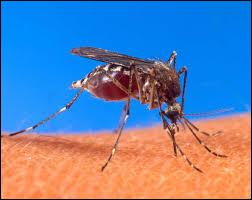
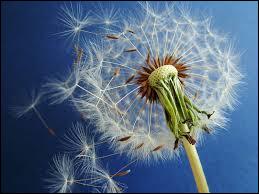

Organisms in this smallest taxonomic group share many characteristics.
domain
kingdom
species
class

The science of describing, classifying, and naming living things is called:
Geology
Biology
Taxonomy
Chemistry

The scientific name for an organism is made from the:
class and family name
genus and species name
domain and kingdom name
kingdom and phylum name

An example of an unicellular organism would be:
monkey
bacteria
spider
human

What kingdom do unicellular, prokaryotic organisms that live in extreme environments?
Animal
Archaebacteria
Eubacteria
Plant

I am prokaryotic and am found everywhere. What kingdom do I belong to?
Eubacteria
Archaebacteria
Fungi
Protista

This organism is multicellular, heterotroph, that has a cell wall made of chitin. What kingdom does it belong in?
fungi
plantae
animalia
eubacteria

Who first proposed binomial nomenclature as a way of classifying organisms?
Carolus Linnaeus
Aristotle
Charles Darwin
Louis Pasteur

What is the correct order of taxonomy?
Kingdom, pylum, class, species, genus, family, class
Species, genus, family, order, class, phylum, kingdom
Kingdom, phylum, class, order, family, genus, species
species, phylum, order, class, kingdom, family, genus

The diagram shows taxonomic groups and a major distinguishing characteristic of all but two of them. Which characteristics will be used to complete the chart?
nonphotosynthetic - photosynthetic
autotrophic - heterotrophic
no nucleus - nucleus
motile - nonmotile
science of classifying organisms
prokaryotic
eubacteria
classification
taxonomy
made of a single cell
mulitcellular
animals
unicellular
eukaryotic
heterotrophs that obtain energy by consuming dead organic matter, can be unicellular or multicellular
fungi
protists
animals
plants
process of grouping things based on their similarities
taxonomy
classification
eubacteria
prokaryotic
organism that makes its own food
prokaryote
eukaryote
autotroph
heterotroph
cells that do not have a nucleus
prokaryotic
eukaryotic
heterotrophs
autotrophs
process of using water, light, and carbon dioxide to produce sugar
respiration
binomial nomenclature
photosynthesis
protista
cells that do have a nucleus
prokaryotic
eukaryotic
unicellular
bacteria
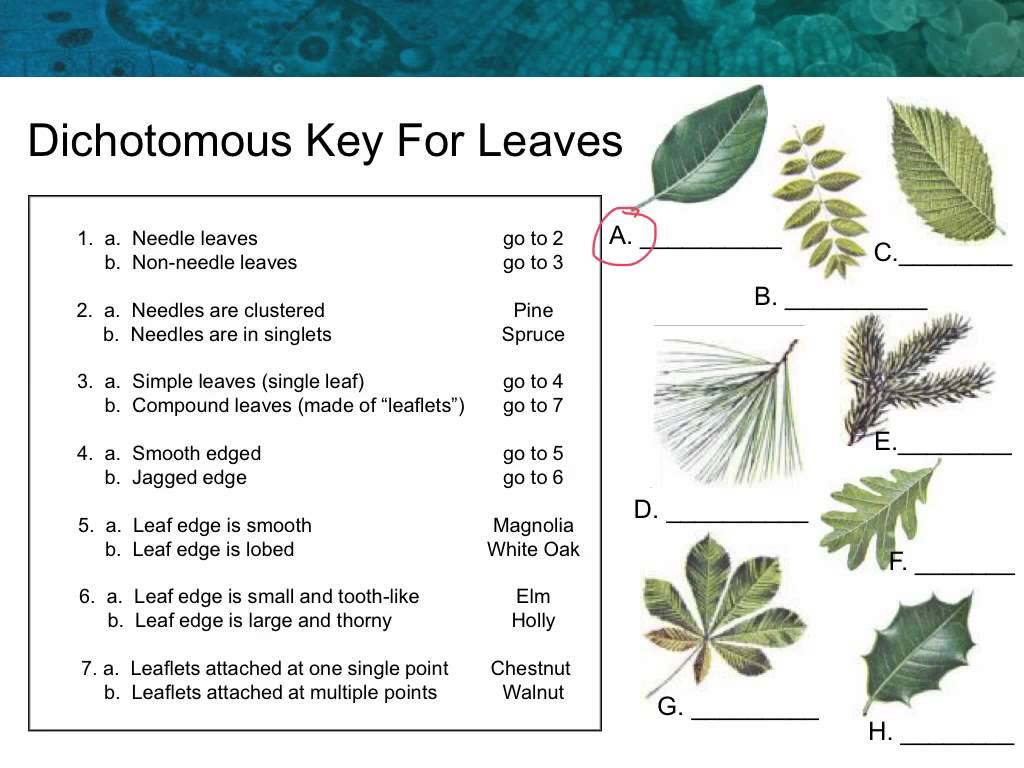
way to identify organisms based on a series of choices between physical characteristics
archaebacteria
prokaryotes
binomial nomenclature
dichotomous key
autotrophs that are multicellula with cell walls
animals
plants
protists
fungi
unicellular organisms that live in extreme environments
eubacteria
autotroph
archaebacteria
fungi
made of more than one cell
multicellular
unicellular
prokaryotic
eubacteria
unicellular prokaryotes taht live in everyday environments
eubacteria
eukaryotes
archaebacteria
animals
2 word naming system used to classify organisms
taxonomy
classification
binomial nomenclature
scientific name
eukaryotic organisms tha tcan be unicellular or multicellular, live in moist environments, and can be plant-like, animal-like, or fungus-like
fungi
eubacteria
protist
archaebacteria
name given to a species consisting of the genus and species labels
dichotomous key
binomial nomenclature
scientific name
photosynthesis
organism that has to consume other organisms for food
autotroph
heterotroph
prokaryote
eukaryote
kingdom of multicellular organisms that can mostly move and are heterotrophs
animals
plants
protists
fungi
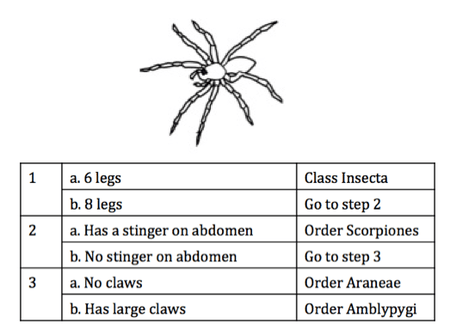

arachnids and insects?
following observations of the plant’s characteristics would be useful in determining its identity with a dichotomous key?

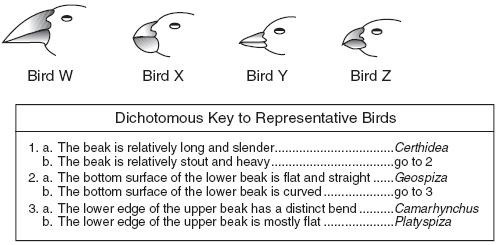
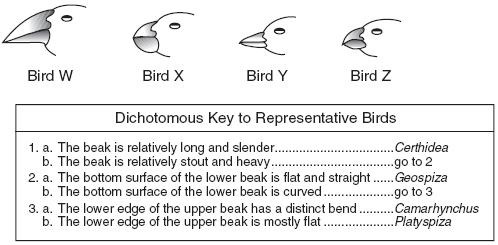


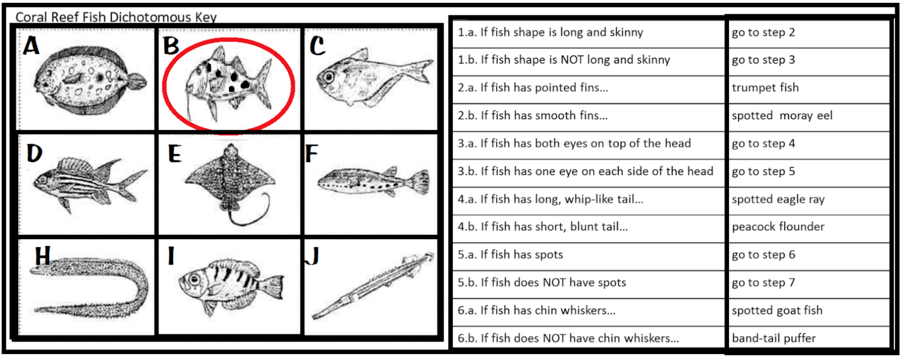
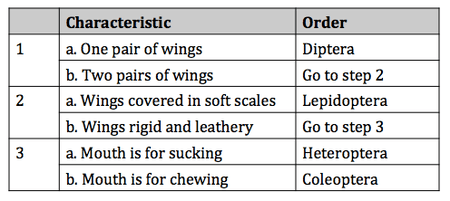
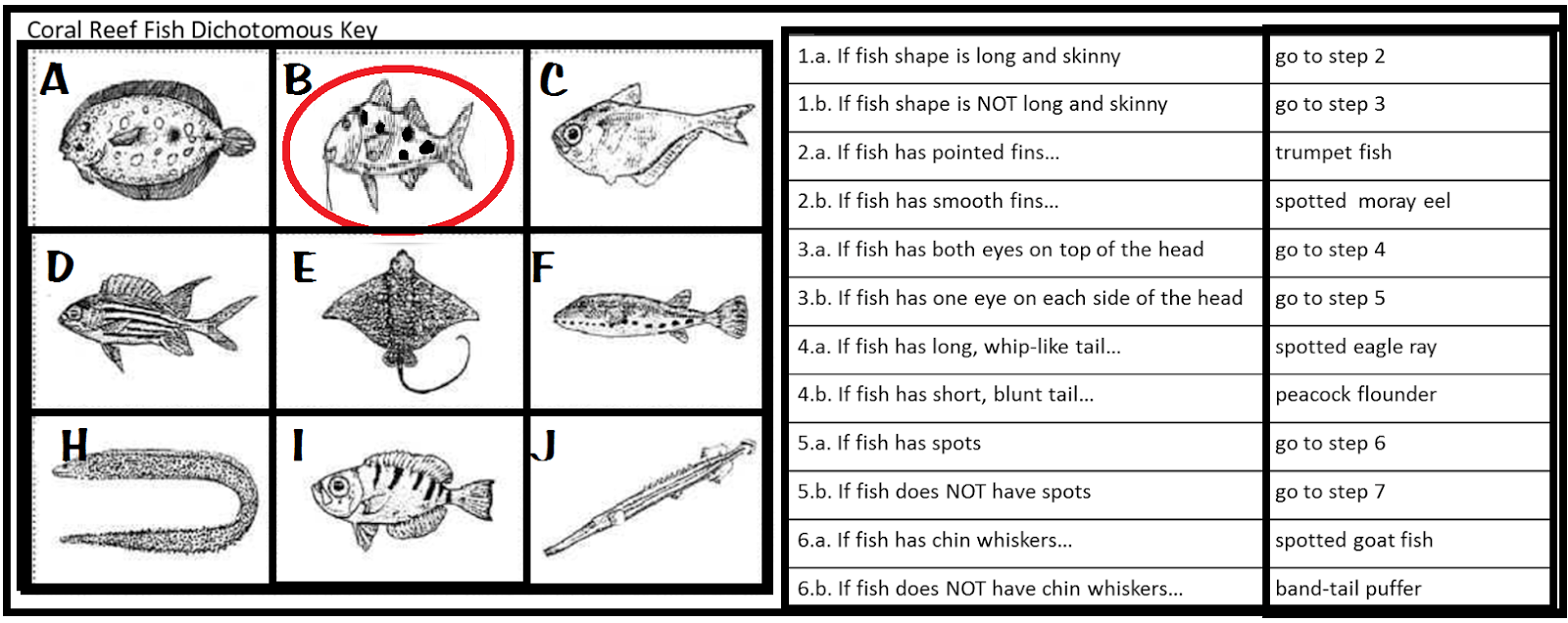
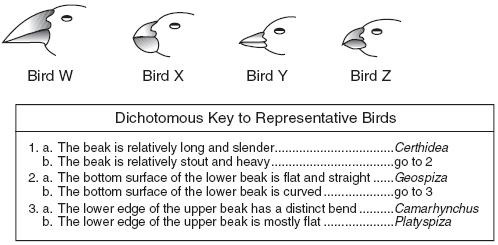
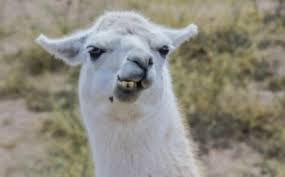

Take your time and read carefully!
A student discovers an arachnid with a segmented abdomen, long legs, and a tail with no stinger. The student uses the dichotomous key below to identify it. Which arachnid has the student found?
Whip Scorpion
Wind Scorpion
Tick
Scorpion


arachnids and insects?
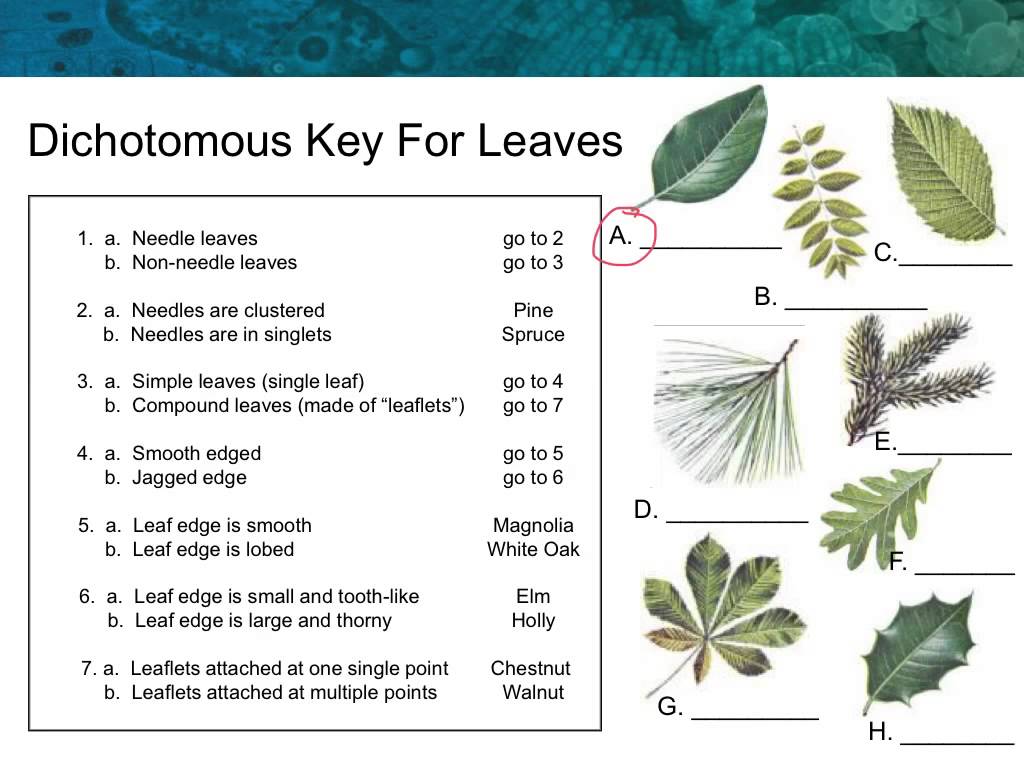


What is the genus of the organism Geophagus braziliensis?
Geophagus
braziliensis
binomial
unknown

