
 Worksheets
9189PH2CWPPT5Q2
Total questions: 24
Worksheet time: 12mins
Where are high neck pillar taps commonly used?
Bathroom sinks
Kitchen sinks
Outdoor water sources
Laboratory sinks
What is the main difference between a high neck pillar tap and a standard pillar tap?
The high neck pillar tap has a shorter neck.
The high neck pillar tap has a different color.
The high neck pillar tap has a longer neck to allow a larger air gap.
The high neck pillar tap is used with a different type of water.
What size is the BSP tail of a high neck pillar tap?
1" BSP tail with 20mm pipe
3/4" BSP tail with 15mm pipe
1/2" BSP tail with 15mm pipe
1/2" BSP tail with 20mm pipe
What is a true characteristic of a mixer tap?
It allows only cold water to mix inside the body of the tap before it exits.
It allows the hot and cold water to mix outside the body of the tap before it exits.
It allows the hot and cold water to mix inside the body of the tap before it exits.
It prevents hot and cold water from mixing at any point.
Where can mixer taps be commonly used?
Only on baths
Only on sinks
On sinks and baths
On garden hoses
What is required when fitting a mixer tap on equal pressure systems?
Electrical backflow prevention
No backflow prevention is needed
Mechanical backflow prevention
Hydraulic backflow prevention
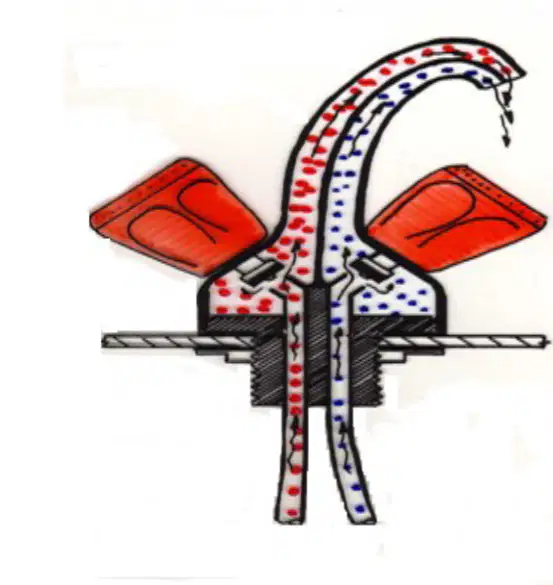
What type of tap is designed to mix hot and cold water as it exits the spout?
Bi-flow mixer tap
Mixer tap
Single-flow tap
Double tap
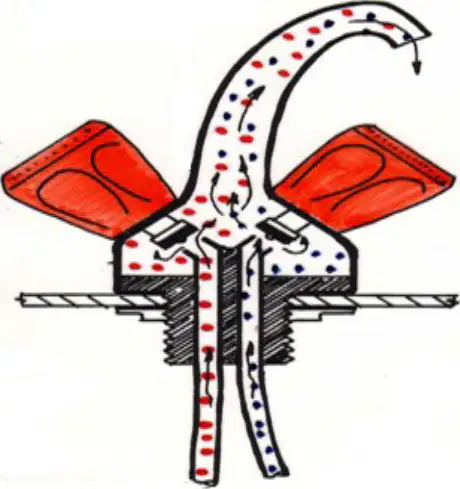
Which type of tap allows hot and cold water to mix in the body of the tap?
Bi-flow mixer tap
Mixer tap
Single-flow tap
Double tap
What is required to attach bib taps to a wall?
A) A wrench
B) A backplate elbow
C) Sealant
D) A hammer
Where are bib taps usually fitted?
A) Below a kitchen sink
B) Above a cleaner's sink
C) In a bathroom
D) Next to a washing machine
What is another common location for fitting bib taps besides above a cleaner's sink?
A) As a bath filler
B) As a hose union tap (outside tap)
C) Under a toilet cistern
D) Next to a dishwasher
What do ceramic disc taps rely on to function?
A) A single rotating ball mechanism
B) Two disc plates turning against each other
C) A rubber washer to control water flow
D) A lever system connected to a spring
How is a ceramic disc tap typically operated?
A) By pulling the tap handle upwards
B) By turning the tap handle a full circle
C) By turning the tap handle a quarter of a turn
D) By pushing the tap handle downwards
For whom is a ceramic disc tap considered a very good style?
A) For people with high water pressure systems
B) For people who prefer traditional taps
C) For disabled people or people with limited mobility
D) For those who require a tap with a complex mechanism
What is the function of isolation valves in plumbing systems?
To regulate the water temperature
To turn off (isolate) complete systems, parts of systems or appliances
To increase water pressure in the system
To purify the water
Which type of isolation valve is used for high-pressure systems?
Full-way gate valves
Stop valves
Terminal fittings
Drainage system valves
What type of isolation valve is suitable for low-pressure systems?
Stop valves
Full-way gate valves
Terminal fittings
Drainage system valves
Stop valves are designed for isolation of which type of water systems?
Low-pressure hot water systems
High-pressure cold water systems
All types of water systems
Non-potable water systems
Why should stop valves not be used on low-pressure supplies?
They are too expensive for low-pressure supplies
They increase the pressure too much
Their restrictive internal design is not suitable
They do not have an arrow to show the direction of flow
Stop valves for domestic use are manufactured to which British Standards?
BS 1010 only
BS 5433 only
Either BS 5433 or BS 1010
BS 1212
What feature on the stop valve body indicates the direction of water flow?
A color-coded handle
A digital display
An arrow
A pressure gauge
What is the primary application of full-way gate valves according to BS 5154?
They are used in high-pressure installations.
They are used on low-pressure installations such as the cold feed to vented hot water storage cylinders.
They are used exclusively for gas flow control.
They are used for electrical conduit systems.
Why are full-way gate valves known as 'full-way'?
Because they can be installed in any orientation.
Because they are fully automated.
Because the design allows water to flow at full bore without much restriction to the flow rate.
Because they can be used in both high-pressure and low-pressure systems.
Why should full-way gate valves not be used on high-pressure supplies?
Because they are too expensive for high-pressure applications.
Because they do not allow water to flow at all.
Because they tend to allow water to pass by the gate when the valve is under pressure.
Because they are not compliant with BS 5154 in high-pressure conditions.

