
 Worksheets
Term 3 Question Bank
Total questions: 120
Worksheet time: 3600secs
Name
Class
Date
1.
The different appearances of the moon caused by the moon’s orbit around Earth.
a)
Ocean Current
b)
Ocean Tide
c)
Satellite View
d)
Lunar Cycle
e)
Season
2.
The breaking down of rocks by water, wind, and ice.
a)
Weathering
b)
Topographic Map
c)
Geological Feature
d)
Plate Tectonic Theory
e)
Erosional Feature
3.
Water that collects in cracks and pores in underground soil and rock layers.
a)
Groundwater
b)
Watershed
c)
Runoff
d)
Conservation
e)
Crustal Feature
4.
Anything people can use.
a)
Convection
b)
Microscope
c)
Resource
d)
Electromagnetic Spectrum
e)
Global Patterns
5.
A tool to measure weight using the force of gravity.
a)
Psychrometer
b)
Spectroscope
c)
Spring Scale
d)
Table
e)
Test Tube
6.
An instrument that measures the relative humidity of air by using the difference in readings between two thermometers, a wet bulb and a dry bulb
a)
Psychrometer
b)
Spectroscope
c)
Spring Scale
d)
Table
e)
Test Tube
7.
A cylindrical glass tube used in laboratory investigations
a)
Psychrometer
b)
Spectroscope
c)
Spring Scale
d)
Table
e)
Test Tube
8.
A tool used to examine and observe light
a)
Psychrometer
b)
Spectroscope
c)
Spring Scale
d)
Table
e)
Test Tube
9.
A structure used to organize and record information in rows and columns
a)
Psychrometer
b)
Spectroscope
c)
Spring Scale
d)
Table
e)
Test Tube
10.
Radio waves have the longest waves on the _______________, so they have the lowest energy.
a)
Electromagnetic Spectrum
b)
Psychrometer
c)
Spectroscope
d)
Spring Scale
e)
Table
11.
__________________ can cause landforms to look different over time by changing their size and shape.
a)
Weathering
b)
Psychrometer
c)
Spectroscope
d)
Spring Scale
e)
Table
12.
To find the current humidity outside, my science teacher taught me how to read a _______________.
a)
Psychrometer
b)
Spectroscope
c)
Spring Scale
d)
Table
e)
Test Tube
13.
Arches National Park in Utah has hundreds of ___________ that have been shaped by wind and water over the past 65 millions years.
a)
Erosional Feature
b)
Psychrometer
c)
Spectroscope
d)
Spring Scale
e)
Table
14.
You can easily measure the weight of an object by hanging it on a ____________.
a)
Spring Scale
b)
Psychrometer
c)
Spectroscope
d)
Table
e)
Test Tube
15.
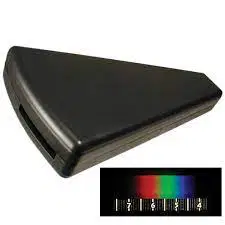
a)
Spectroscope
b)
Psychrometer
c)
Spring Scale
d)
Table
e)
Test Tube
16.

a)
Convection
b)
Psychrometer
c)
Spectroscope
d)
Spring Scale
e)
Table
17.
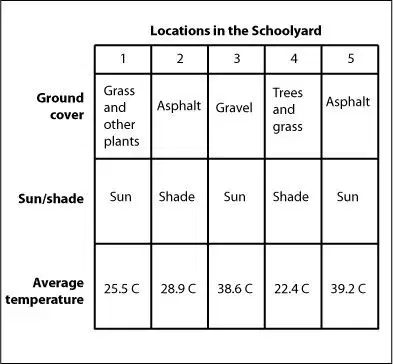
a)
Table
b)
Psychrometer
c)
Spectroscope
d)
Spring Scale
e)
Test Tube
18.
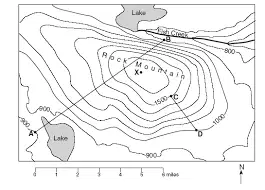
a)
Topographic Map
b)
Psychrometer
c)
Spectroscope
d)
Spring Scale
e)
Table
19.

a)
Test Tube
b)
Psychrometer
c)
Spectroscope
d)
Spring Scale
e)
Table
20.
A major wind pattern that affects weather around the world.
a)
Convection
b)
Microscope
c)
Resource
d)
Electromagnetic Spectrum
e)
Global Patterns
21.
The transfer of heat through currents in liquids and gases.
a)
Convection
b)
Microscope
c)
Resource
d)
Electromagnetic Spectrum
e)
Global Patterns
22.
The entire range of wavelengths and frequencies over which electromagnetic radiation extends.
a)
Convection
b)
Microscope
c)
Resource
d)
Electromagnetic Spectrum
e)
Global Patterns
23.
An instrument that uses lenses to make small objects look larger.
a)
Convection
b)
Microscope
c)
Resource
d)
Electromagnetic Spectrum
e)
Global Patterns
24.
Some marine animals use _____________ as sea highways to help them migrate quickly for feeding and breeding.
a)
Ocean Current
b)
Convection
c)
Electromagnetic Spectrum
d)
Global Pattern
e)
Resource
25.
By participating in conservation efforts like recycling, we are helping save valuable _____________.
a)
Resources
b)
Convection
c)
Electromagnetic Spectrum
d)
Global Pattern
e)
Microscope
26.
An aquifer is a body of rock underground that stores _______________.
a)
Groundwater
b)
Convection
c)
Electromagnetic Spectrum
d)
Global Pattern
e)
Resource
27.
______________ can actually spread pollution by picking up fertilizer, oil, and dirt as it makes its way over roads and storm drains and into our rivers and lakes.
a)
Runoff
b)
Convection
c)
Electromagnetic Spectrum
d)
Global Pattern
e)
Resource
28.
In a science lab, scientists often use a _______________ to look at plant and animal cells so that they can study their organelles.
a)
Microscope
b)
Convection
c)
Electromagnetic Spectrum
d)
Global Pattern
e)
Resource
29.
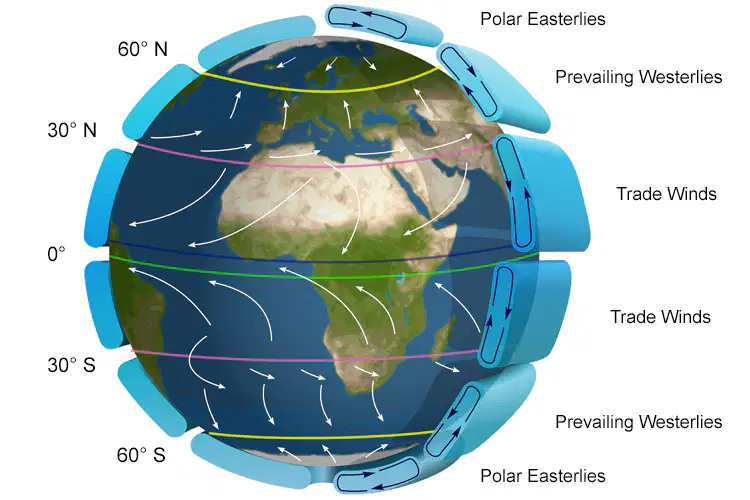
a)
Global Pattern
b)
Convection
c)
Electromagnetic Spectrum
d)
Resource
e)
Microscope
30.
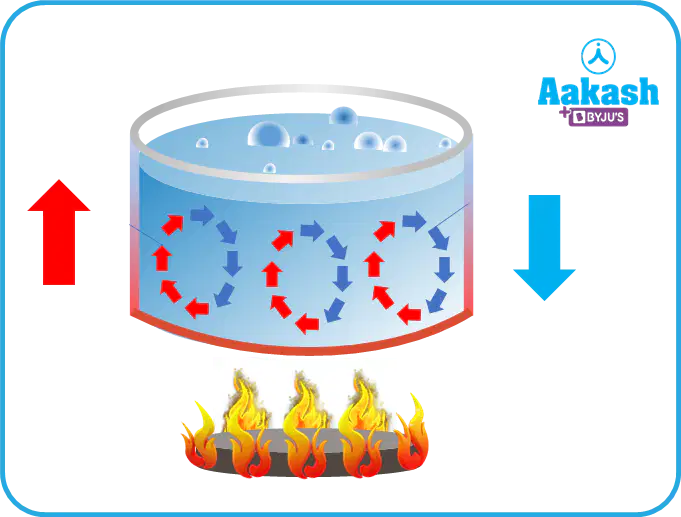
a)
Convection
b)
Electromagnetic Spectrum
c)
Global Pattern
d)
Resource
e)
Microscope
31.

a)
Geological Feature
b)
Convection
c)
Electromagnetic Spectrum
d)
Global Pattern
e)
Resource
32.
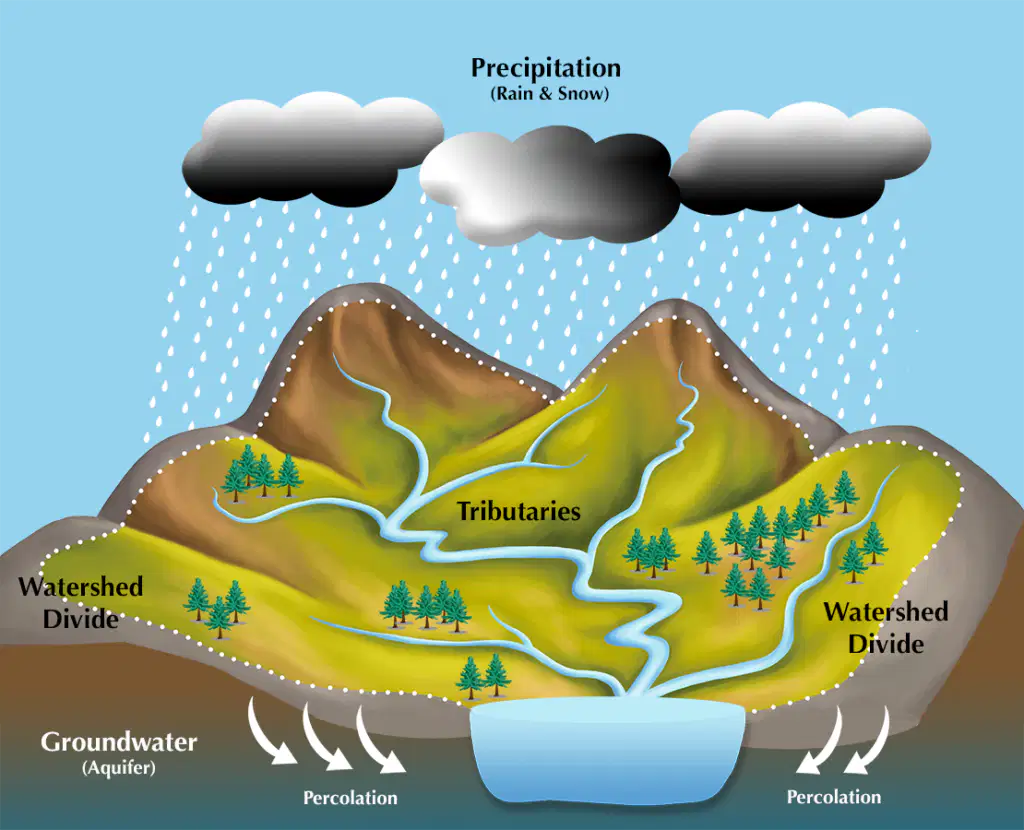
a)
Watershed
b)
Convection
c)
Electromagnetic Spectrum
d)
Global Pattern
e)
Resource
33.
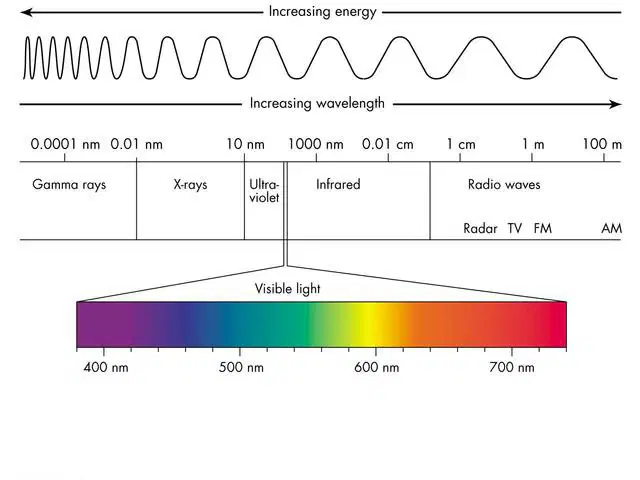
a)
Electromagnetic Spectrum
b)
Convection
c)
Global Pattern
d)
Resource
e)
Microscope
34.
The wise use of natural resources in order to protect them.
a)
Groundwater
b)
Watershed
c)
Runoff
d)
Conservation
e)
Crustal Feature
35.
A structure on Earth’s crust.
a)
Groundwater
b)
Watershed
c)
Runoff
d)
Conservation
e)
Crustal Feature
36.
An area of land where the surface water and groundwater drain into a particular body of water.
a)
Groundwater
b)
Watershed
c)
Runoff
d)
Conservation
e)
Crustal Feature
37.
Water that flows along Earth’s surface into bodies of water.
a)
Groundwater
b)
Watershed
c)
Runoff
d)
Conservation
e)
Crustal Feature
38.
The ______________ of natural resources like water, food, and plant life can protect the future of our planet.
a)
Conservation
b)
Groundwater
c)
Watershed
d)
Runoff
e)
Crustal Feature
39.
_______________ run on a predictable schedule because of this, sailors know when shoreline levels are high and low.
a)
Ocean Tide
b)
Groundwater
c)
Watershed
d)
Runoff
e)
Conservation
40.
Volcanoes, ocean ridges, and mountains are all _______________ that form when plates move.
a)
Crustal Feature
b)
Groundwater
c)
Watershed
d)
Runoff
e)
Conservation
41.
Hot clouds of gas and dust in space called ________ serve as nurseries for stars before they are formed.
a)
Nebula
b)
Groundwater
c)
Watershed
d)
Runoff
e)
Conservation
42.
The _____________ restarts every month and has 8 different phases.
a)
Lunar Cycle
b)
Groundwater
c)
Watershed
d)
Runoff
e)
Conservation
43.
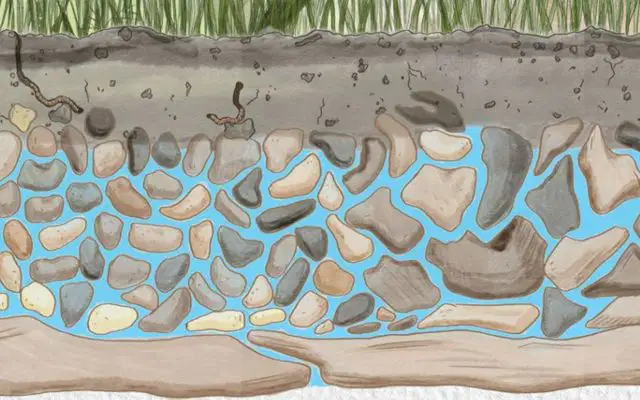
a)
Groundwater
b)
Watershed
c)
Runoff
d)
Conservation
e)
Crustal Feature
44.
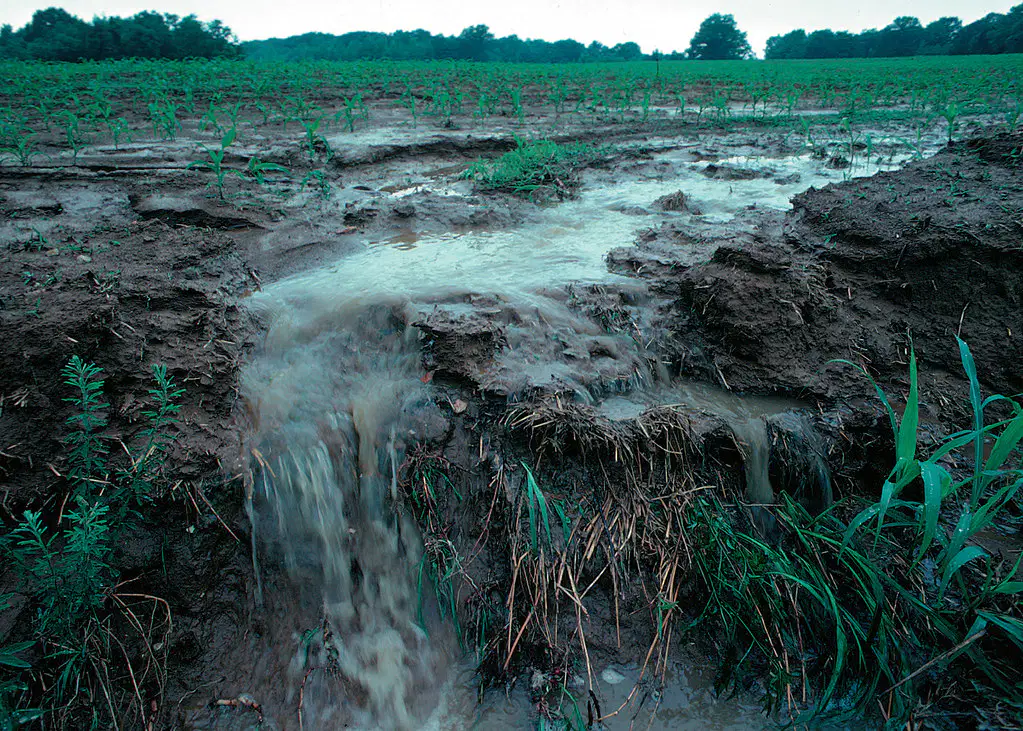
a)
Runoff
b)
Groundwater
c)
Watershed
d)
Conservation
e)
Crustal Feature
45.
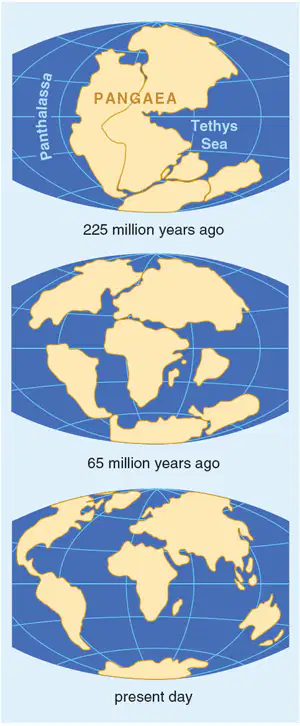
a)
Plate Tectonic Theory
b)
Groundwater
c)
Watershed
d)
Runoff
e)
Conservation
46.
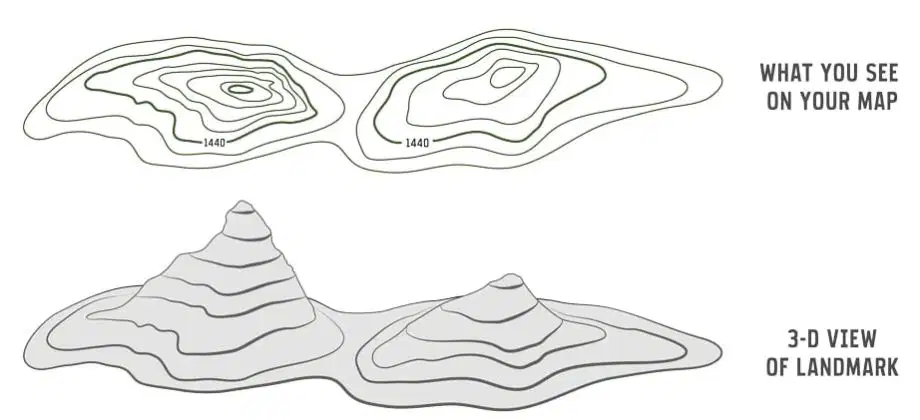
a)
Topographic Map
b)
Groundwater
c)
Watershed
d)
Runoff
e)
Conservation
47.

a)
Watershed
b)
Groundwater
c)
Runoff
d)
Conservation
e)
Crustal Feature
48.
A geological feature shaped by erosion.
a)
Topographic Map
b)
Weathering
c)
Geological Feature
d)
Plate Tectonic Theory
e)
Erosional Feature
49.
A map that uses contour lines to show the surface features of an area.
a)
Topographic Map
b)
Weathering
c)
Geological Feature
d)
Plate Tectonic Theory
e)
Erosional Feature
50.
A landform made of natural rocks or minerals.
a)
Topographic Map
b)
Weathering
c)
Geological Feature
d)
Plate Tectonic Theory
e)
Erosional Feature
51.
The theory that Earth’s plates move on the fluid mantle, causing major geological events.
a)
Topographic Map
b)
Weathering
c)
Geological Feature
d)
Plate Tectonic Theory
e)
Erosional Feature
52.
Global __________________ move warm and cold water around the globe.
a)
Ocean Current
b)
Topographic Map
c)
Weathering
d)
Geological Feature
e)
Plate Tectonic Theory
53.
Over many years, _____________ can shape rock into unusual formations.
a)
Weathering
b)
Topographic Map
c)
Geological Feature
d)
Plate Tectonic Theory
e)
Erosional Feature
54.
All the planets in our solar system ____________ around the Sun.
a)
Revolve
b)
Topographic Map
c)
Weathering
d)
Geological Feature
e)
Plate Tectonic Theory
55.
Cliffs by the sea often have many _________________ because of the constant waves moving sediment away.
a)
Erosional Features
b)
Topographic Map
c)
Weathering
d)
Geological Features
e)
Plate Tectonic Theory
56.
The Earth rotates on its _________.
a)
Axis
b)
Topographic Map
c)
Weathering
d)
Geological Features
e)
Plate Tectonic Theory
57.
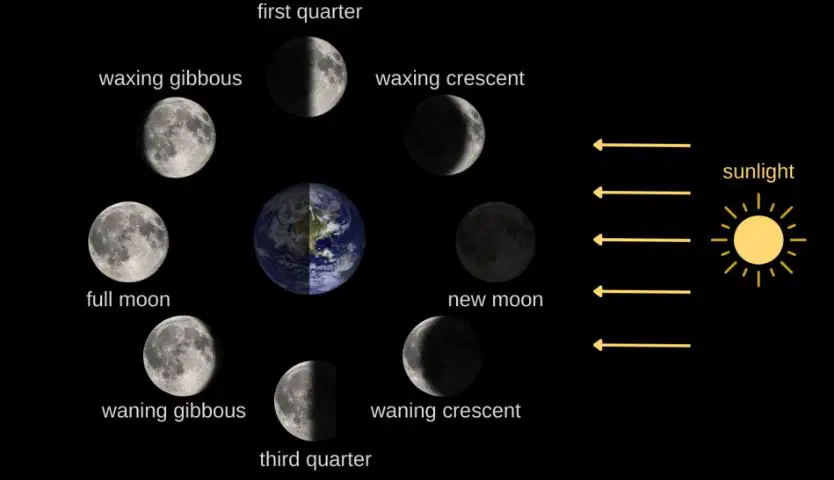
a)
Lunar Cycle
b)
Topographic Map
c)
Weathering
d)
Geological Feature
e)
Plate Tectonic Theory
58.
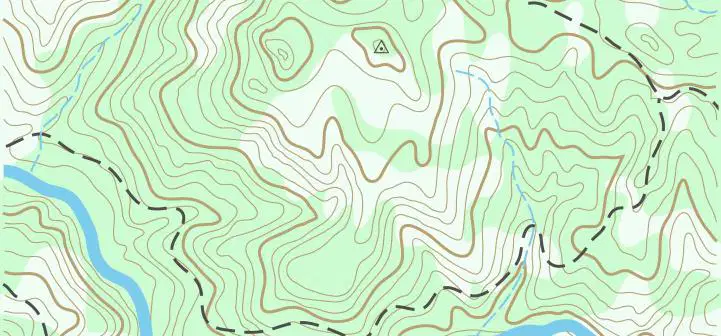
a)
Topographic Map
b)
Weathering
c)
Geological Feature
d)
Plate Tectonic Theory
e)
Erosional Feature
59.

a)
Plate Tectonic Theory
b)
Topographic Map
c)
Weathering
d)
Geological Feature
e)
Erosional Feature
60.

a)
Weather Map
b)
Topographic Map
c)
Weathering
d)
Geological Feature
e)
Plate Tectonic Theory
61.

a)
Geological Feature
b)
Topographic Map
c)
Weathering
d)
Plate Tectonic Theory
e)
Erosional Feature
62.
The continuous flow of water in a single direction.
a)
Ocean Current
b)
Ocean Tide
c)
Satellite View
d)
Lunar Cycle
e)
Season
63.
One of four periods of the year, caused by the tilt of Earth away or toward the Sun as it revolves around the Sun.
a)
Ocean Current
b)
Ocean Tide
c)
Satellite View
d)
Lunar Cycle
e)
Season
64.
An image taken by a satellite.
a)
Ocean Current
b)
Ocean Tide
c)
Satellite View
d)
Lunar Cycle
e)
Season
65.
The regular rise and fall of ocean levels.
a)
Ocean Current
b)
Ocean Tide
c)
Satellite View
d)
Lunar Cycle
e)
Season
66.
The full moon is just one phase of the __________________.
a)
Lunar Cycle
b)
Ocean Current
c)
Ocean Tide
d)
Satellite View
e)
Season
67.
_____________________ systems are associated with stormy weather.
a)
Low Pressure
b)
Ocean Current
c)
Ocean Tide
d)
Satellite View
e)
Lunar Cycle
68.
__________________ systems bring clear skies and sunny weather.
a)
High Pressure
b)
Ocean Current
c)
Ocean Tide
d)
Satellite View
e)
Lunar Cycle
69.
The four _____________ bring different climate conditions because of the position of the Earth.
a)
Seasons
b)
Ocean Current
c)
Ocean Tide
d)
Satellite View
e)
Lunar Cycle
70.
Spiral galaxies are also known as _____________________ because of the appearance of a spiral "arms".
a)
Disc-Shaped Galaxy
b)
Ocean Current
c)
Ocean Tide
d)
Satellite View
e)
Lunar Cycle
71.

a)
Satellite View
b)
Ocean Current
c)
Ocean Tide
d)
Lunar Cycle
e)
Season
72.
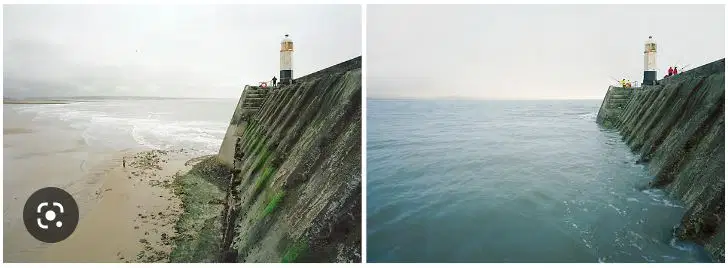
a)
Ocean Tide
b)
Ocean Current
c)
Satellite View
d)
Lunar Cycle
e)
Season
73.
a)
Axis
b)
Ocean Current
c)
Ocean Tide
d)
Satellite View
e)
Lunar Cycle
74.
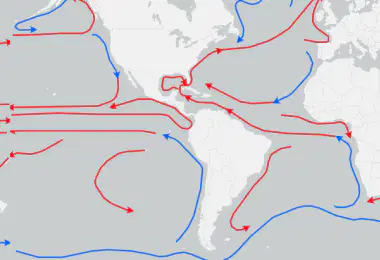
a)
Ocean Current
b)
Ocean Tide
c)
Satellite View
d)
Lunar Cycle
e)
Season
75.
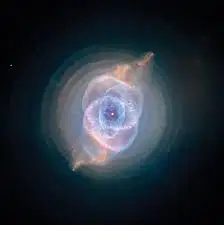
a)
Nebula
b)
Ocean Current
c)
Ocean Tide
d)
Satellite View
e)
Lunar Cycle
76.
An area where the atmospheric pressure is greater than the pressure of the surrounding areas
a)
Low Pressure
b)
High Pressure
c)
Weather System
d)
Weather Map
e)
Hurricane
77.
A circular-shaped galaxy that looks like a flattened disc with arms spiraling from the center.
a)
Universe
b)
Tilt
c)
Disc-Shaped Galaxy
d)
Axis
e)
Revolves
78.
All matter and energy as a whole, including Earth, the galaxies, and space.
a)
Universe
b)
Tilt
c)
Disc-Shaped Galaxy
d)
Axis
e)
Revolves
79.
To travel in a path around another object.
a)
Universe
b)
Tilt
c)
Disc-Shaped Galaxy
d)
Axis
e)
Revolves
80.
The act of leaning, sloping, or slanting.
a)
Universe
b)
Tilt
c)
Disc-Shaped Galaxy
d)
Axis
e)
Revolves
81.
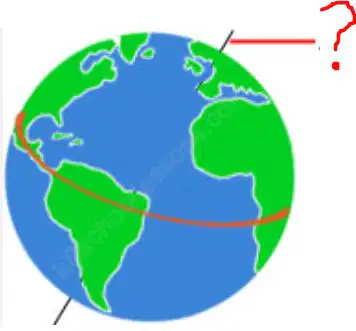
An imaginary line around which a planet rotates.
a)
Universe
b)
Tilt
c)
Disc-Shaped Galaxy
d)
Axis
e)
Revolves
82.
_________ are giant tropical storms that form over the ocean.
a)
Hurricane
b)
Universe
c)
Tilt
d)
Disc-Shaped Galaxy
e)
Axis
83.
There are 3 main types of ___________: elliptical, irregular, and disc-shaped.
a)
Galaxies
b)
Universe
c)
Tilt
d)
Disc-Shaped Galaxy
e)
Axis
84.
Everything found in space belongs to the _____________.
a)
Universe
b)
Tilt
c)
Disc-Shaped Galaxy
d)
Axis
e)
Revolve
85.
A _________________ shows what the weather will be like in a certain area for the coming days.
a)
Weather Map
b)
Universe
c)
Tilt
d)
Disc-Shaped Galaxy
e)
Axis
86.
The ________ of the Earth is about 23.5 degrees which causes the seasons.
a)
Tilt
b)
Universe
c)
Disc-Shaped Galaxy
d)
Axis
e)
Revolve
87.
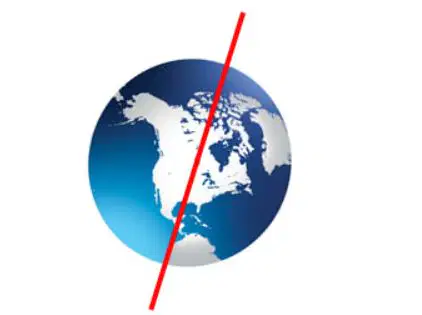
The red line represents the...
a)
Axis
b)
Universe
c)
Tilt
d)
Disc-Shaped Galaxy
e)
Revolve
88.

a)
Revolve
b)
Universe
c)
Tilt
d)
Disc-Shaped Galaxy
e)
Axis
89.

Represented by a blue "H"
a)
High Pressure
b)
Universe
c)
Tilt
d)
Disc-Shaped Galaxy
e)
Axis
90.
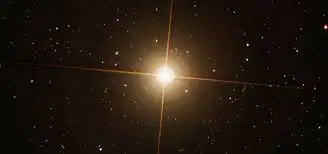
a)
Star
b)
Universe
c)
Tilt
d)
Disc-Shaped Galaxy
e)
Axis
91.
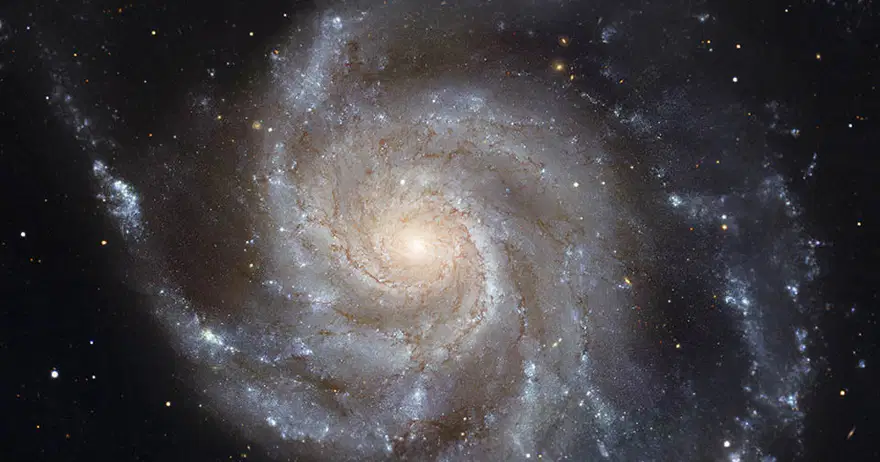
a)
Disc-Shaped Galaxy
b)
Galaxy
c)
Universe
d)
Tilt
e)
Axis
92.
A powerful storm with strong winds and heavy rains
a)
Low Pressure
b)
High Pressure
c)
Weather System
d)
Weather Map
e)
Hurricane
93.
An area where the atmospheric pressure is lower than the pressure of the surrounding areas
a)
Low Pressure
b)
High Pressure
c)
Weather System
d)
Weather Map
e)
Hurricane
94.
A set of weather conditions, reflecting the pattern of air movement in the atmosphere, that affects a region for a period of time
a)
Low Pressure
b)
High Pressure
c)
Weather System
d)
Weather Map
e)
Hurricane
95.
A chart showing the weather conditions of a large area
a)
Low Pressure
b)
High Pressure
c)
Weather System
d)
Weather Map
e)
Hurricane
96.
Meteorologists and weathermen use a _______ to predict the weather in their local city and state.
a)
Weather Map
b)
High Pressure
c)
Hurricane
d)
Low Pressure
e)
Weather System
97.
The closest galaxy to ours is still 25,000 ______ away from the Sun.
a)
Light Year
b)
High Pressure
c)
Hurricane
d)
Low Pressure
e)
Weather System
98.
High pressure systems and low pressure systems are both ___________ that bring different types of weather conditions to a regions.
a)
Weather System
b)
High Pressure
c)
Hurricane
d)
Low Pressure
e)
Weather Map
99.
The Hertzsprung-Russell diagram plots a ______ based on it's brightness and temperature.
a)
Star
b)
High Pressure
c)
Hurricane
d)
Low Pressure
e)
Weather System
100.
Astronomers have discovered a distant ________ that contains over 100 billion stars.
a)
Galaxy
b)
High Pressure
c)
Hurricane
d)
Low Pressure
e)
Weather System
101.
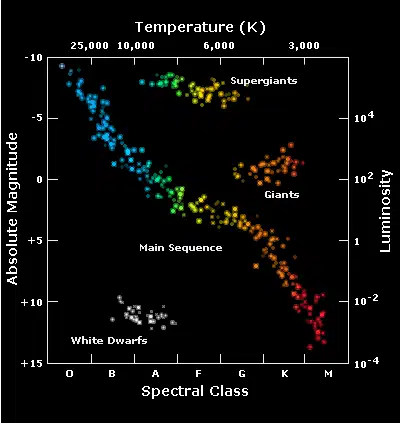
a)
Hertzsprung-Russell Diagram
b)
High Pressure
c)
Hurricane
d)
Low Pressure
e)
Weather System
102.
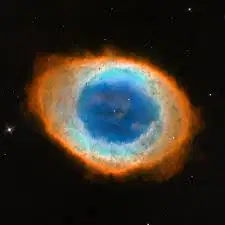
a)
Nebula
b)
High Pressure
c)
Hurricane
d)
Low Pressure
e)
Weather System
103.
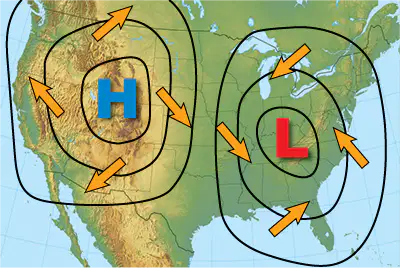
What does the BLUE "H" represent?
a)
High Pressure
b)
Hurricane
c)
Low Pressure
d)
Weather System
e)
Weather Map
104.

What does the RED "L" represent?
a)
Low Pressure
b)
High Pressure
c)
Hurricane
d)
Weather System
e)
Weather Map
105.

a)
Hurricane
b)
High Pressure
c)
Low Pressure
d)
Weather System
e)
Weather Map
106.
The distance light travels in one year, equal to approximately 9.46 X10¹² km
a)
Star
b)
Light Year
c)
Nebula
d)
Hertzsprung-Russell diagram
e)
Galaxy
107.
A grouping of stars, gas, and dust held together by gravity
a)
Star
b)
Light years
c)
Nebula
d)
Hertzsprung-Russell diagram
e)
Galaxy
108.
A large cloud of gas and dust in space
a)
Star
b)
Light years
c)
Nebula
d)
Hertzsprung-Russell diagram
e)
Galaxy
109.
A huge ball of gas in space that releases heat and light
a)
Star
b)
Light years
c)
Nebula
d)
Hertzsprung-Russell diagram
e)
Galaxy
110.
A graph in which the absolute magnitude of stars is plotted vertically against their surface temperatures
a)
Star
b)
Light years
c)
Nebula
d)
Hertzsprung-Russell diagram
e)
Galaxy
111.
Our star, the Sun, is found towards the middle of the graph on the ____________ because it is a star with medium temperature and brightness.
a)
Galaxy
b)
Hertzsprung-Russell Diagram
c)
Nebula
d)
Star(s)
e)
Light Year(s)
112.
Our solar system is found in the Milky Way ________.
a)
Galaxy
b)
Hertzsprung-Russell Diagram
c)
Nebula
d)
Star(s)
e)
Light Year(s)
113.
Thanks to the Hubble Space telescope we have seen a star that's 28 billion ________ away.
a)
Galaxy
b)
Hertzsprung-Russell Diagram
c)
Nebula
d)
Star(s)
e)
Light Year(s)
114.
Some __________ come from the gas and dust from the explosions of a dying star. Others are regions where new stars are beginning to form.
a)
Galaxy
b)
Hertzsprung-Russell Diagram
c)
Nebula
d)
Star(s)
e)
Light Year(s)
115.
Constellations are shapes made up of ______ in the night sky. Before GPS people would use them as a guide for directions.
a)
Galaxy
b)
Hertzsprung-Russell Diagram
c)
Nebula
d)
Star(s)
e)
Light Year(s)
116.

a)
Galaxy
b)
Hertzsprung-Russell Diagram
c)
Nebula
d)
Star
e)
Light Year
117.

a)
Galaxy
b)
Hertzsprung-Russell Diagram
c)
Nebula
d)
Star
e)
Light Year
118.

a)
Galaxy
b)
Hertzsprung-Russell Diagram
c)
Nebula
d)
Star
e)
Light Year
119.
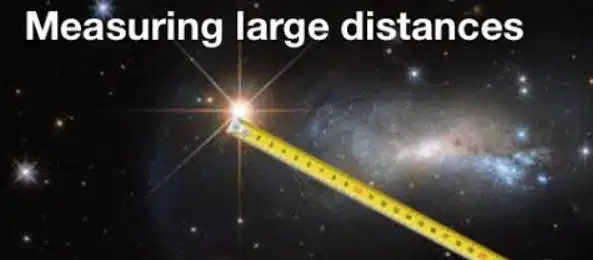
a)
Galaxy
b)
Hertzsprung-Russell Diagram
c)
Nebula
d)
Star
e)
Light Year
120.

a)
Galaxy
b)
Hertzsprung-Russell Diagram
c)
Nebula
d)
Star
e)
Light Year
100 %

