
Font size
 Worksheets
NET4th
Total questions: 203
Worksheet time: 3hrs 23mins
Standards (MEMO)
(a)
Standards (MEMO)
(a)
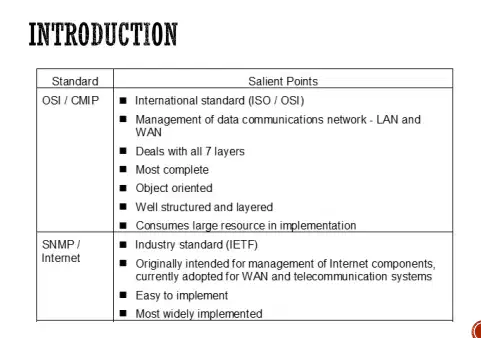
(MEMO)
(a)
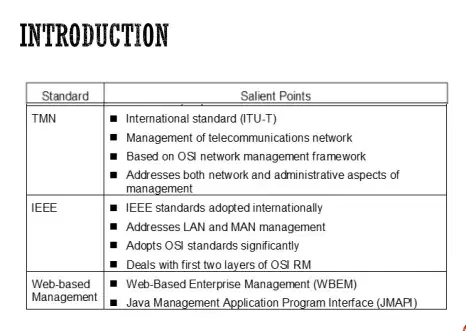
(MEMO)
(a)
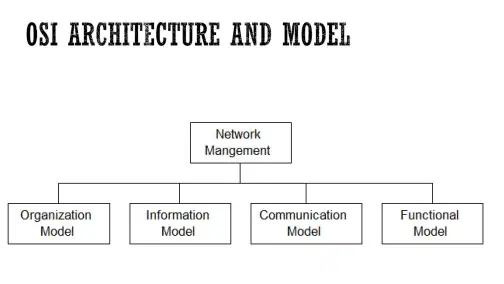
MEMO OSI ARCHITECTURE AND MODEL
(a)
Rapid network developments in recent years coupled with the introduction of large number of new technologies and the expectation of newservices, in possibly a , _mandate an improvement in networkmanagement.One possible solution is the_
(a)
This model provides a framework and guidelines for the control, maintenance and supervision of large networks.
(a)
According to the _ defines a conceptual model for managing all communication “entities” within a network.
(a)
Organization (OSI ARCI & MODEL)
(a)
Information (OSI ARCI & MODEL)
(a)
Structure of management information (SMI)
(a)
Management information base (MIB)
(a)
Object-oriented (OSI ARCI & MODEL)
Five major functional areas:
(a)
(focuses upon how the information is exchanged between the managed systems)
(a)
Communication (focuses upon how the information is exchanged between the managed systems)
(a)
(involved with the various activities performed in support of network management)
(a)
Functions (involved with the various activities performed in support of network management)
• Application functions
(a)
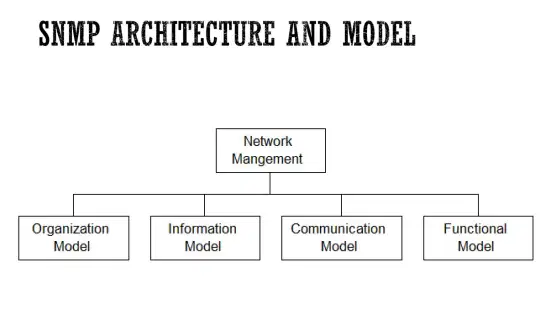
SNMP ARCHITECTURE AND MODEL (MEMO)
(a)
has a simple architecture based on aclient-server model.
(a)
The servers, called _, collect and process information about devices on the network.
(a)
The clients, called _, are any type of device or device component connected to the network.
(a)
They can include not just computers, but also network switches, phones, printers, and so on.
(a)
Organization (SNMP ARCHI & MODEL)
(a)
Information (SNMP ARCHI & MODEL)
(a)
Communication (SNMP ARCHI & MODEL)
(a)
Functions (SNMP ARCHI & MODEL)
• Application functions
(a)
Addresses management of telecommunication networks
(a)
Based on OSI model
(a)
Superstructure on OSI network
(a)
Addresses network, service, and business management
(a)
is an ITU standard which definesa Network Management Architecture.
(a)
Originally most _defined the interface to the customer, _ define internal workings of the network
(a)
The effect should be to allow us and our competitors to mixnetwork elements from different manufacturers and buy off the shelf management systems to manage them all. In other words to be _and to add value on top of that.
(a)
Manager (ORGANIZATIONAL MODEL)
(a)
Agent (ORGANIZATIONAL MODEL)
(a)
Managed objects (ORGANIZATIONAL MODEL)
(a)
a dataprocessing or data communicationsresource that may be managedthrough the use of an Open SystemsInterconnection (OSI) managementprotocol.
(a)
The resource itself need not be an OSI resource.
(a)
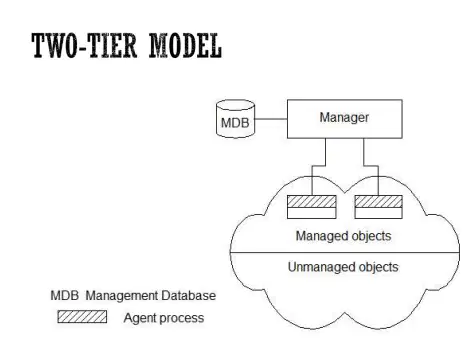
MEMO TWO-TIER MODEL
(a)
*We know the function of server client architecture incomputer networking. The _access some servicesfrom the server end.
(a)
The information save in the form of database in the_.
(a)
We access the database server via an _and the data can be retrieve or saved in the _
(a)
The method to access the database from a far server are of two types. Which are divided into two types _ in networking.
(a)
Agent built into network element
Example:
(a)
An agent can manage multiple elements
Example:
(a)
is a physical database
(a)
_are network elements that are not managed - _
(a)
is very simple and easy topology of application and database server
(a)
In _a user can access the database directly from the client system.
(a)
There is no any mediator application serverbetween the client and database server.
(a)
The application is installed in the client computer.
(a)
The usercan access the database directly from client
(a)
So there are basically a client application and a database server which create a _ in networking
(a)
The user send request from the client application to the database server.
(a)
The databaseserver accept the client request and responds to therequest.
(a)
There may be some authentication methods used between the client application and database server for security reason.
(a)
We can say the _ layer handled via the client application at the _
(a)
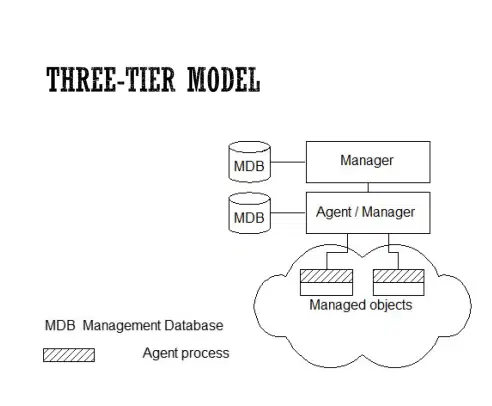
THREE-TIER MODEL (MEMO)
(a)
is little bit critical from the 2 tier
(a)
Three stages works in 3 tier architecture these are_
(a)
The application is hosted a separate server which is connected with the database server at the _ somewhere in the data center
(a)
the user need to access the application server
(a)
The _provide the data transfer betweenthe client and database server
(a)
There may be multiple application servers works for single application which can behandled by a _
(a)
The _sends a request to the application server to access the application.
(a)
The _ provide the user interface to the client and connect the database for the client.
(a)
plays the dual role
(a)
Middle layer plays the dual role
(a)
Example of middle level:
(a)
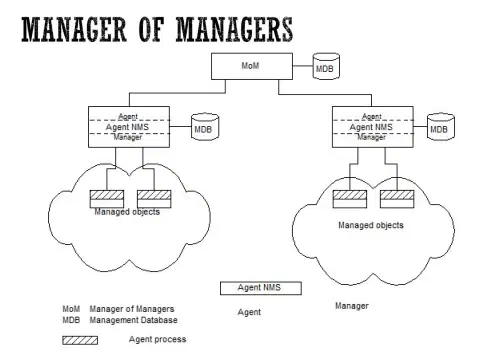
MANAGER OF MANAGERS (MEMO)
(a)
manages the domain
(a)
presents integrated view of domains
(a)
Domain may be geographical, administrative, vendor-specific products, etc.
(a)
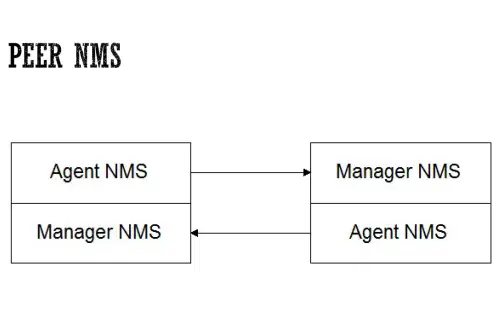
MEMO PEER NMS
(a)
Dual role of both NMSs
(a)
Network management system acts as peers
(a)
Dumbbell architecture
(a)
Notice that the manager and agent functions are processes and not systems
(a)
Figure in a book uniquely identified by
(a)
The three elements above define the syntax
(a)
is the meaning of the three entities according to Webster’s dictionary
(a)
The information comprises syntax and semantics about an _
(a)
defines for a managed object
(a)
SMI defines for a managed object
(a)
Example
sysDescr:{ system 1 }
Syntax: OCTET STRING
Definition: "A textual description of the entity. "
Access: read-only
Status: mandatory
(a)
SMI stands for
(a)
It defines the rules fordescribing managed objects
(a)
In the _framework, managed objects reside in a virtual database called the
(a)
Collection of related objects are defined in
(a)
The_ are written using a subset of abstract syntax notation, describing the data structures in a _
(a)
A string of zero or morebytes has a value between _
(a)
_ contains information about objects
(a)
Organized by grouping of related objects
(a)
Defines relationship between objects
(a)
It is NOT a physical database.
(a)
It is a virtual database that is compiled into management module
(a)
The fundamental purpose of the _is to translate numerical strings into human-readable text.
(a)
When an SNMP device sends a message or "trap," it identifies each data object in the message with anumber string called an_, or .
(a)
The MIB provides a text label called for each_ .Your SNMP manager uses the _as a codebook for translating the OID numbers into a human-readable display
(a)
Your _ needs it in order to process messages from your devices. Without the MIB, the message is just a meaningless string of numbers
(a)
_ library system has many branches
(a)
Each branch has a set of books
(a)
The books in each branch is a different set
(a)
The information base of the county has the view (catalog) of all books
(a)
The information base of each branch has the catalog of books that belong to that branch. That is, each branch has its view (catalog) of the information base.
(a)
A managed object has many attributes –
(a)
There are several operations that can be performed on the _
(a)
A _can view and perform only certain operations on the object by invoking the management agent
(a)
The view of the object attributes that the agent perceives is the _
(a)
The operation that a user can perform is the _
(a)
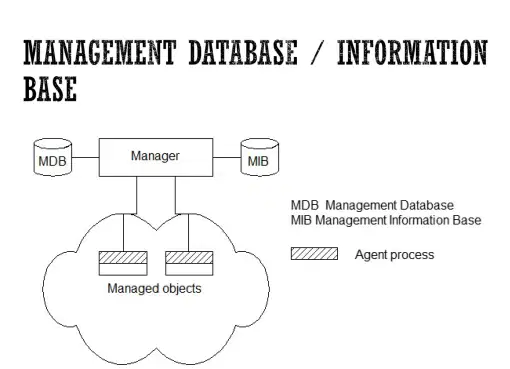
MANAGEMENT BASE / INFORMATION BASE
(a)
Distinction between MDB and MIB
(a)
An _can automatically discover amanaged object, such as a hub, when addedto the network
(a)
The _can identify the new object as hub only after the _ of the hub is compiled into NMS software
(a)
Managed objects can be
(a)
Managed objects can be
oNetwork elements (hardware, system)
(a)
Managed objects can be
o Software (non-physical)
(a)
Managed objects can be
o Administrative information
(a)
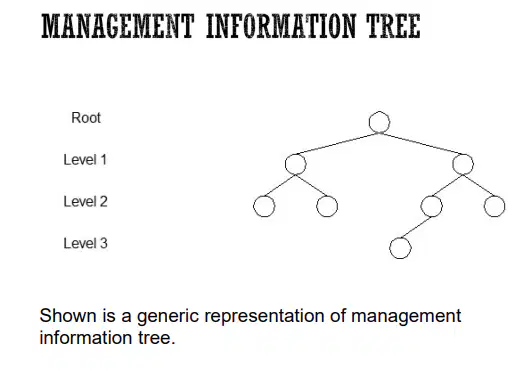
MEMO
(a)
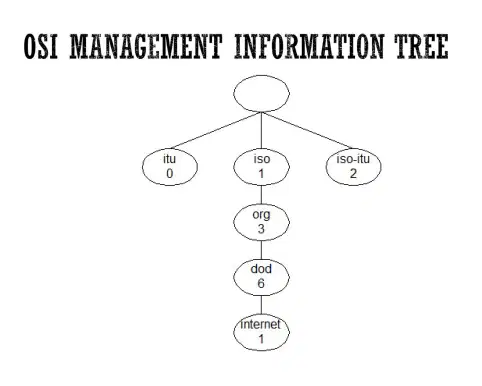
MEMO
(a)
iso _itu _dod _
(a)
Designation:
• iso 1
• org 1.3
• dod 1.3.6
• internet 1.3.6.1
(a)
Object Type _ & Instance
(a)
•Example of a circle • “circle” is _•
Semantics is definition from dictionary” “A plane figure bounded by a single curved line, every point of which is of equal distance from the center of the figure.”
(a)
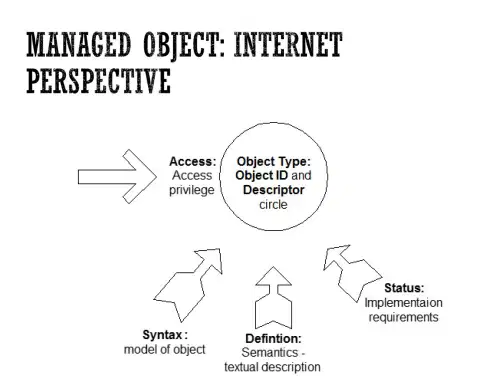
MEMOOO
(a)
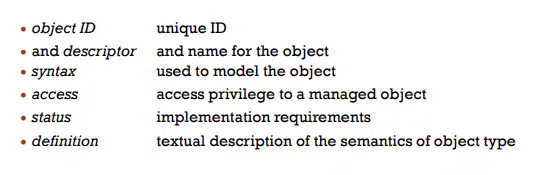
MANAGED OBJECT: INTERNET PERSPECTIVE (MEMO)
(a)
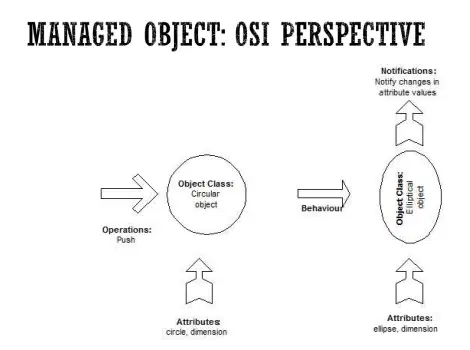
MEMOOO
(a)
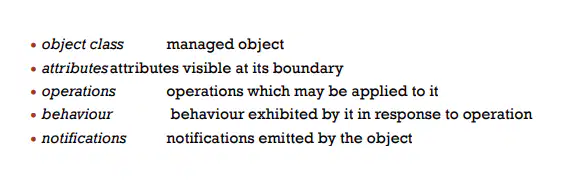
MANAGED OBJECT: OSI PERSPECTIVE (MEMO)
(a)
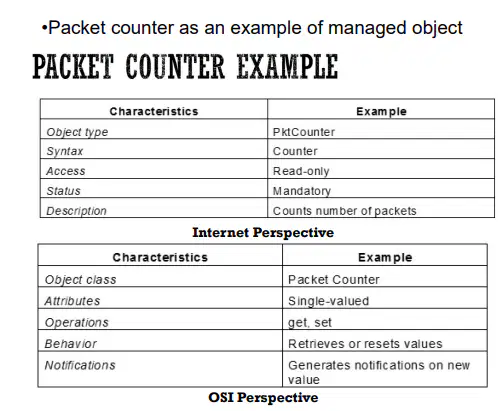
Packet counter as an example (MEMO)
(a)
_ in Internet vs _ approach in OSI
(a)
OSI characteristics of _are part of communication model in Internet: _
(a)
_ is part of OSI security model
(a)
is part of OSI conformance application
(a)
_ permits creation and deletion of objects; Internet does not: Enhancement in _
(a)
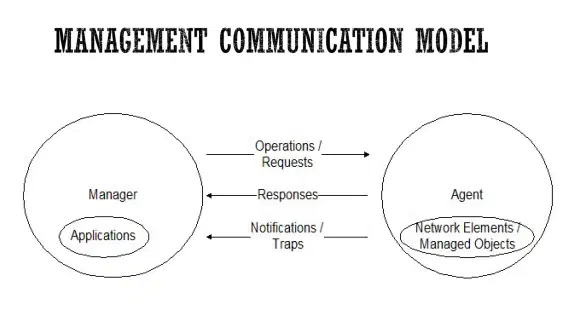
MEMO
(a)
Shown:
Internet: _; OSI:
Internet: _; OSI:
(a)
SNMPv2 Protocols:
Notify: Enables an agent to send unsolicited notifications to the _ of significant events.
(a)
The_ responds to requests for information from a management station, responds to requests for actions from the management station, and may from time to time provide the management station with important but _.
(a)
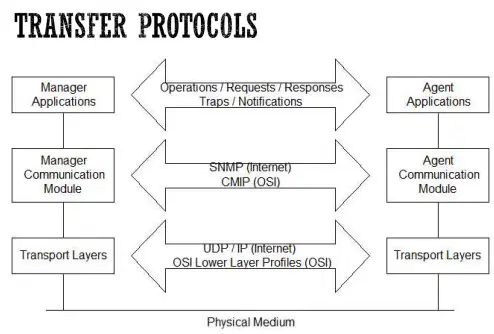
TRANSFER PROTOCOL MEMO
(a)
(TRANSFER PROTOCOL)
Shown: Management Communication Transfer Protocols
Internet: _; OSI:
OSI: uses CMISE _
OSI: _; SNMPv2:
(a)
_forms the basis of protocol design. It allows the decomposition of single, complex protocols into simpler, cooperating protocols
(a)
The software supporting protocols has a_ and its relationship with protocol layering is shown in the figure.
(a)
To send a message on the manager’s end, the _ interacts with the module directly below it and hands over the message to be encapsulated
(a)
The _ fills in the header data in accordance with the protocol it implements and interacts with the bottom module which sends the message over the communications channel to the bottom module of agent’s end.
(a)
On the agent’s end the reverse happens, so ultimately the message gets delivered in its original form to the _ of the agent system.
(a)
At least one host in the network is designated as the _, or manager.
(a)
In addition to the network _, the network control host includes a collection of software called the (NMA).
(a)
includes an operator interface to allow an authorized user to manage the network.
(a)
responds to user commands by displaying information and/or by issuing commands toNMEs throughout the network
(a)
(NMA) This communication is carried out using an _ that employs the communications architecture in the same fashion as any other distributed application.
(a)
Each other node in the network that is part of the network management system includes an NME and, for purposes of network management, is referred to as an _.
(a)
_include end systems that support user applications as well as nodes that provide a communications services, such as front-end processors, cluster controllers, bridges, and routers.
(a)
_is more than a syntax; it is a language
(a)
Addresses both syntax and semantics
(a)
Two types of syntax:
(a)
set of rules that specify data type and structure for information storage
(a)
set of rules for communicating information between systems
(a)
Makes application layer protocols independent of lower layer protocols
(a)
Can generate machine-readable code:_ (BER) is used in management modules.
(a)
is a formal notation used for describing data transmitted bytelecommunications protocols, regardless of languageimplementation and physical representation of these data, whatever the application, whether complex or very simple.
(a)
(a) offers extensibility which addresses the problem of, and provides support for, the interworking between previously deployed systems and newer, updated versions designed years apart.
One of the main reasons for the success of ASN.1 is that this notation is associated with several standardized encoding rules such as the_ , or more recently the _, which prove useful for applications that undergo restrictions in terms of bandwidth
(a)
These encoding rules describe how the values defined in ASN.1 should be encoded for transmission (i.e., how they can be translated into the bytes 'over the wire' and reverse), regardless of machine, programming language, or how it is represented in an application program.
(a)
encodings are more streamlined than many competing notations, enabling rapid and reliable transmission of extensible messages -- an advantage for wireless broadband.
(a)
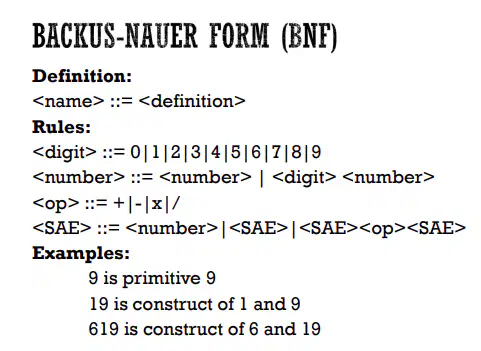
BNF MEMO
(a)
is a formal mathematical way to describe a language, (to describe the syntax of the programming languages).
(a)
is a way of defining syntax.
(a)
• a set of terminal symbols
• a set of non-terminal symbols
• a set of production rules of the form
(a)
Left-Hand-Side ::= Right-Hand-Side
where the _ is a non-terminal symbol and the _is a sequence of symbols (terminals or non-terminals).
(a)
The meaning of the _ is that the nonterminal on the left hand side may be replaced by the expression on the right hand side.
(a)
The rules are called _, and look like this: symbol := alternative1 | alternative2 ...
(a)
A production rule simply states that the symbol on the left-hand side of the _ must be replaced by one of the alternatives on the right hand side.
(a)
The alternatives are separated by _. (One variation on this is to use ::= instead of :=, but the meaning is the same.) Alternatives usually consist of both symbols and something called
(a)
are simply pieces of the final string that are not symbols.
(a)
is used for ASN.1 constructs
(a)
developed from primitives
(a)
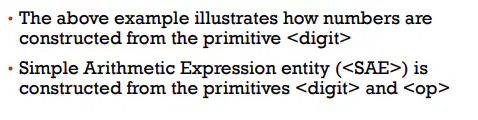
BNF
(a)
BNF
(a)
(BNF)
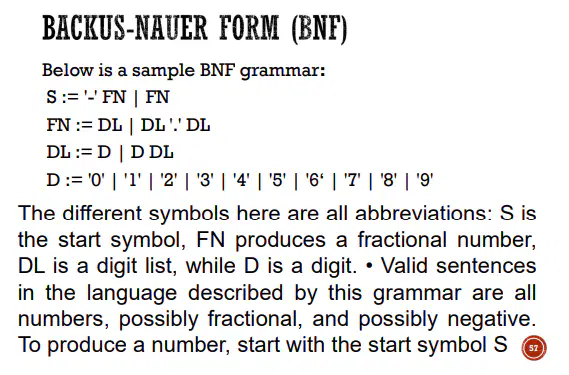
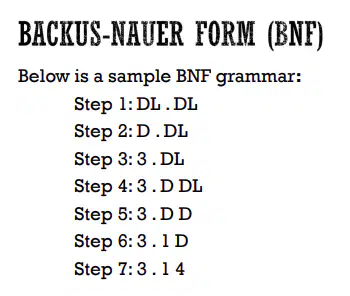
We begin by replacing the S symbol with one of its productions. In the case of a negative numberwe choose not to put a '-' in front of the number. We’ll just use the plain FN production and replaceS by FN: The next step is then to replace the FN symbol with one of its productions. We want a fractional number, so we choose the production that createstwo decimal lists with a '.' between them, and afterthat we keep choosing replacing a symbol withone of its productions once per line in theexample above: Here we've produced the fractional number 3.14.
(a)
ASN.1 SYMBOLS
(a)
ASN.1
(a)
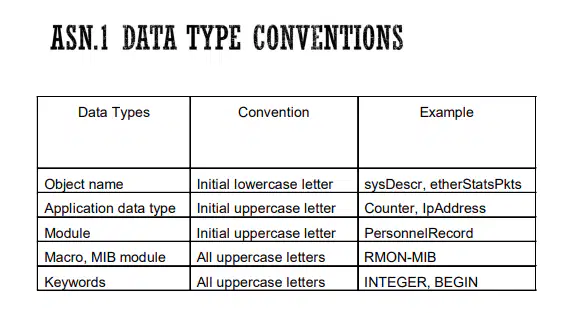
ASN.1
(a)

ASN.1
(a)
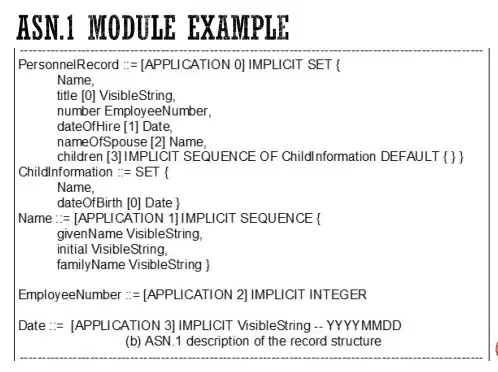
ASN.1
(a)
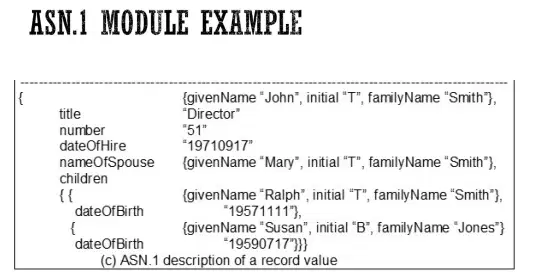
ASN.1
(a)
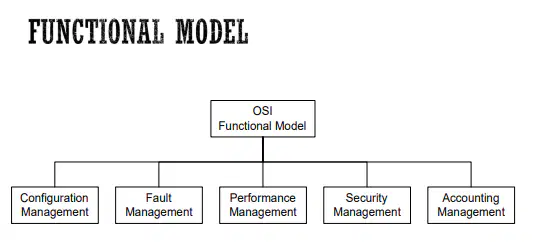
FUNCTIONAL MODE
(a)
(FUNCTIONAL MODE)
• Configuration management
(a)
(FUNCTIONAL MODE)
• Fault management
(a)
(FUNCTIONAL MODE)
• Performance management
(a)
(FUNCTIONAL MODE)
• Security management
(a)
(FUNCTIONAL MODE)
• Accounting management
(a)
Desirable properties of secure communication:
(a)
Only the sender and intended receiver should be able to understand the contents of the transmitted message.
(a)
Alice and Bob want to ensure that the content of their communication is not altered, either maliciously or by accident, in transit.
(a)
Both the sender and receiver should be able to confirm the identity of the other party involved in the communication—to confirm that the other party is indeed who or what they claim to be.
(a)
Because eavesdroppers may intercept the message, this necessarily requires that the message be somehow encrypted so that an intercepted message cannot be understood by an interceptor. This aspect of _is probably the most commonly perceived meaning of the term secure communication.
(a)
Operational devices such as firewalls and intrusion detection systems are used to counter attacks against an organization’s network.
(a)
A _sits between the organization’s network and the public network, controlling packet access to and from the network.
(a)
An_ performs “deep packet inspection,” alerting the network administrators about suspicious activity.
(a)
An intruder can potentially perform:
(a)
sniffing and recording control and data messages on the channel.
(a)
modification, insertion, or deletion of messages or message content.
(a)
allow a sender to disguise data so that an intruder can gain no information from the intercepted data. The receiver, of course, must be able to recover the original data from the disguised data.
(a)

