wayground logo

Free Printable Worksheets

NEW

Font size

S
M
L
XL
Worksheets

STAAR Quiz 1

Total questions: 52

Worksheet time: 56mins

Name
Class
Date
1.

What energy is used and produced by the lamp in order to melt the candle?

a)

Used: Sound

Produced: Light

b)

Used: Mechanical

Produced: Thermal

c)

Used: Electricity

Produced: Thermal

d)

Used: Electricity

Produced: Light

2.

What happens to light during reflection?

a)

Some light strikes the mirror and is scattered in all directions

b)

Some light passes through the mirror

c)

The light ray hits the mirror and is bounced back in a new direction

d)

The light strikes the mirror and is bent in a new direction as it passes through

3.

What happens to light during reflection?

a)

Some light strikes the mirror and is scattered in all directions

b)

Some light passes through the mirror

c)

The light ray hits the mirror and is bounced back in a new direction

d)

The light strikes the mirror and is bent in a new direction as it passes through

4.
A class prepared some electrical circuits using battery, connecting wires, and three light bulbs.  Which of these circuits can make the three bulbs light?
a)
A
b)
B
c)
C
d)
D
5.

What type of circuit is this?

a)

Series, because there is only 1 path

b)

Series, because there are 5 light bulbs

c)

Parallel, because there are 5 paths

d)

Parallel, because there is only 1 path

6.

What type of circuit is this and how do you know?

a)

series circuit, because if you cut at X, all the bulbs will turn off.

b)

parallel circuit, because if you cut at X, the other 2 light bulbs will still be on.

7.

Which examples use mechanical energy to perform their functions?

a)

A

b)

B

c)

C

d)

D

8.

A student made a list of activities that involve energy. Which activities on the list are examples of the use of mechanical energy?

1. A toaster heating bread

2. Brushing your teeth

3. A boy swimming in the pool

4. Computer charging

5. Kicking a soccer ball

a)

2, 3, 4

b)

1, 3, 4

c)

2, 3, 5

d)

2, 4, 5

9.
What is this called?
a)

refraction

b)

reflection

c)

absorption

d)

retraction

10.

the bending of light

a)

refraction

b)

reflection

c)

absorption

d)

transparent

11.
the bouncing of light
a)

refraction

b)

reflection

c)

absorption

d)

shadow

12.
The ability to move, work or cause a change in matter is...
a)
mass
b)
volume
c)
energy
d)
density
13.
A student was asked to help pass out cups of hot chocolate to two other students.  A teacher poured the steaming liquid into cups.  Once cup was made of stainless steel and the other was made of thick plastic.  As the student walked across the room, he suddenly put one of the cups on a desk and exclaimed "Ouch".  Which cup did he put down and why?
a)
He put down the plastic cup because the contents were spilling everywhere.
b)
He put down the steel cup because it was conducting thermal energy from the liquid to his hand.
c)
He put down the steel cup because it was insulating thermal energy from the liquid to his hand.
d)
He put down the plastic cup because it was insulating thermal energy from the liquid to his hand.
14.
One hot summer, you remember you left a cup of water outside. A few weeks later, you saw that the cup was empty and you remember the cup having water. What happened to the water?
a)
It evaporated
b)
It underwent deposition
c)
It melted
15.
A watermelon has more matter than a grape, so it has more
a)
mass
b)
eat
c)
solid
d)
greater
16.

Which one is magnetic?

a)

sand

b)

plastic

c)

iron

d)

wood

17.
Magnetic force between two magnets gets weaker the more ________________ between them.
a)
distance
b)
attraction
c)
metal
d)
lightsabers
18.
Which will NOT stick to a magnet?
a)
the screen on the door
b)
a penny
c)
a staple
d)
paperclip
19.

This rock was another type of rock that was heated and compressed over time. What type of rock is this?

a)

Sedimentary

b)

Igneous

c)

Metamorphic

20.

The process when rocks break into smaller pieces due to exposure to natural elements is called...

a)

Deposition

b)

Erosion

c)

Weathering

21.

The process by which sediments move from one place to another from wind or rain is called...

a)

Deposition

b)

Erosion

c)

Weathering

22.

The process where material is added to land (or a landform). Can be deposited by water, wind or glaciers.

a)

Deposition

b)

Erosion

c)

Weathering

23.
Which of the following is an example of friction that is helpful?
a)
Brakes used on a bike
b)
Tires from a car on the road
c)
Tread on the bottom of your shoes
d)
All are examples that are helpful
24.
Rougher surfaces have ...
a)
greater friction
b)
less friction
c)
the same level of friction
25.
Light bounces when it is 
a)
reflected
b)
absorbed
c)
refracted
26.
Light travels
a)
around corners
b)
in a straight line
27.
Light bounces when it is 
a)
reflected
b)
absorbed
c)
refracted
28.
Light bends when it is 
a)
refracted
b)
reflected
c)
absorbed
29.
mirror
a)
absorbs
b)
reflects 
c)
refracts
30.
lenses
a)
reflect
b)
refract
c)
absorb
31.
smooth, shiny surfaces
a)
reflect
b)
refract
c)
absorb
32.
rainbow
a)
light is reflected
b)
light is refracted
c)
light is absorbed
33.
All of the following are sources of light except...
a)
the sun
b)
a light bulb
c)
fire
d)
the moon
34.
Light is a form of 
a)
Matter
b)
Reflection
c)
Energy
d)
Force
35.

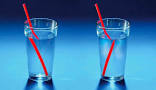
A straw sitting in a glass of water looks broken because light travels more slowly through the water than air. This is an example of ____________.

a)

Reflection

b)

Refraction

c)

Absorbing

d)

Transmitting

36.

This is an example of?

a)

fog

b)

Reflection

c)

Refraction

d)

translucent

37.

What is the name of the object in the picture. Hint: it forms a rainbow

a)

lens

b)

telescope

c)

prism

d)

mirror

38.

Cardboard, wood, and books are some examples of ________ objects.

a)

opaque

b)

translucent

c)

transparent

d)

reflection

39.

Sunglasses, notebook paper, and lampshades are examples of __________ objects.

a)

translucent

b)

transparent

c)

opaque

d)

wood

40.

When light can easily pass through an object, we say that that object is ___ .

a)

transparent

b)

translucent

c)

opaque

d)

transported

41.
Which object requires only mechanical energy to perform its main function?
a)
A
b)
B
c)
C
d)
D
42.
The toy oven shown uses a lightbulb to bake small cakes. What types of energy does the toy oven use to bake the cakes?
a)
Light and sound
b)
Electrical and thermal
c)
Thermal and mechanical
d)
Mechanical and electrical
43.
A student made a list of activities that involve energy. Which activities on the list are examples of the use of mechanical energy?
a)
Activities 1, 4, and 6
b)
Activities 2, 4, and 5
c)
Activities 1 and 2
d)
Activities 3, 5, and 6
44.
A class is learning about states of matter. The teacher shows the students how to set up the investigation shown in the diagram.
a)
Thermal and mechanical
b)
Mechanical, light, and electrical
c)
Electrical and thermal
d)
Light, mechanical, and thermal
45.
Water flows through turbines in dams like the one shown below. The flowing water makes the turbines spin. What type of energy is used to make the turbines spin in this type of dam?
a)
Light energy
b)
Thermal energy
c)
Sound energy
d)
Mechanical energy
46.
Three different objects that use the same source of energy are shown. What is the energy source for these objects?
a)
Light energy
b)
Mechanical energy
c)
Sound energy
d)
Electrical energy
47.
Is this a heat, light, or sound source?
a)
Sound
b)
Heat 
c)
Light
48.
Is this a heat, light, or sound source?
a)
Sound
b)
Light
c)
Heat
49.

What type of energy causes ice cream to melt?

a)

thermal/heat

b)

light

c)

sound

d)

electrical

50.
This form of energy means heat.
a)
Mechanic
b)
Light
c)
Thermal
d)
Sound
51.
Photosynthesis and solar panels use this form of energy.
a)
Mechanic
b)
Light
c)
Thermal
d)
Sound
52.

What type of energy allows you to see the images and texts on your cell phone screen?

a)

Sound

b)

Thermal

c)

Magnetism

d)

Light