
NEW
Font size
 Worksheets
The Circulatory System
Total questions: 28
Worksheet time: 18mins
What is the main function of the circulatory system?
secrete enzymes
digest proteins
produce hormones
transport materials
Which gas is transported by the circulatory system in humans and is used by cells during respiration to release energy stored in food?
carbon dioxide
nitrogen
hydrogen
oxygen

State one reason why blood at location B contains more oxygen than blood at location A.
because blood at location A goes to the lungs
because blood at location A comes from the lungs
because blood at location B comes from the lungs
because blood at location B goes to the lungs
Identify one way to determine a person's heart rates.
put a hand on the heart to measure pulse
put a thumb on the wrist to measure pulse
put a thumb on the neck to measure pulse
put two fingers on the wrist to measure pulse
The human body has specialized cells, such as white blood cells, to help protect it from many diseases. Describe what these specialized cells do to protect the body from the disease.
they carry oxygen
they fight and destroy germs
they give blood its color
they clot when we get a cut
Blood vessels that carry blood away from the heart.
Veins
Capillaries
Arteries
Blood vessels that carry blood to the heart.
Veins
Arteries
Capillaries
The upper part of the heart is made up of two chambers called what?
Ventricles
Atria
The bottom part of the heart is divided into two chambers called what?
Ventricles
Atria
These blood cells carry oxygen from the lungs to all parts of the body.
White Blood Cells
Red Blood Cells
Platelets
Plasma
The smallest blood vessels that ensure oxygen and nutrients are delivered to the body's cells.
Capillaries
Arteries
Veins
What parts act like doors that control blood flow in the heart?
valves
heart dams
kidneys
chambers

How many chambers does the heart have?
one
two
three
four
What wall separates the left side and right side of the heart?
Ventricle
Atrium
Septum
The great wall
As the blood reaches the lungs, what is removed from the blood?
oxygen
carbon dioxide
red blood cells
white blood cells

The movement of blood through the heart and body is called:
locomotion
ventriculation
heart pump
circulation

What is the organ that pumps blood all throughout the human body?
The lungs
The heart
The kidneys
The blood vessels and capillaries
How does the heart work?
It pumps blood first to the lungs, back to the heart and then around the rest of the body.
It pumps blood first to the rest of the body, back to the lungs and then to the heart.
It pumps blood around the rest of the body, back to the heart and then to the lungs,

What is blood pressure?
Pressure of the blood against the walls of the veins.
Pressure of the heart pushing the blood out.
Pressure of the heart receiving blood.
Pressure of the blood against the walls of the arteries.

If your pulse rate increases, your heart is beating
slower than before
faster than before
more forcefully than before
with less pressure than before
The circulatory system works with the _______ system
disgestive
immune
nervous
respiratory

Oxygen deprived blood enters the heart through the
right ventricle
left ventricle
right atrium
left atrium
The heart is the size of
your thumb
your fist
your ribcage
your foot
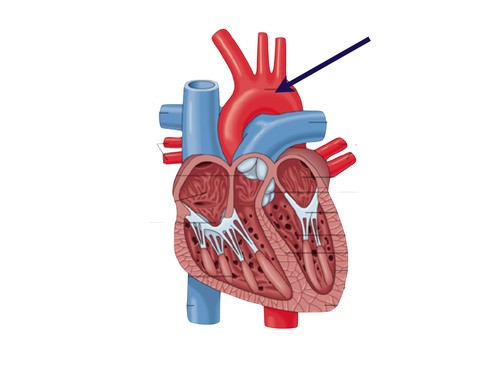

The part of the heart that contains only oxygen-rich blood is. . . .
1 and 2
1 and 3
2 and 4
2 and 3
What is the correct path through the circulatory system which describes the passage of blood originating in the left leg?
Vena cava-> right atrium-> right ventricle-> lungs-> left atrium-> left ventricle-> aorta
Vena cava-> left atrium-> left ventricle-> lungs-> right atrium-> right ventricle-> aorta
Vena cava-> right atrium-> left atrium-> lungs-> right ventricle-> left ventricle-> aorta
Vena cava-> left atrium-> right atrium -> lungs-> left ventricle-> right ventricle-> aorta
Why is blood that flows from the lungs to the heart bright red rather than dark red?
Oxygen makes it red
Carbon dioxide makes it red
Gastric juices produce the red color of the blood
The lungs add a pigment (dye) to blood as it flows through them
Why is oxygen important to blood and to the cells?
Oxygen helps the blood to clot
Oxygen brings food to the cells
Oxygen is necessary for cell growth and energy
oxygen is not important - carbon dioxide is the most important substance in the body

