
 Worksheets
Molecular biology
Total questions: 40
Worksheet time: 40mins
Which form of glucose is stored in the human liver and muscle?
Cellulose
Glycogen
Lipids
Starch
Lipids are insoluble in water because lipid molecules are _________?
hydophilic
hydrophobic
neutral
Which of the following term refers to the combination of two types of monosaccharides?
Monosaccharide
Disaccharide
Polysaccharide
Which of the following is a term that refers to an energy source obtained from plants?
Cellulose
Glycogen
Lipids
Starch
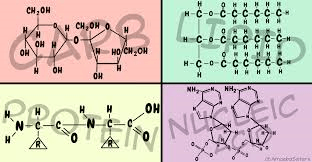
What is a biomolecule?
The dissolved particle in a solution
One of the by-products of respiration
Large molecule that is present in living organisms
None of the above

The function of the nucleic acid is --
to store and transmit genetic information inherited from your parents
to maintain our body temperature
to build up muscles bones and other body parts
to regulate sugar in your blood and give your cells energy
Which of the following is a characteristic of carbohydrates?
Provides structure for cells
Provides energy for all cellular activities
Contain complex carbohydrates known as starches
All of the above

Which of the following is a characteristic of protein?
Made up of amino acids and regulate cellular processes
Fats, oils, and waxes
Complex carbohydrates known as starches
DNA and RNA
Which biomolecule is important for insulation?
Lipid
Proteins
Carbohydrates
Nucleic acid
Your friend is really irritable while sitting in class. He feels lightheaded and dizzy. He is also feeling a bit of confusion and brain fog.
What inferences are most realistic to make about the biomolecules in your friend's body?
He is running low on fast sources of energy
Proteins are being broken down or reshaped
The coding information in the cell is incorrect or incomplete
There is not enough insulation or energy storage


*GLUCOSE

* cholesterol and triglycerides
If a substance has the elements CHO and is not soluble in water, which of the macromolecules would this substance be?
Carbohydrate
Lipid
Protien
Nucleic Acid
Enzymes function best at a specific temperature.


View Figure 2 (if not visible)
Which organic molecule would a long-distance runner most likely choose to eat two hours before a race?
A protein, because it builds muscle mass.
A lipid because it provides long term energy storage.
A carbohydrate because it releases energy quickly.
A protein, because it transports oxygen into the blood stream.
Which biomolecules transport oxygen and other substances and also form part of most organelles?
Lipids
Carbohydrates
Proteins
Nucleic Acids
Which biomolecules provide quick energy for the cell and also provide materials to build the cell membrane/wall?
Carbohydrates
Proteins
Lipids
Nucleic Acids
Glycerol and fatty acids are the monomers of _________.
Lipids
Carbohydrates
Proteins
Nucleic Acids
Which of the following contains the most lipid?


Which of the following is the correct pair of biomolecules and their monomers?
Carbohydrate: Fatty Acids
Protein: Amino acid
Lipid: Nucleotide
Nucleic Acid: DNA
Just under an orca's skin lies a thick layer of blubber. Blubber helps insulate a whale from heat loss. Based on this information, which biomolecule is blubber primarily made of?
Lipids
Nucleic Acids
Proteins
Carbohydrates

